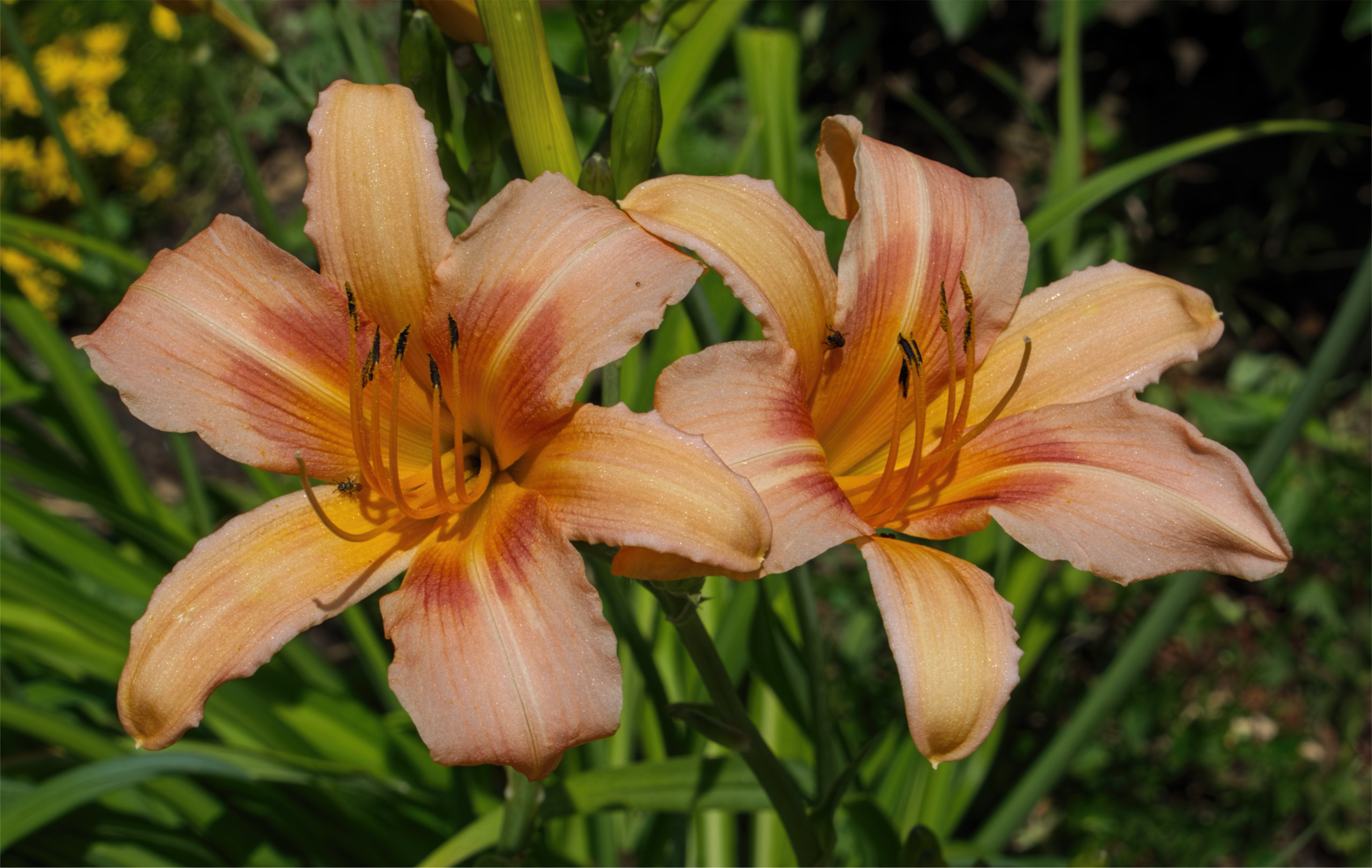
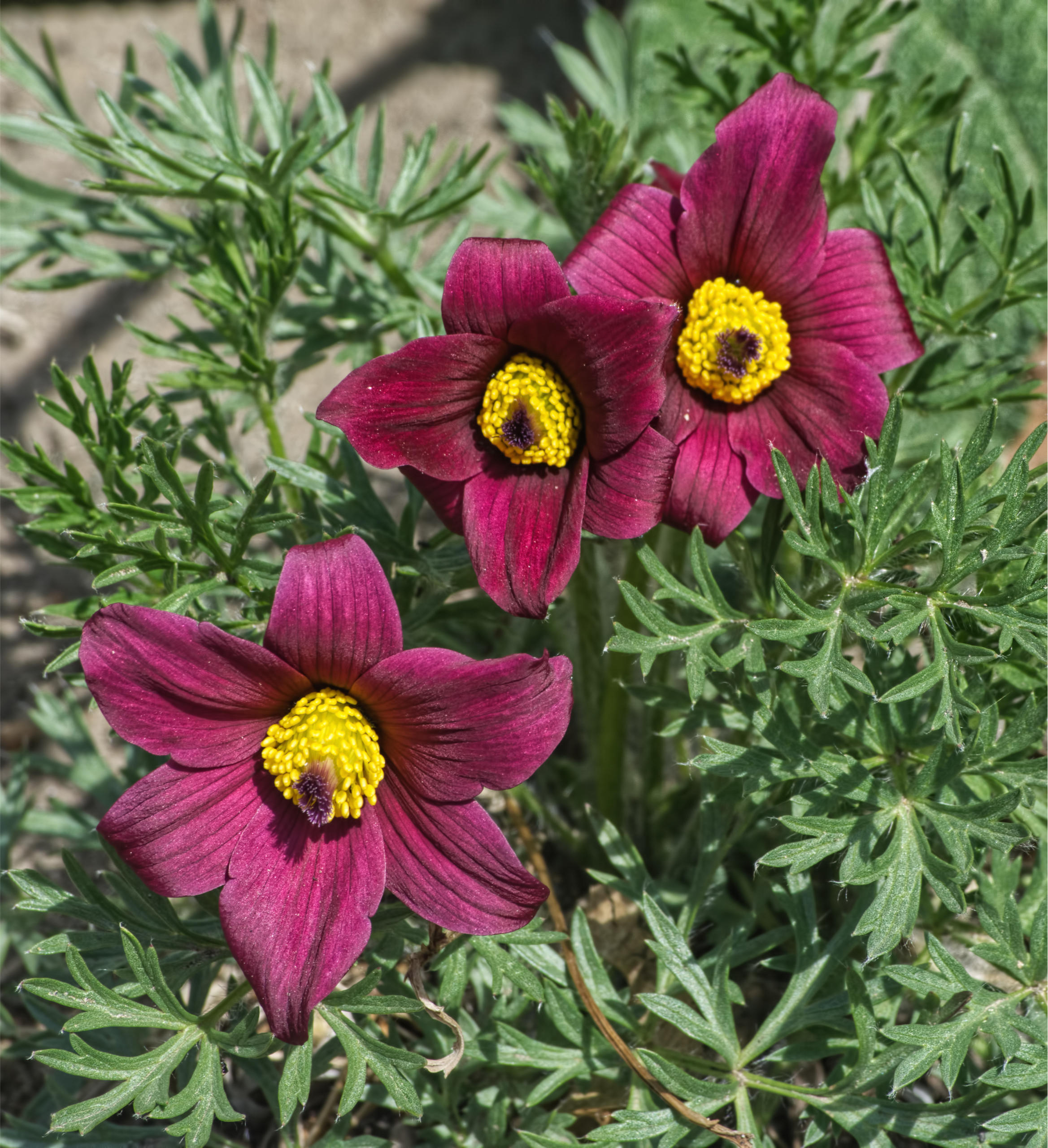
Horticulturalists see colors differently than most people. I’ve mentioned before that “coerulea” forms of orchids look lavender to me, not blue. Something similar happens with daylilies. This is “Hall’s Pink.”
Does that look pink to you? Parts of it may look a bit pinkish, but overall I’d call it orange.
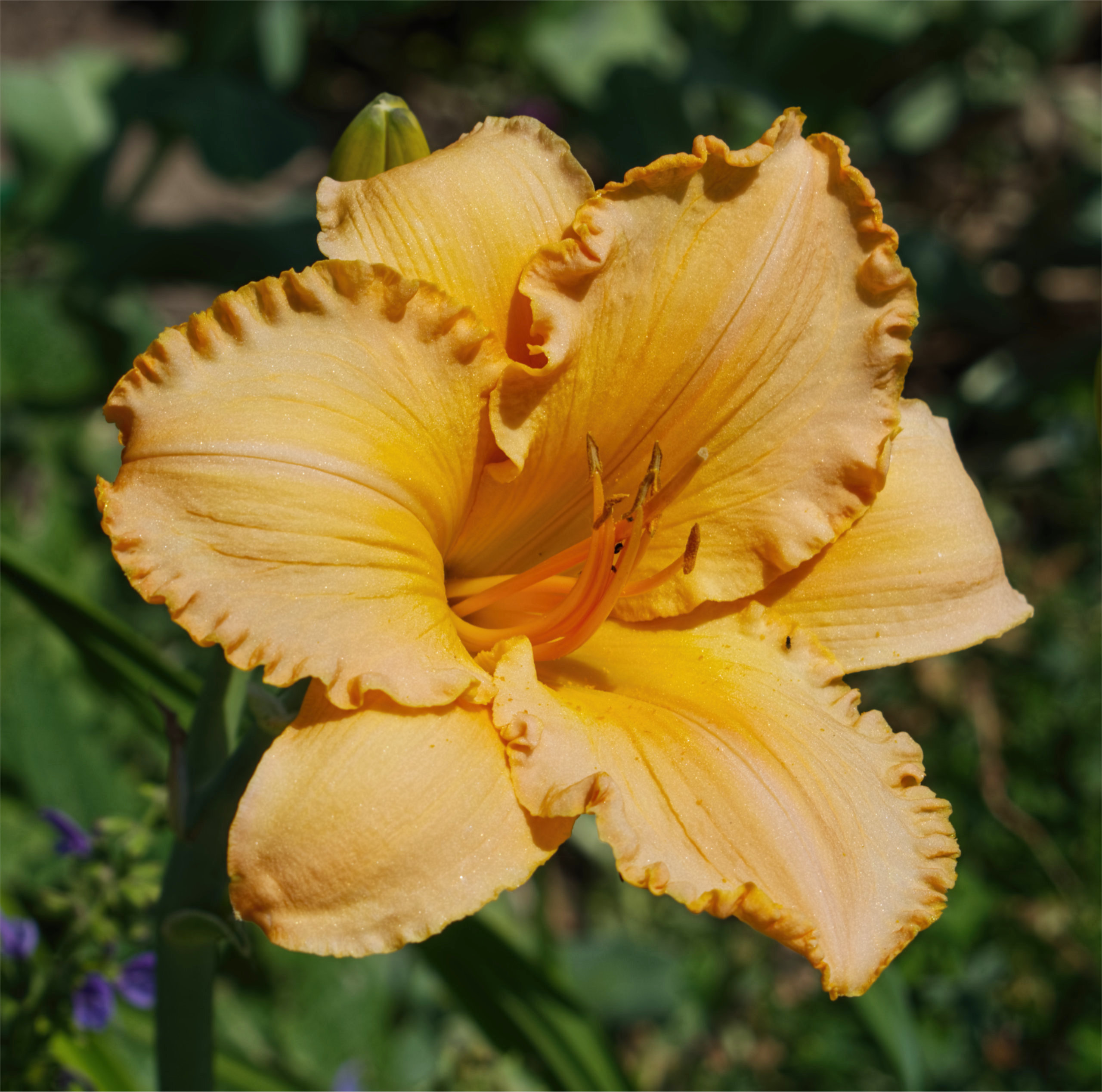
“Artist Etching” is generally described as “pink.” Judge for yourself.
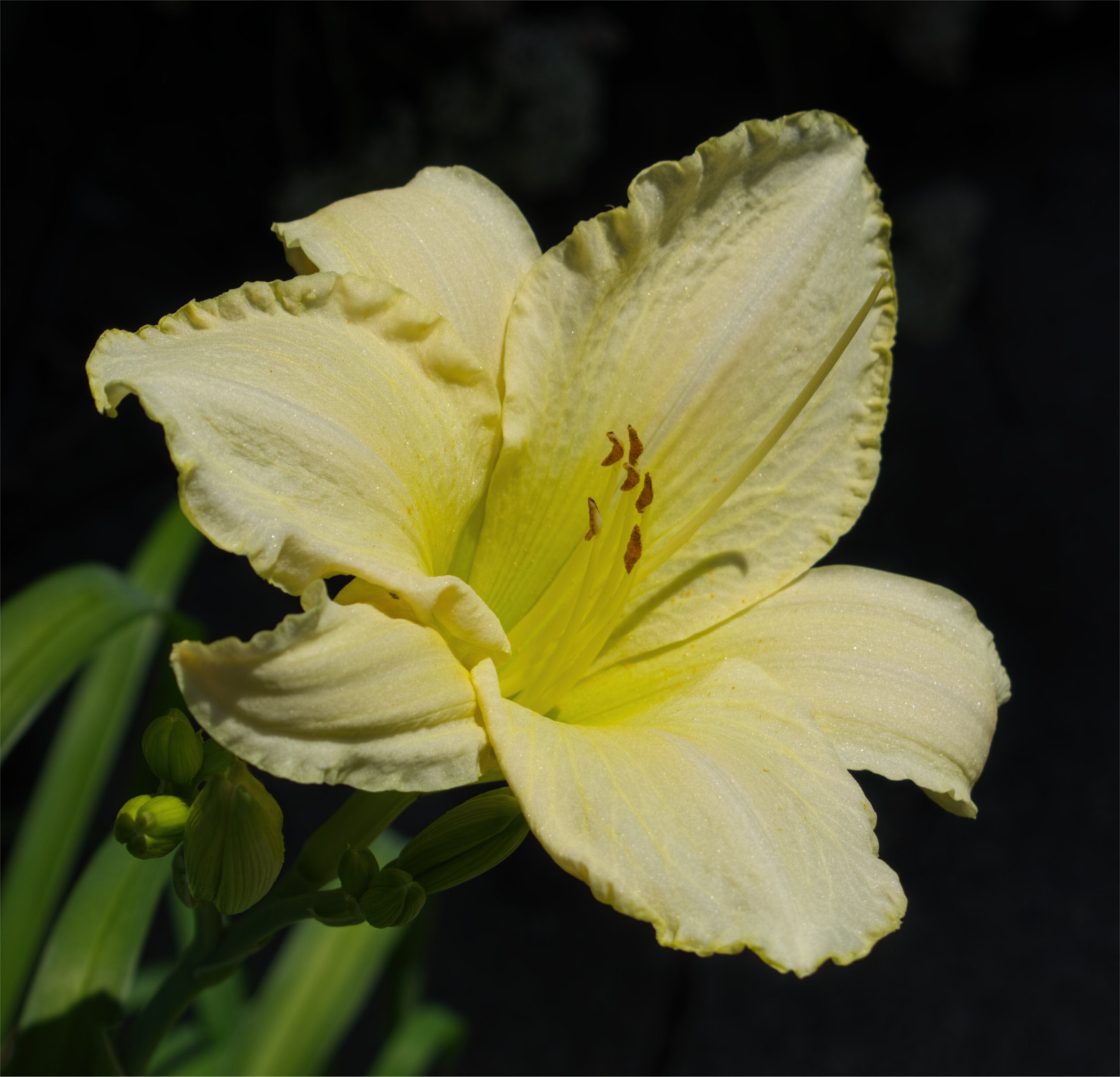
Meanwhile, “Snowy Apparition” is called “near white.”
Not very “near” to my eyes. I’ve seen pictures online in which it does look very pale, but the plant in my garden is definitely yellow.
It’s possible that in a different garden with different conditions, or photographed at different times of the day under different lighting, the colors may be truer to their descriptions, but calling these “pink” and “white” is wishful thinking. Still, even though the colors are not as advertised, they’re reliable plants that bloom well.
Nikolai Kapustin was born in 1937 in the Ukraine and started playing the piano at 7. He studied at the Moscow Conservatory where he worked with Alexander Goldenweiser. While in Moscow, Kapustin discovered jazz. He later cited Oscar Peterson as the most influential figure on his own music. Kapustin composes in the traditional forms — sonata, theme and variations, etc. — but uses a jazz vocabulary. You can argue whether his music is truly “jazz” — while it may sound spontaneous, every single note is written out — but it is lively, colorful music. Recordings by Marc-André Hamelin, Stephen Osborne, John Salmon1, and Kapustin himself can all be recommended. And perhaps those of everyone’s current favorite, Yuja Wang.
*****
The late Peter Schickele, in addition discovering the works of P.D.Q. Bach and composing listenable music of his own, had a weekly radio show, “Schickele Mix,” in which he discussed musical topics clearly and understandably for all listeners, musicians and non-musicians alike, using examples of all kinds of music, from Palestrina to the Everly Brothers. The show has been off the air for many years, but it is available as podcasts here.
More years ago than I want to calculate I saw Schickele in concert, where the pièce de résistance was the “Concerto for Piano Versus Orchestra.” I finally found a good video of the concerto.
*****
Here’s a website devoted to analyzing the music of that brilliant jackass, Frank Zappa.
Carl Stalling may be the best-known composer of cartoon music, but there were others of note, including Scott Bradley. Bradley wrote music for MGM cartoons, including Tom and Jerry and Droopy Dog. Unfortunately, there hasn’t yet been a “Scott Bradley Project” paralleling Stalling’s, and his music is hard to find. The one collection offered at the devil’s website is lousy and I can’t recommend it. Instead, hunt for the out-of-print Tom and Jerry & Tex Avery Too, a fuller and better-sounding compilation.
More cartoon music:
*****
Children Cry for Castoria — Nicolas Slonimsky, the compiler of the Lexicon of Musical Invective, many years ago used ad copy as the texts for songs:
Note on the videos: Four years ago I got absolutely disgusted with YouTube and refused to post any videos or even click on one. Since then, either the lizard people who run it stopped putting unskippable half-hour ads before every three-minute video, or the Brave browser has become better at blocking ads, so I can now watch videos without using very bad language. Therefore I am permitting myself to post a few YouTube videos. For now.
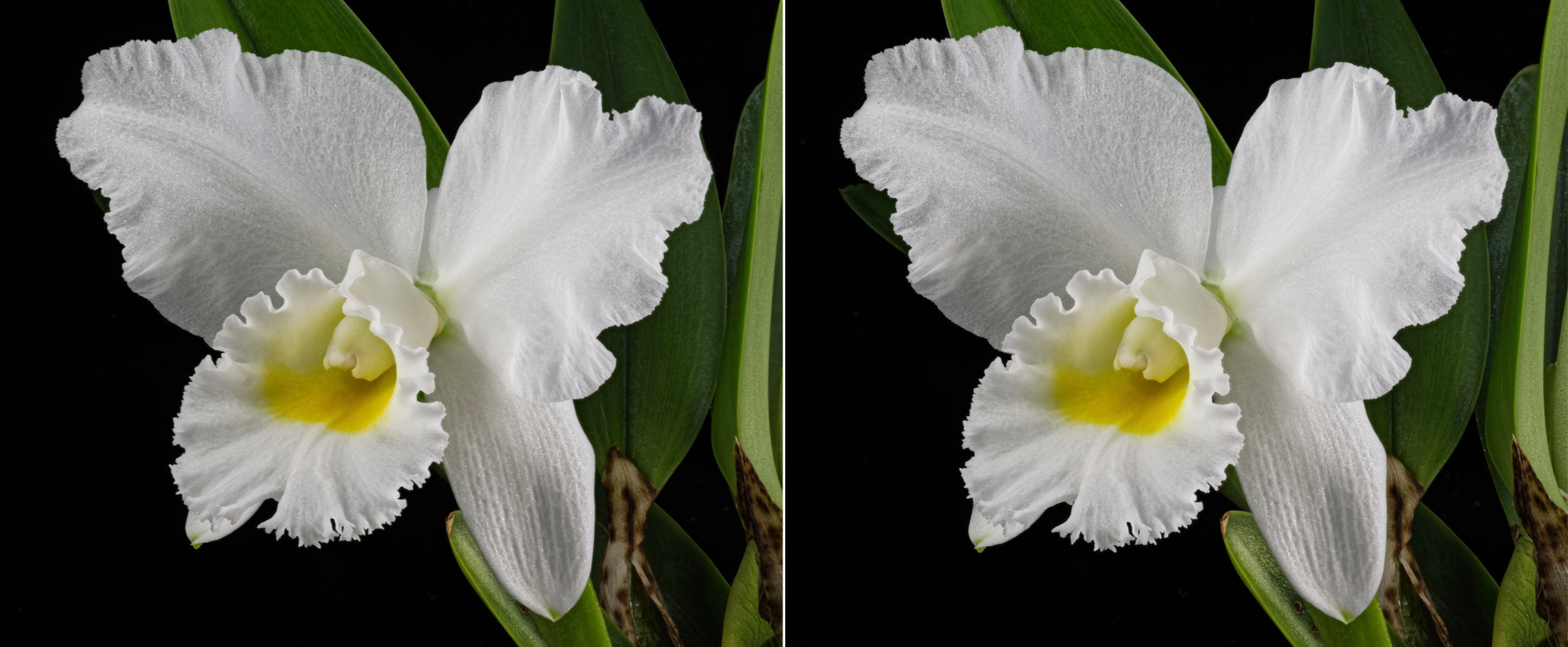
A new orchid opened this week. It’s a Cattleya hybrid from Sunset Valley Orchids, “Lc. Arctic Moon ‘Rochelle’ x C. Ruth Gee ‘Diamond Jubilee’.” The picture is a cross-view stereo pair; to see the orchid in three dimensions, cross your eyes so that you right eye focuses on the left image, and vice versa. It’s easier to do than to explain how.
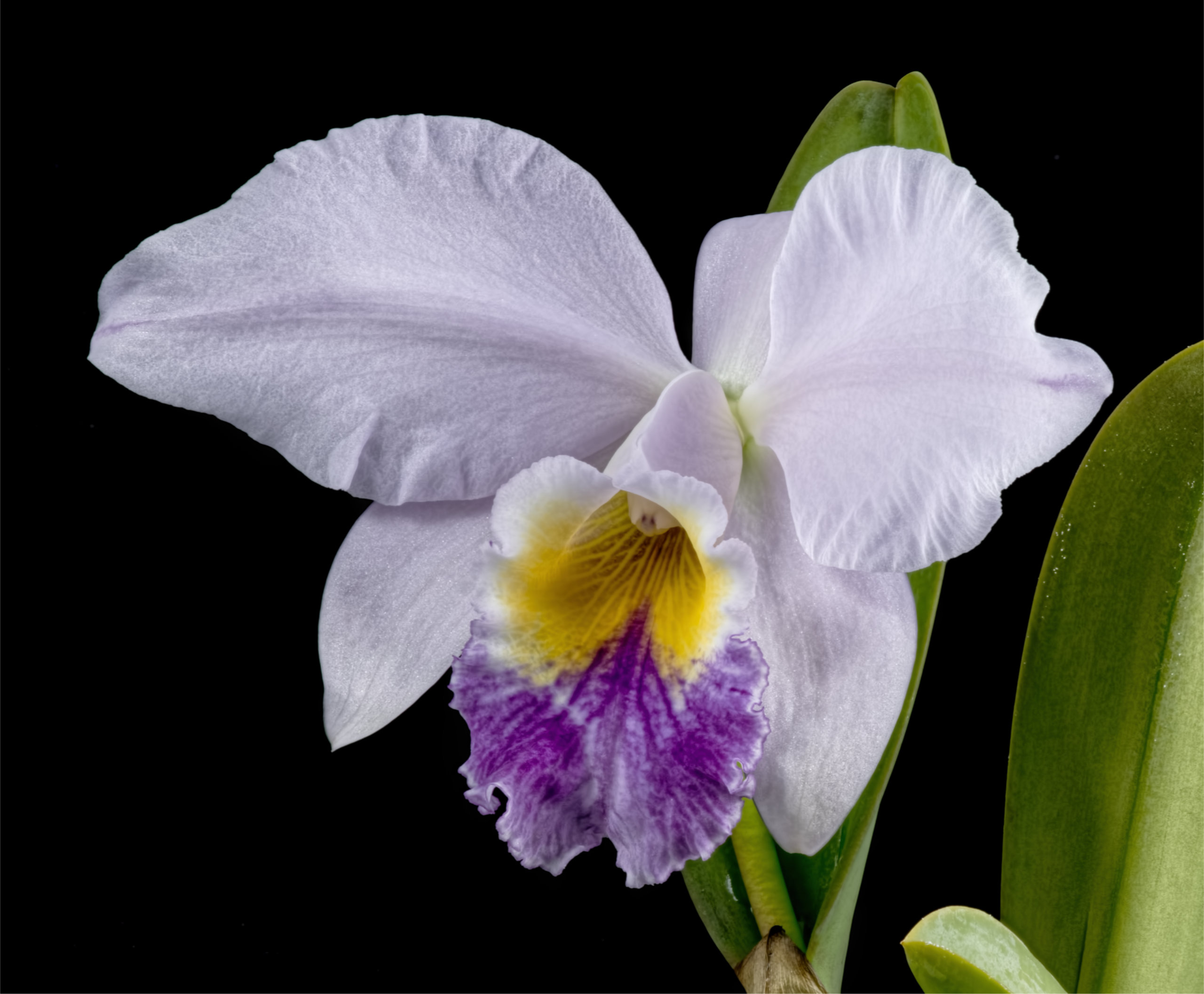
Another Catt hybrid, “C. mossiae f. coerulea ‘Blue Moon’ x L. sincorana f. coerulea ‘Dark Blue’,” is also in bloom. Fred Clarke listed this as a “blue” Cattleya, but it looks lavender to me.
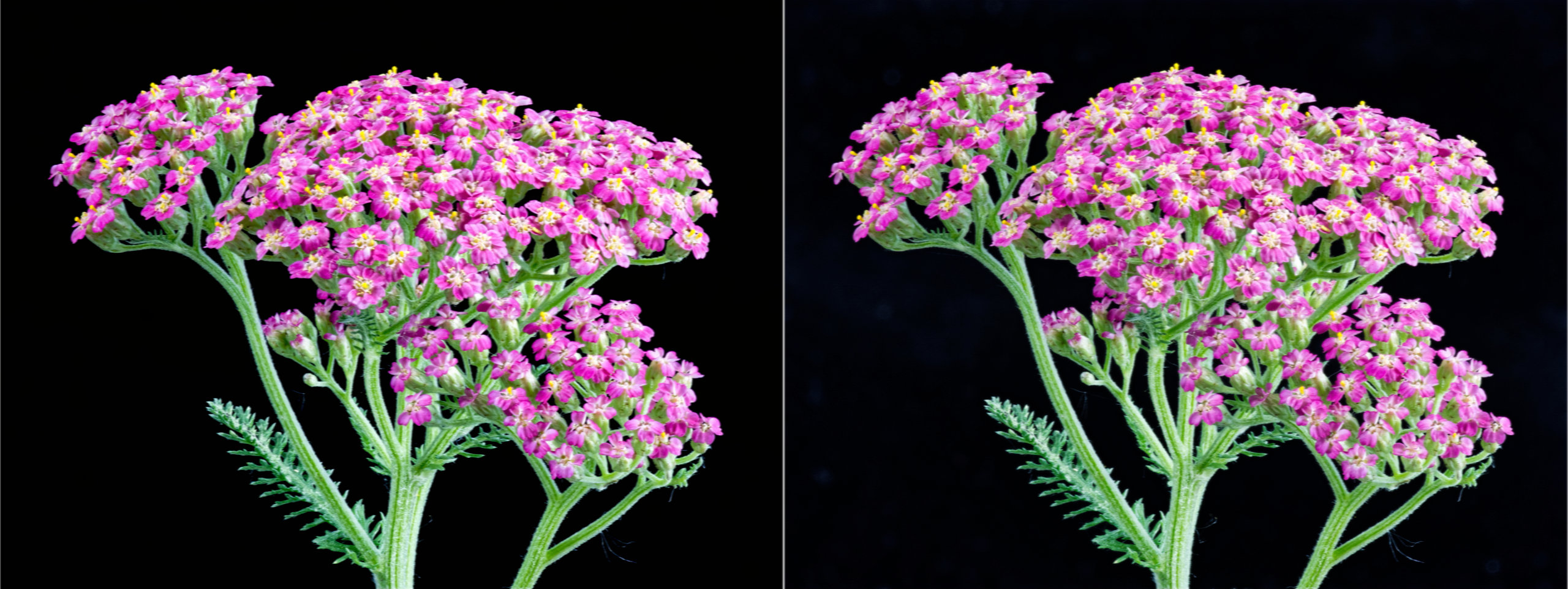
If you’d like more practice crossing your eyes, here’s an Achillea:
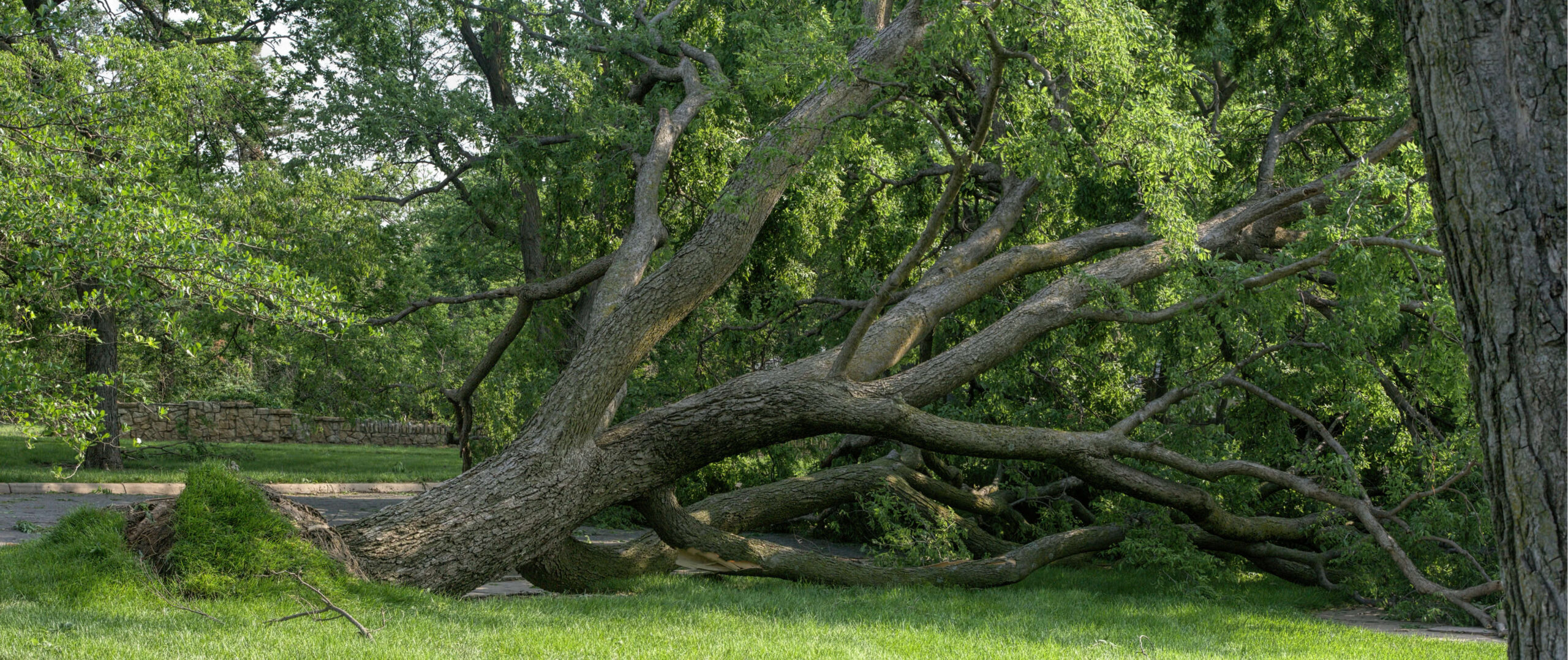
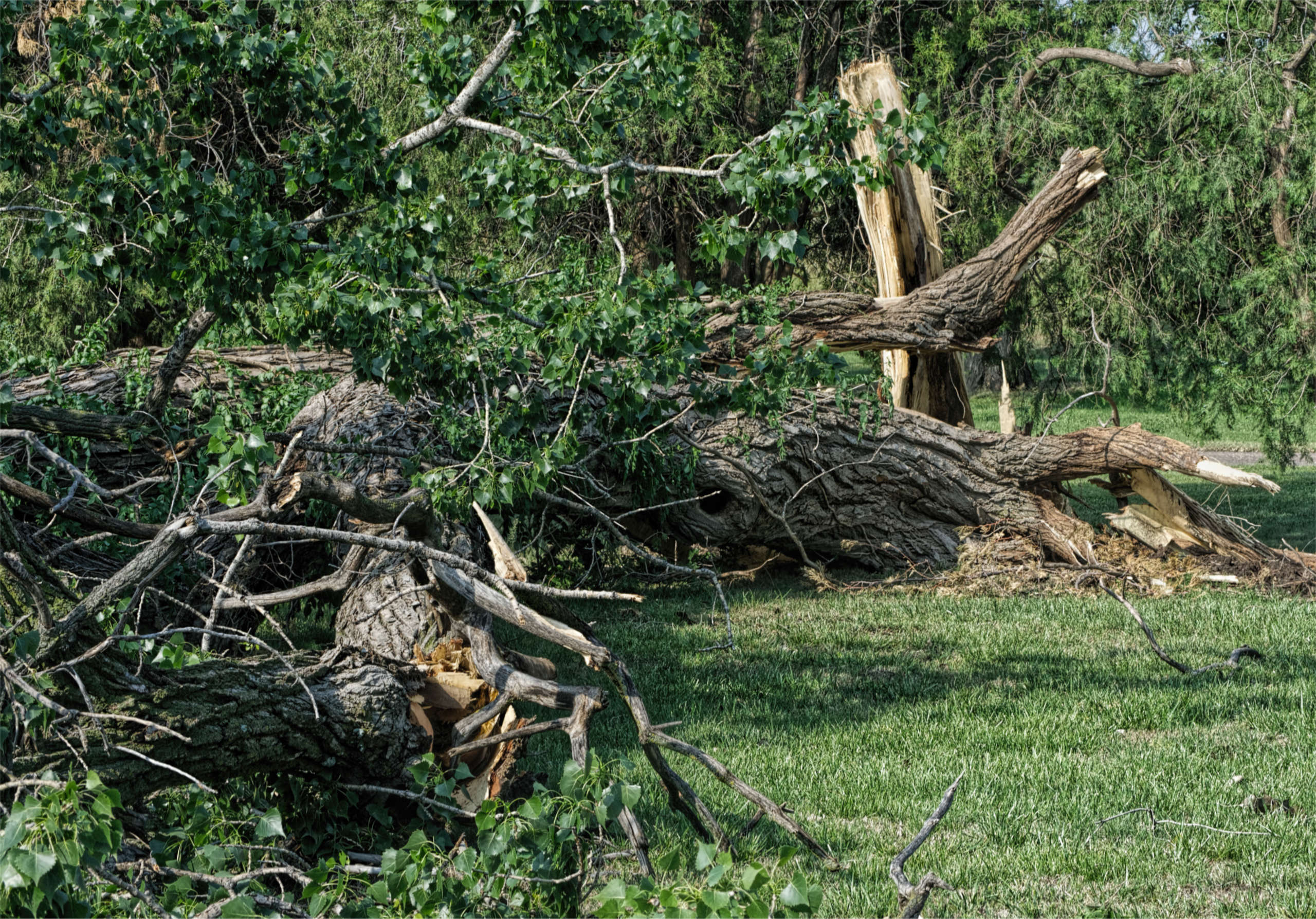
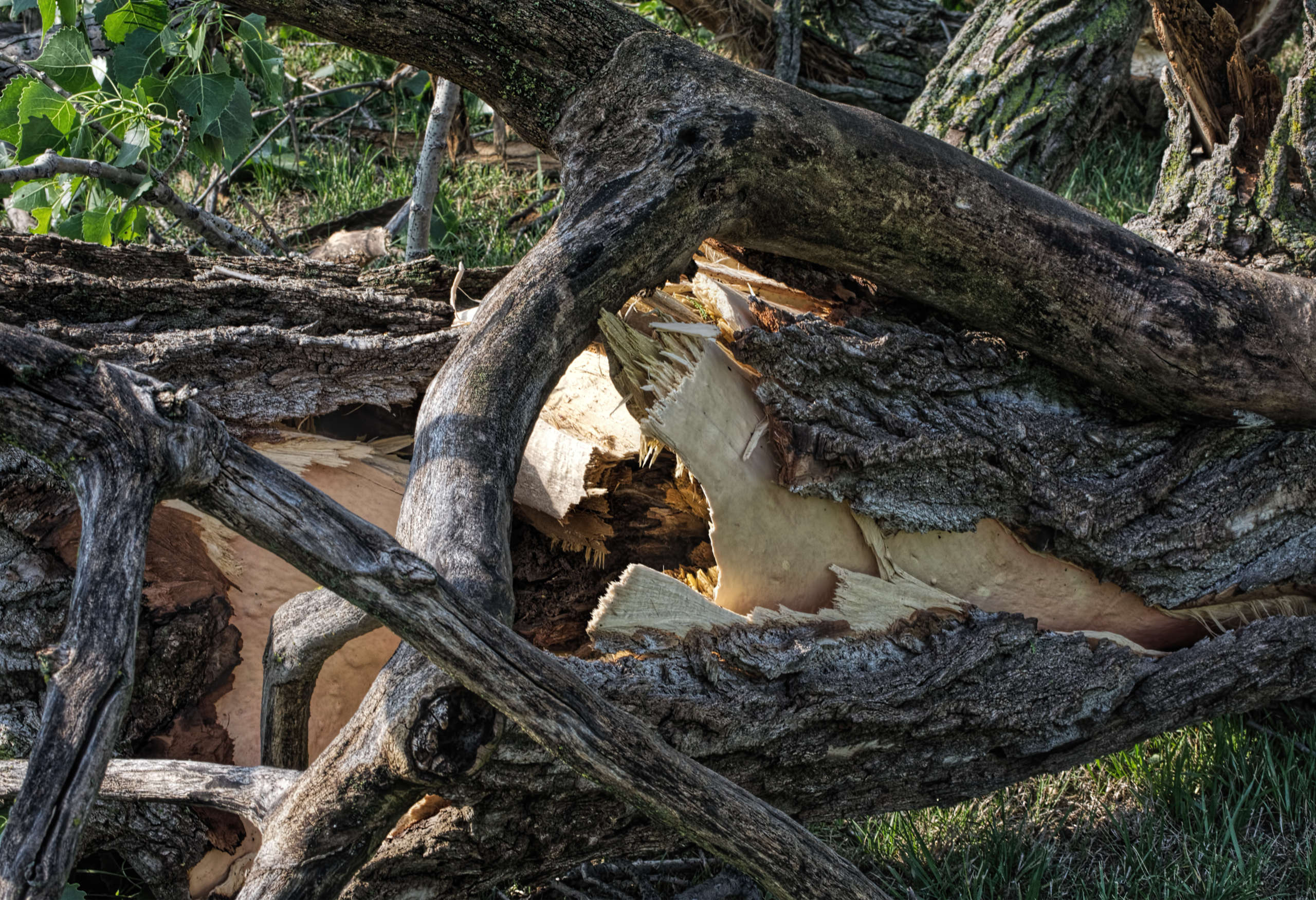
Sunday afternoon the weatherman declared that there was a 100% chance of rain that evening. As the afternoon became evening, that chance steadily diminished, and I figured we’d be lucky to get a trace of moisture. When the probability dipped down to 38% and it looked like everything was indeed going to miss us, I heard thunder. Then rain came, arriving horizonally at 86 mph.2 The wind uprooted trees all over town and snapped telephone poles. I was lucky and my place got almost no damage, but where the ash tree was that I used to see out the window while I sat at my desk is now just blue sky. The neighborhood did lose electricity for a day and a half — not surprising when the poles supporting power lines are broken into two or more pieces — but it’s back now. I was impressed with how quickly the worst of the mess on the street was cleared up. Yesterday morning, a fleet of pickup trucks from a nearby town brought a crew of about two dozen young men, who cleared the street and took chainsaws to the fallen trees and branches, leaving the debris neatly piled to be hauled away.
Stay far away from old cottonwood trees during stormy weather.
(The pictures were taken at a park at the other side of town but are representative of the storm damage.)
“Pre-Vatican II” includes everyone from the Hildegard of Bingen to Teresa of Avila to Edith Stein. Heck, it includes most of Dorothy Day and Thomas Merton’s writings. “Pre-Vatican II” includes the life, witness and prayers of St. Francis of Assisi. “Pre-Vatican II” includes, well, every single Catholic thing that emerged before 1962, I guess.
Kahlo was a minor talent inflated into a major one by identity politics (including Mexican nationalism) and artworld access provided by marriage to Diego Rivera, the great Mexican muralist. She is the darling of women who once cried over Sylvia Plath and grew up to carry @MeToo tote bags. Her painting was a relentless obsession with herself as sign and symbol of eternal female suffering—Frida, Woman of Sorrows. Her prominence owes as much to the maudlin chauvinism of her work as on the names she slept with.
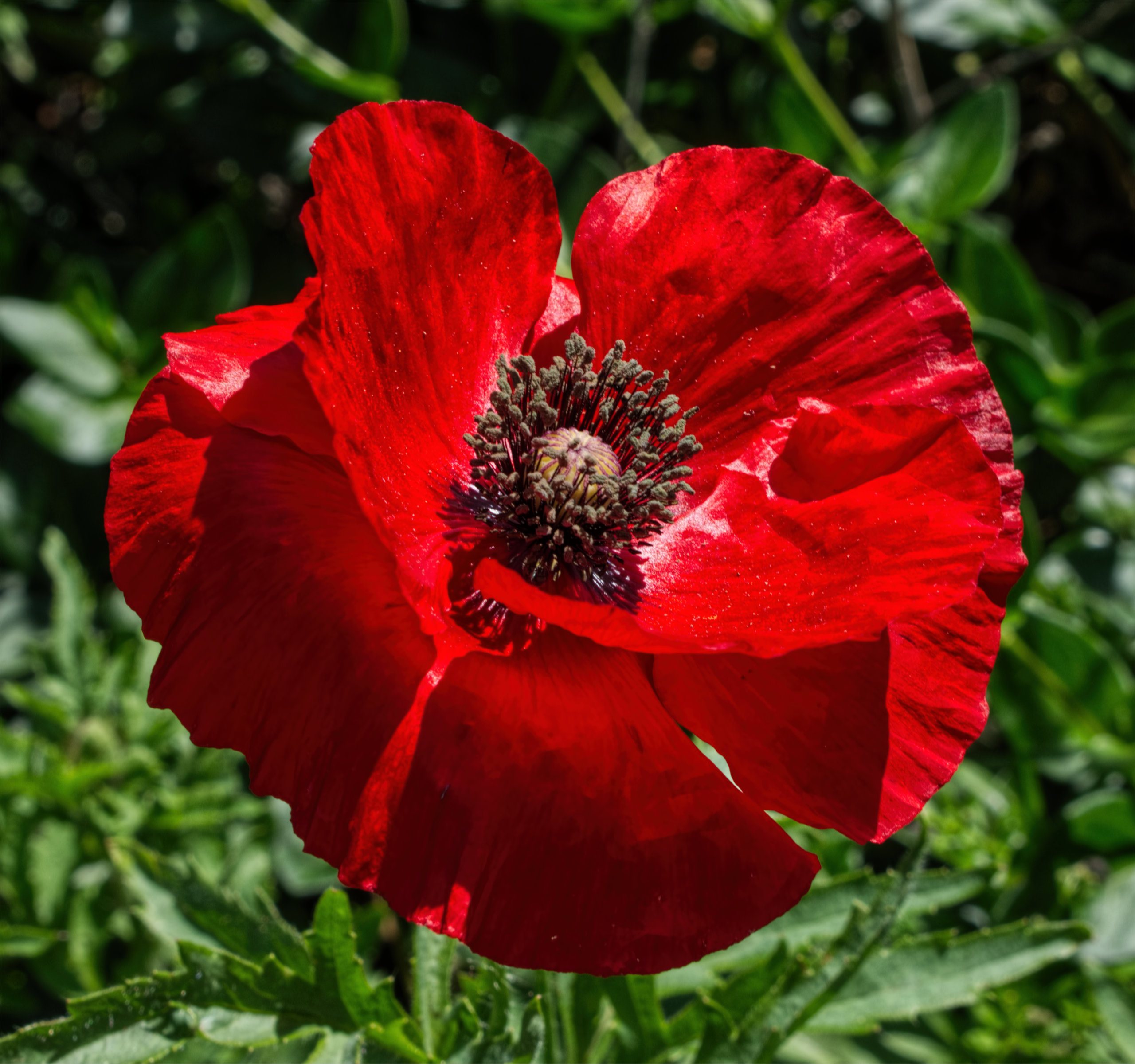
Eventually I’ll get back to books, music, animation and the collapse of civilization, but for the moment my focus is on my garden. Here are some recent pictures. There are more at my Flickr page.
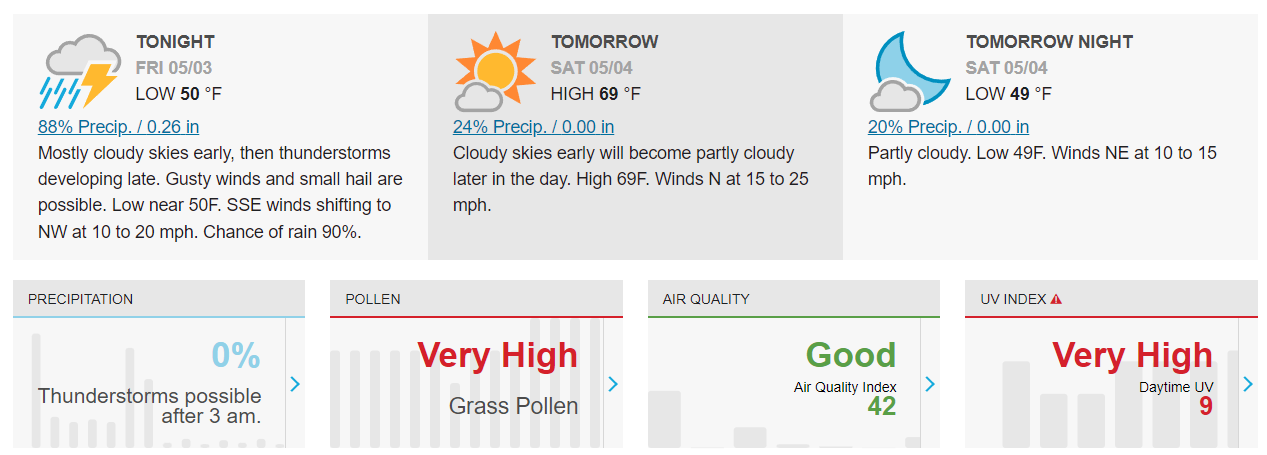
… will it rain? While much of the prairie has been getting an overabundance of weather, out here in the middle of nowhere there has been virtually nothing. April showers this year amounted to .16 of an inch. It’s dry, and we need some real rain, not just a bit of drizzle. Yesterday the weatherman predicted a 100% chance of rain tonight, and I thought, yeah, right. He’s predicted heavy rain many times this year, but as the moment approaches the probability diminishes, the “thunderstorms possible after” time gets later and later, and ultimately that inch of rain becomes just a trace, or nothing.
Tonight, however, it looks like rain might actually fall. The chance of rain is at 90%, not the 60% or 40% that it would typically have been reduced to by this time. The arrival time has been postponed to after 3 a.m. and the amount expected is down to a quarter inch, which are not good signs, but nevertheless it looks like we might get enough moisture to make a difference.
Update, the morning after: We got about an inch of rain, starting shortly after midnight.
Despite the dryness the garden is doing well. Snapshots are below the fold.
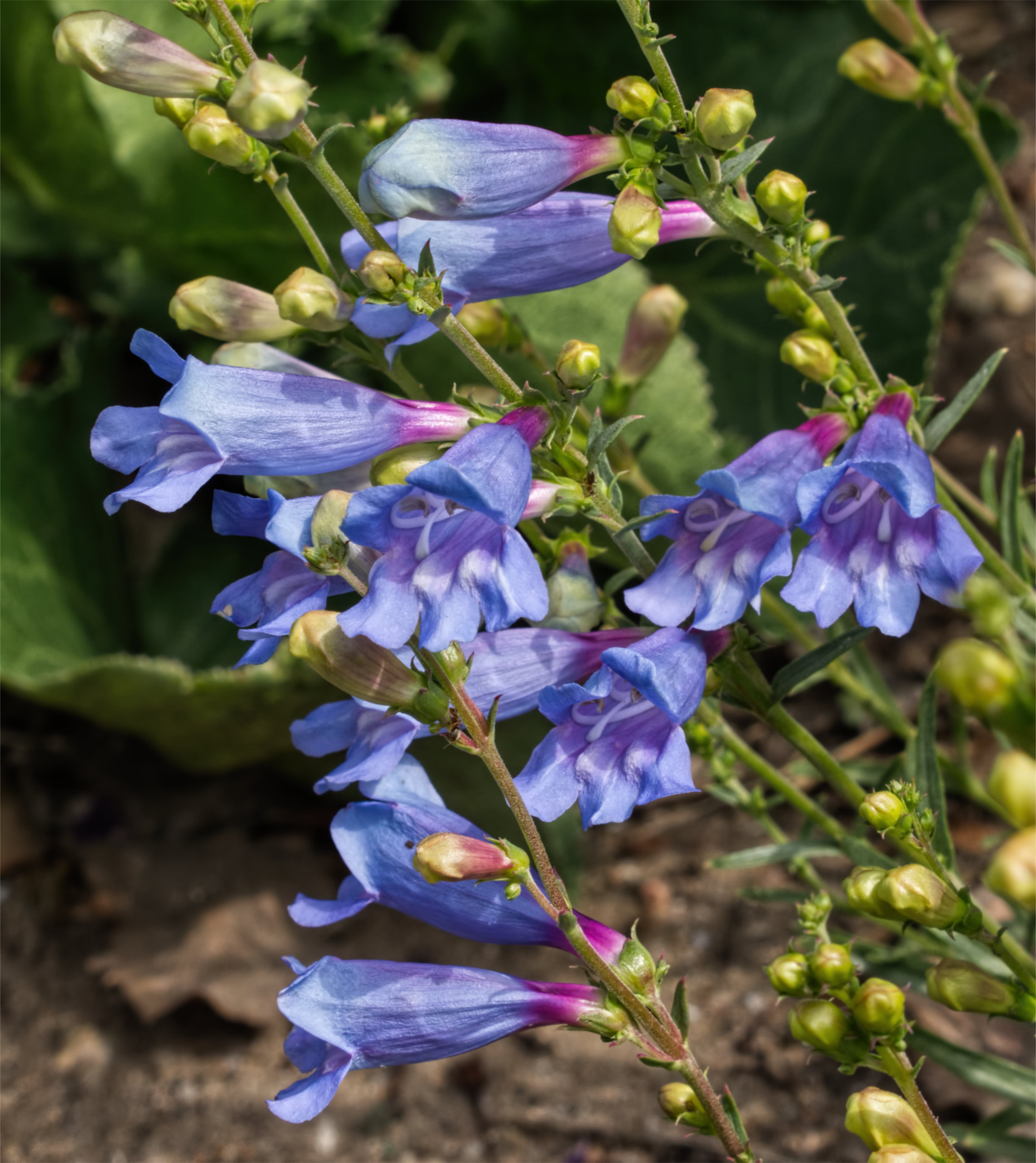
The first of the penstemons opened this week. The others I planted last year are heavily budded and should put on a good show over the next couple of months. This year I put in a bunch more, focusing on blues and reds, to see which species will survive in Kansas.
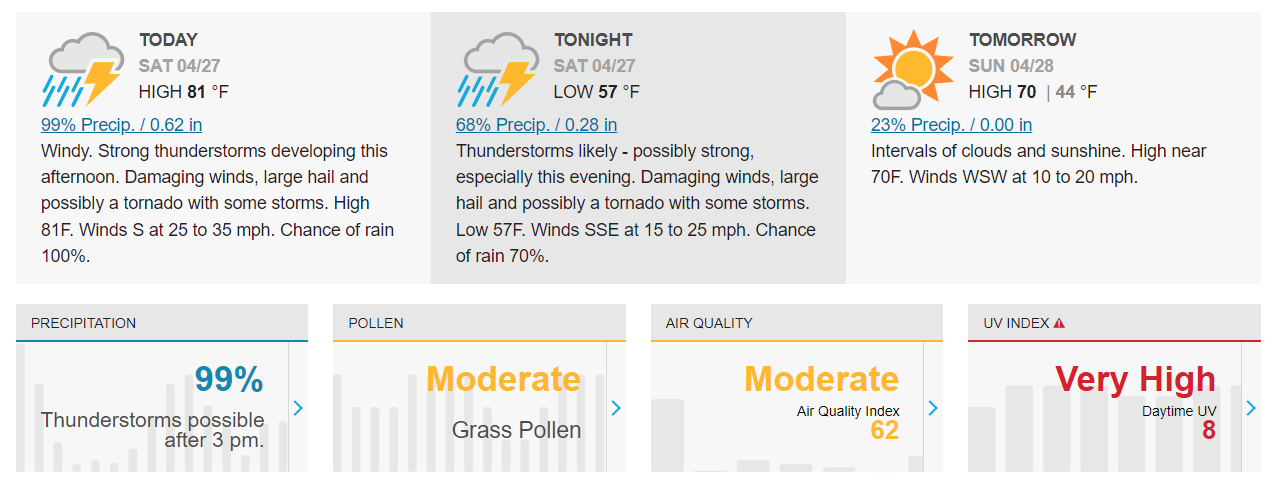
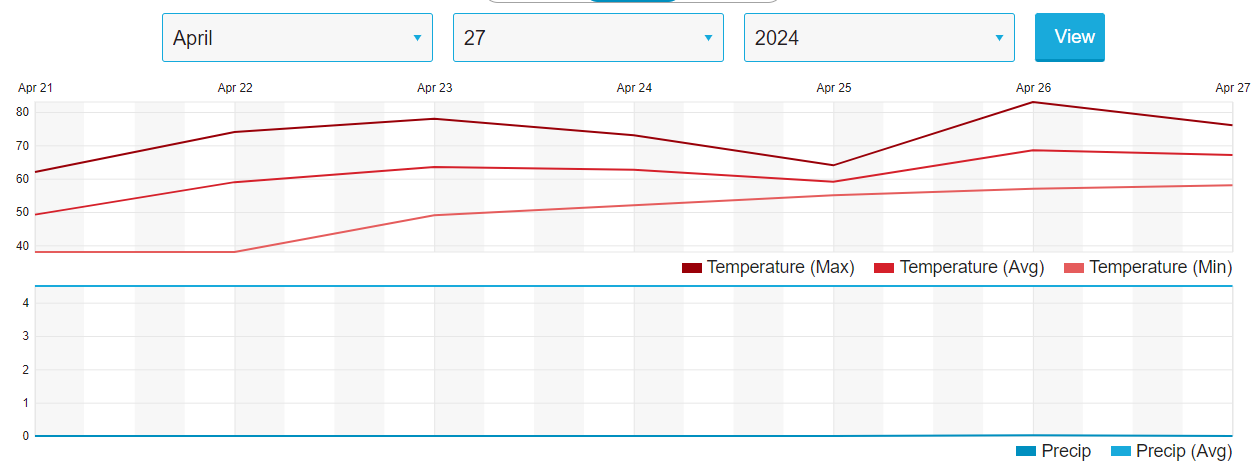
This is the forecast for the afternoon. It looks promising, and there’s even a tornado watch, but I don’t know if there will actually be any measurable precipitation. Several times earlier this week the weatherman has promised 50%, 60%, 70%, 80% chances of rain. Here’s what we got:
The garden needs water, but I don’t want to get out the sprinklers if we’re going to get an inch of rain. I’ll just cross my fingers for now.
Update: All the interesting weather missed us, which is fortunate. However, we only got half of a tenth of an inch of rain overnight, which is not enough. I’ll need to water everything.
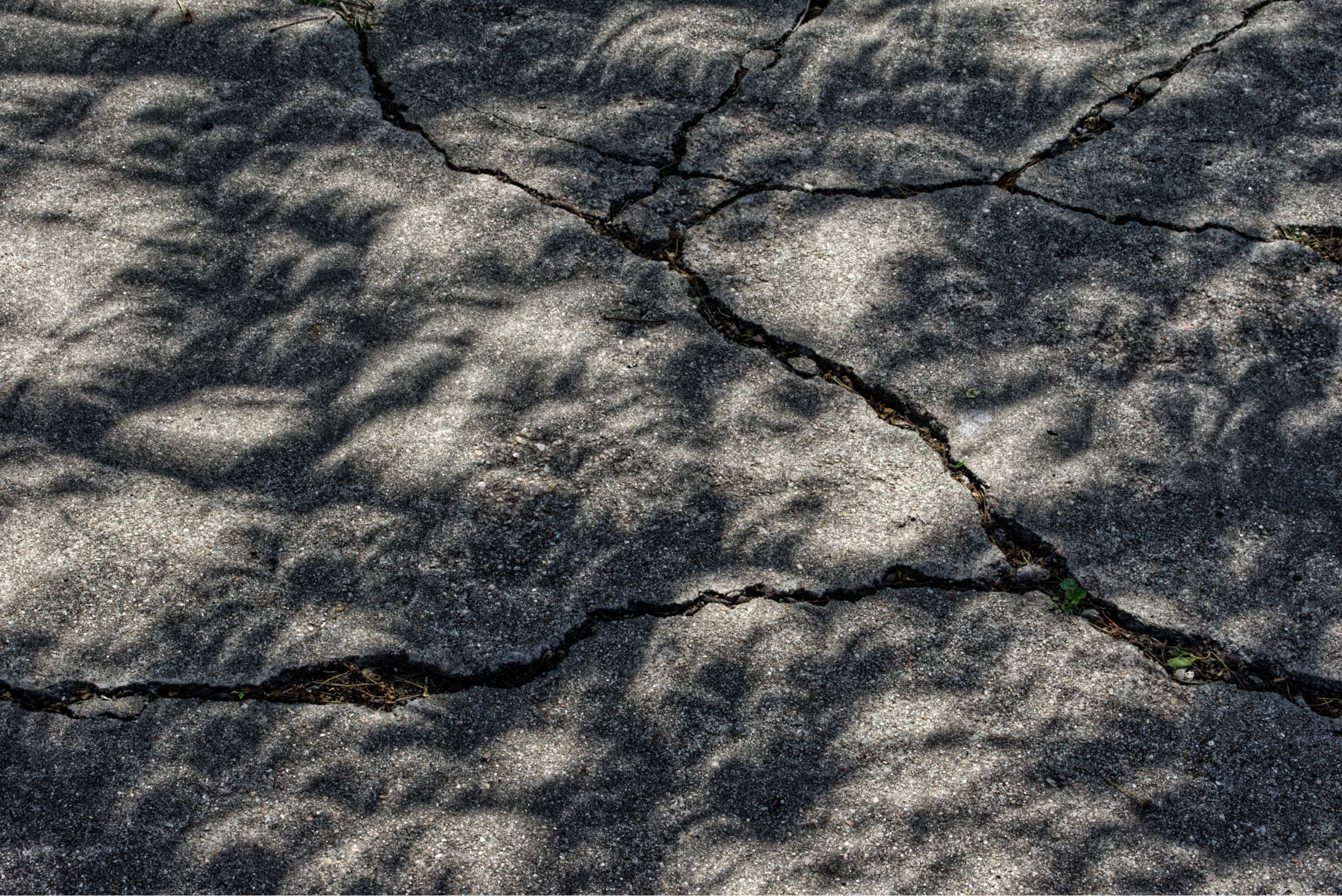
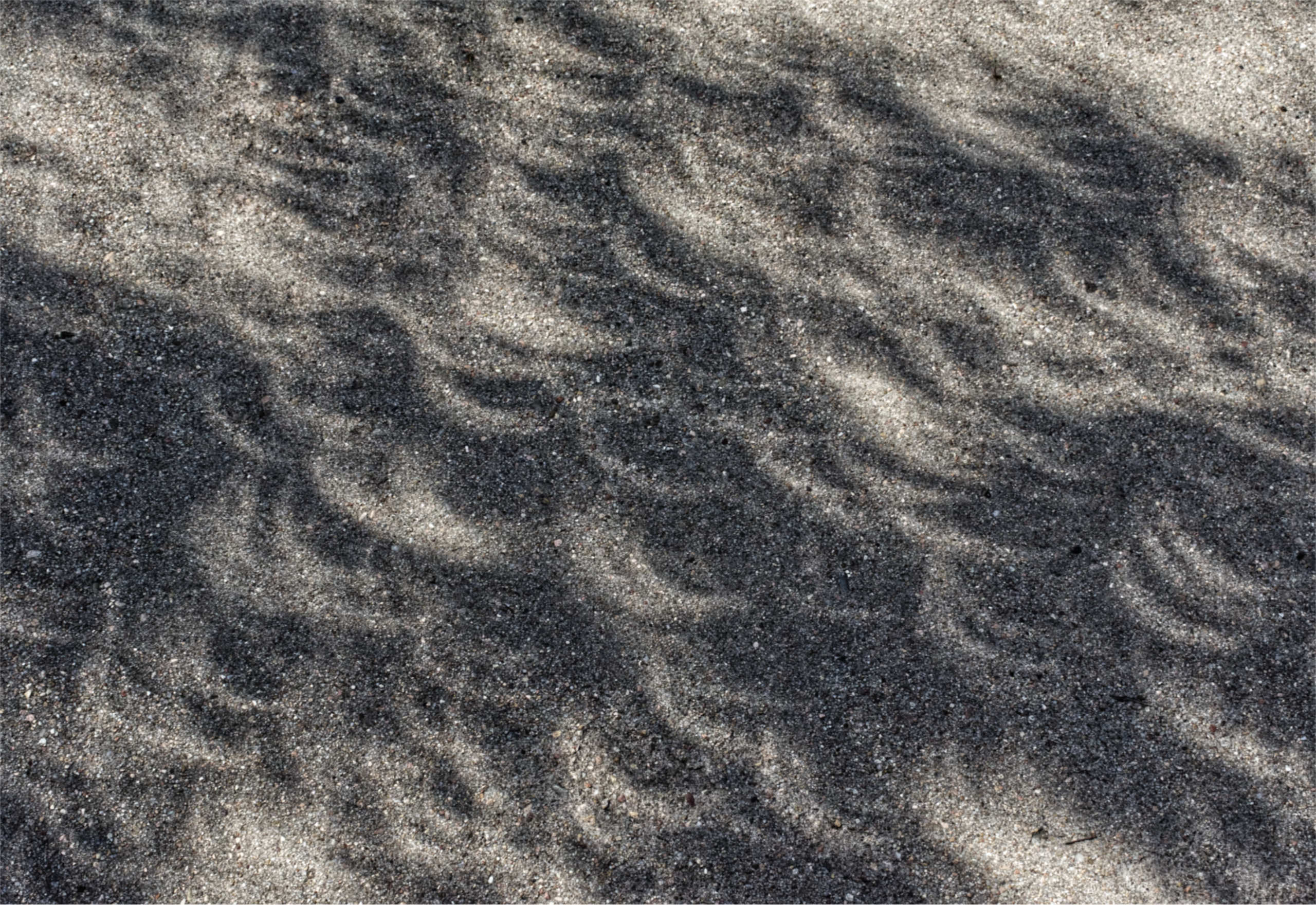
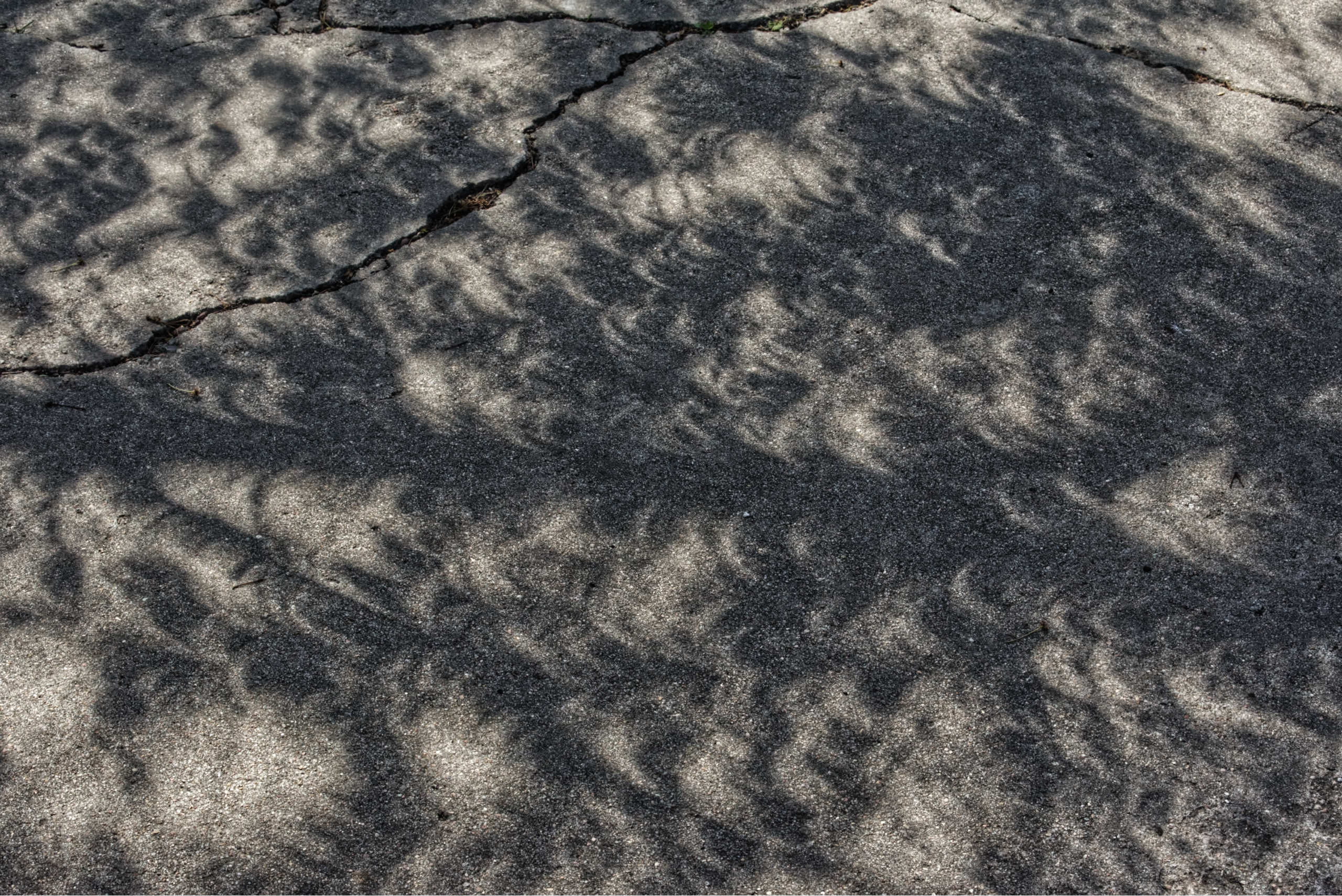
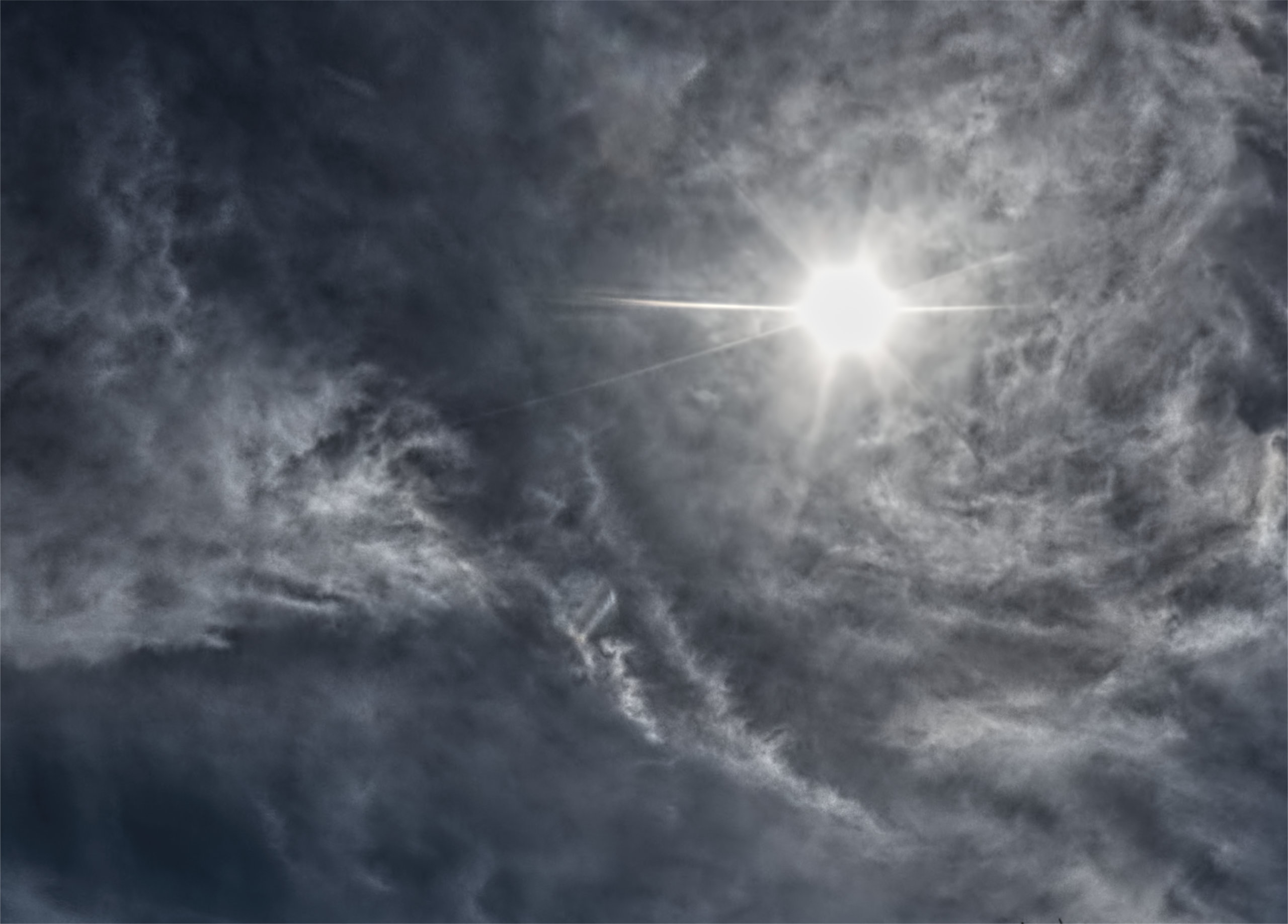
I don’t have the proper filters for directly photographing the sun, so I pointed the camera down during today’s eclipse to record the crescent suns on the pavement.
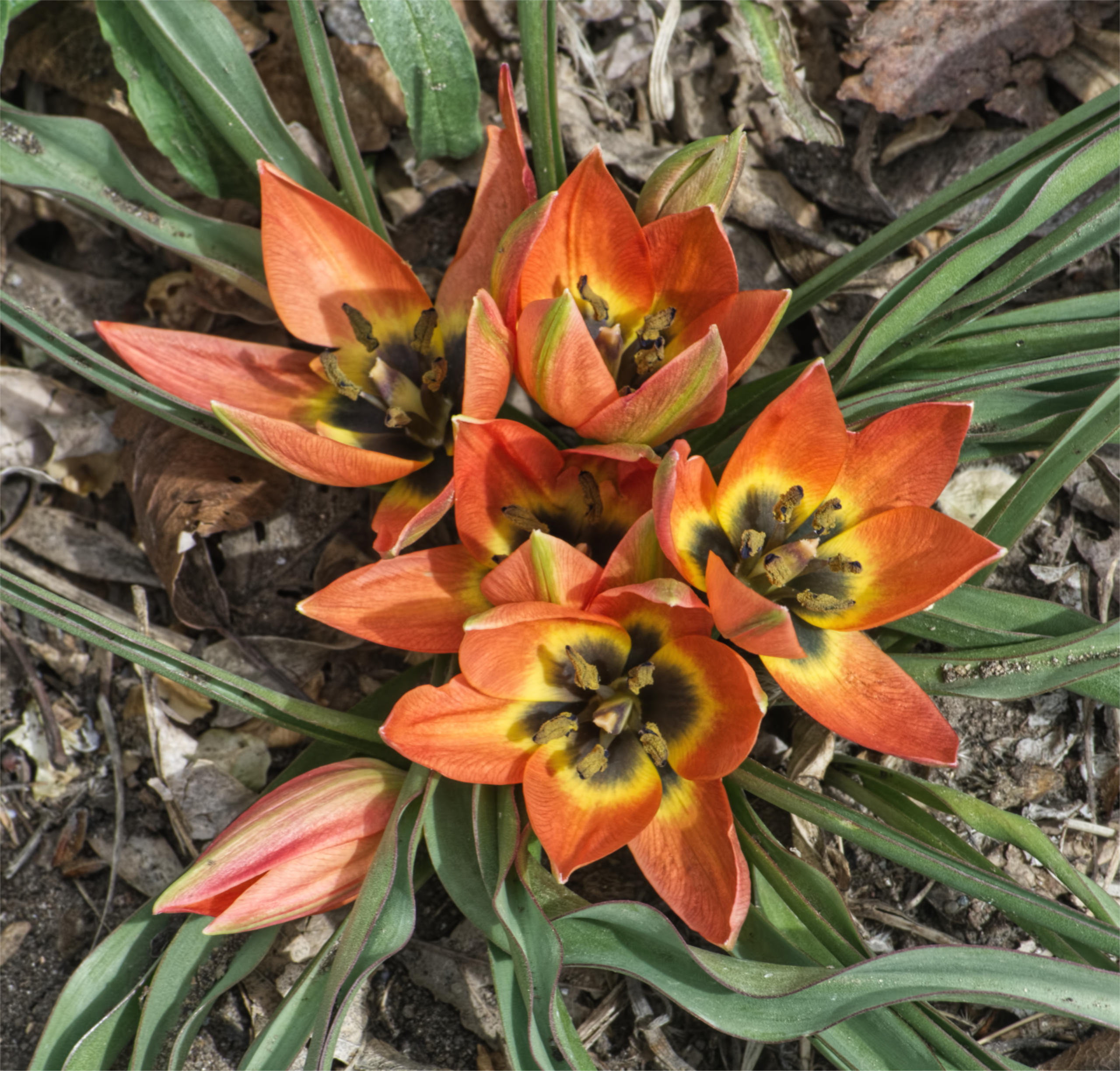
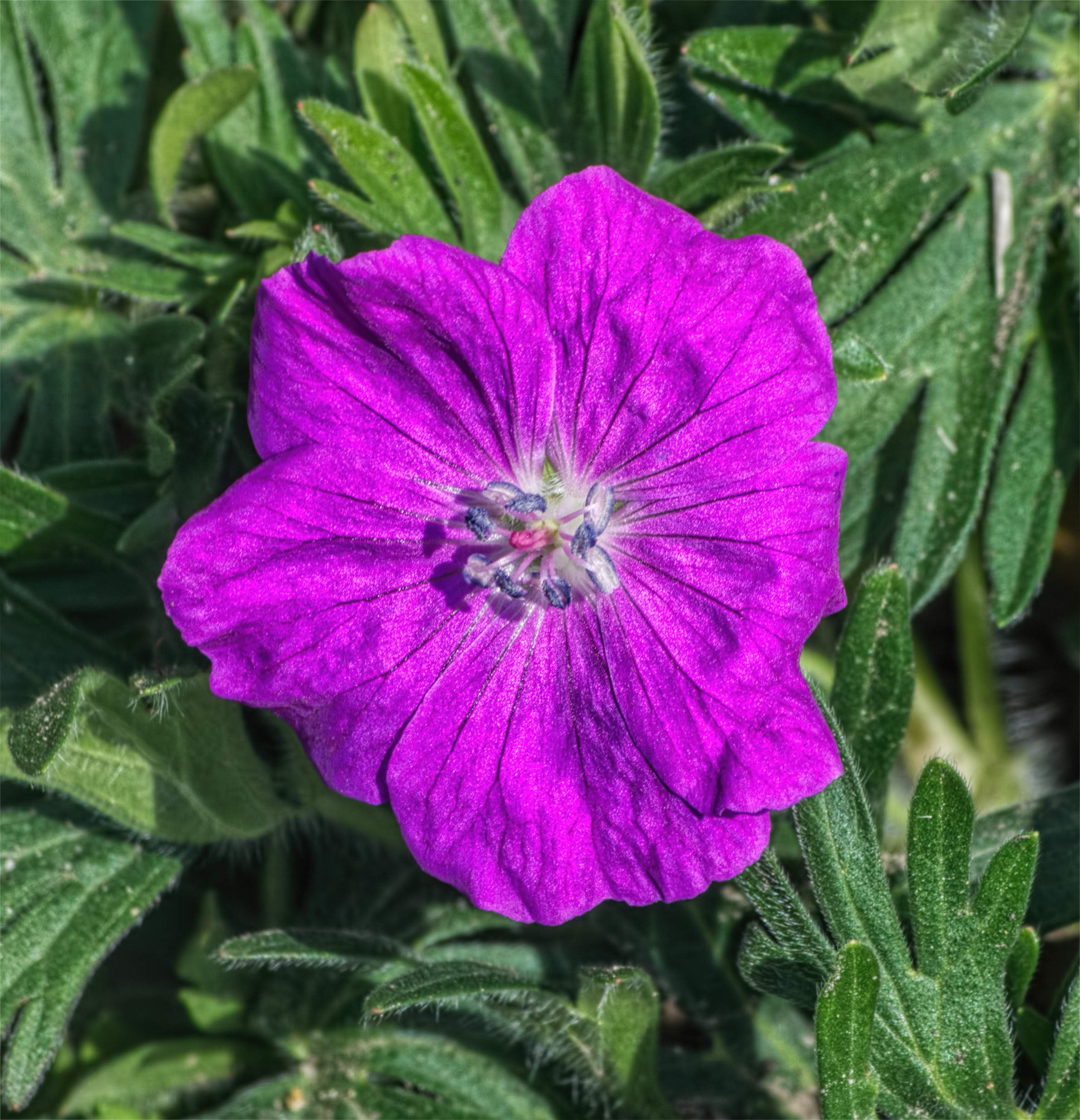
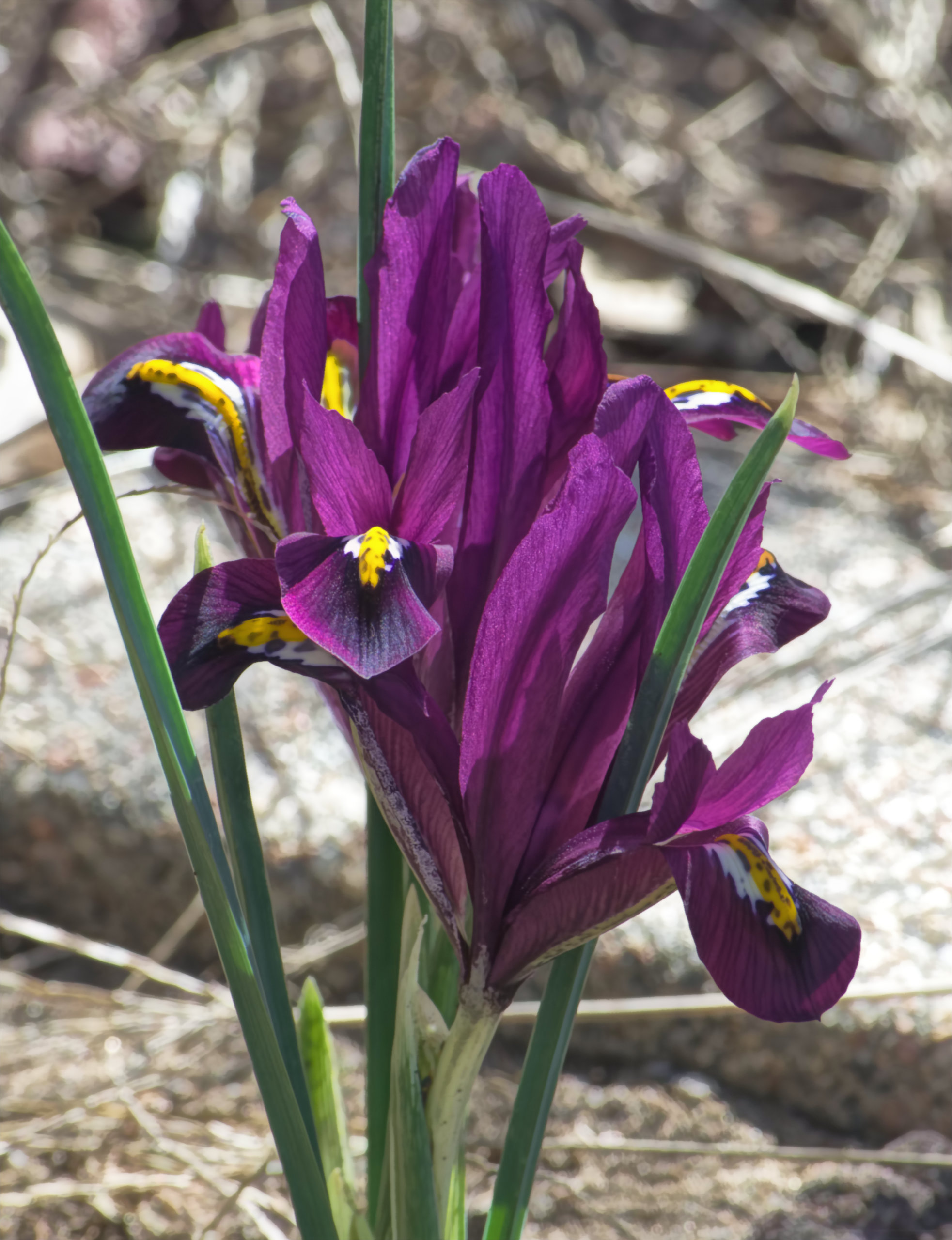
Spring is definitely here, about three weeks early. The 16℉ late in March did surprisingly little damage, and most things are rapidly growing. Here are a few of the current highlights.
Unidentified species tulipUnlabeled hardy geranium, probably a form of G. sanguineum
***
Grr. WordPress logged me out while I was assembling this post. Even though the “Howdy” message remained at the upper right, I couldn’t see the page preview. I had to relog using the login under the “Meta” heading on the weblog page to finish this post.
Joseph Moore’s most recent post mentions the Iron Chancellor. That reminded me of a bit of horticultural history.
One rose I grew many years ago was a fine white hybrid perpetual called “Frau Karl Druschki.” That’s a bad enough name, but it could have been much worse. From an online discussion:
According to a reference, for some years from 1900 there was an annual competition for the best new seedling of German origin, to be named ‘Otto von Bismarck’. The rose described here is pink, from 1908. However there is an illustration dated 1900. Was that a different rose? (Or as a passing thought, a typo?)
1900 was the year that the rose eventually named ‘Frau Karl Druschki’ was entered in the competition….
… ‘Frau Karl Druschki’, at the time still unnamed, had participated in the original competition in 1900, but the judges found no rose to be good enough to be called ‘Otto von Bismarck’. So, Lambert named his rose FKD and commercialzed it and was out of the game. The original prize money of 1000 Marks was increased first to 2000, then to 3000, to no vail – nothing was good enough! Finally in 1906 Kiese’s rose made it. The irony is that FKD went on to become one of the hottest introductions of the early 20th century, while Kiese’s ‘Otto von Bismarck’ almost disappeared.
You can call the rose “Snow Queen” or “Schneekönigin” if you find “Frau Karl Druschki” too clunky.
But amid the usual carnival of perversity there was one bijou we thought might interest our readers. No, it has nothing to do with, you know, literature. The denizens of the mla and indeed of the humanities departments of most of our universities wouldn’t countenance anything so retrograde. But how’s this, a session on “Vegetal Afterlives”?
“Advancing recent work in critical plant studies”—“critical plant studies”? alas, yes—“asking how plants offer vibrant models of resistance to environmental destruction through their persistent attempts to create a Plantocene, . . . panelists focus on the theme of vegetal resistance, considering how plants can offer models of resistance for human crises like systemic racism, unnatural disasters, and climate change.”
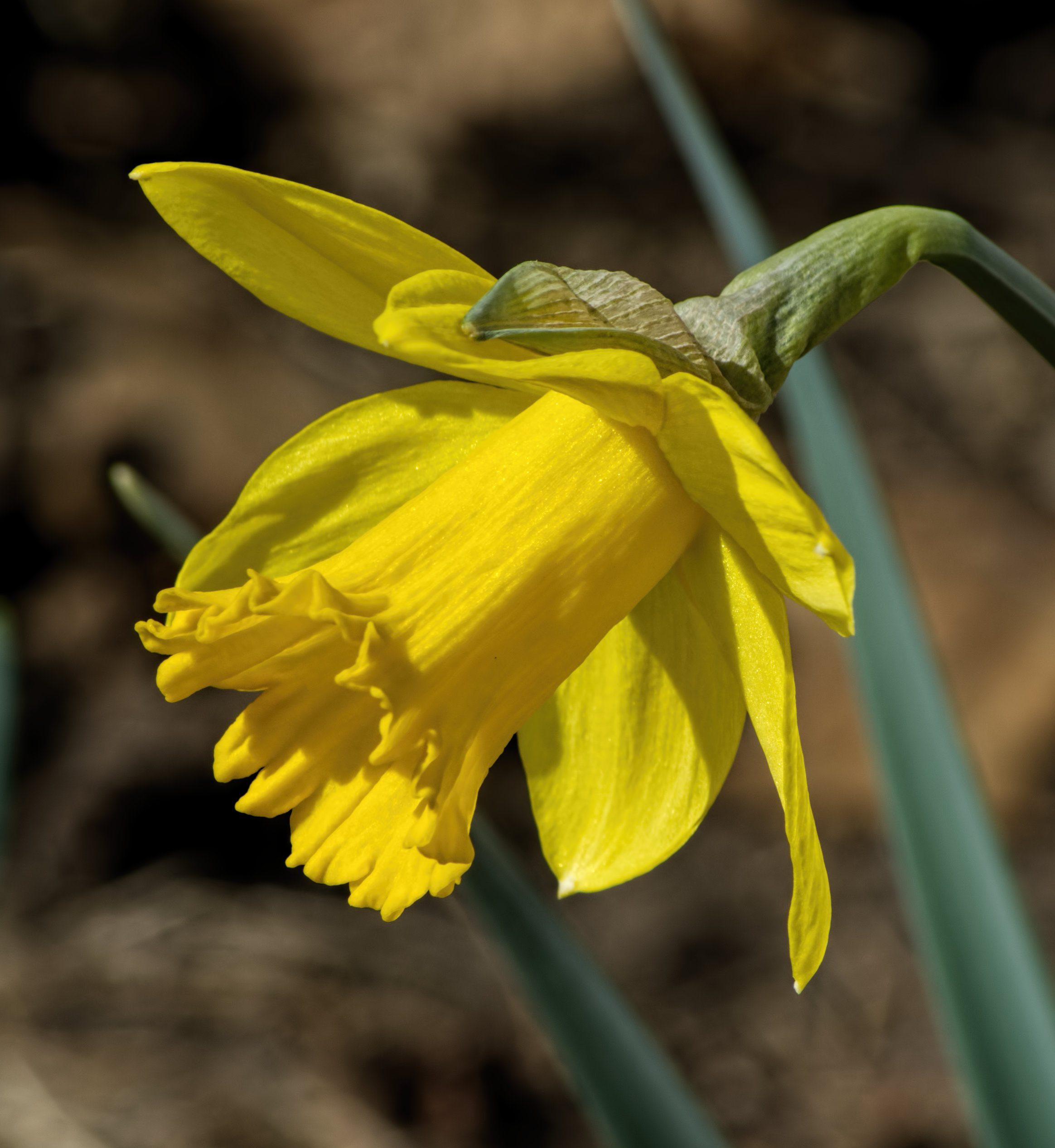
After a brutal January, it looks like we’re heading for an early spring. The daffodil above opened yesterday, unscathed by the 13℉ freeze Saturday morning. This is the second-earliest daffodil I’ve seen in Kansas. (The earliest bloomed February 17 fifteen years ago.) The forecast for the rest of the month looks like late March or early April. The weather may well double-cross me in March (it occasionally happens that the heaviest snow of a winter falls on March 20), but it’s probably time to clean up the garden and get it ready for this year’s experiments.