Miscellaneous quotes, decline and fall edition

Fillyjonk:

… something I read in this week’s The Week that is one of the sadder things I’ve heard recently: apparently animal behaviorists have found some dogs are “depressed” because of a lack of eye contact – because their owners spend so much time staring at their smartphones….

The Z Man:

The classical period featured a celebration of human beauty. The artists strove to capture the ideal of man in those beautiful statues we still have today. The medieval period had the celebration of God and his love for man. Walk into an old cathedral and you immediately feel the essence of that relationship. Of course, our canon is packed with poetry exploring the beauty of life, all of which was composed in a prior age, by men who are strangers to us now.

Walk into a modern building today and you know what it is like to be in the chute at a slaughter house.

William Torrey Harris, U.S. Commissioner of Education 1889-1906:

Ninety-nine [students] out of a hundred are automata, careful to walk in prescribed paths, careful to follow the prescribed custom. This is not an accident but the result of substantial education, which, scientifically defined, is the subsumption of the individual.

and

The great purpose of school can be realized better in dark, airless, ugly places … It is to master the physical self, to transcend the beauty of nature. School should develop the power to withdraw from the external world.

*****

Continue reading “Miscellaneous quotes, decline and fall edition”

Remembering Steven

Last Sunday marked the second year since Steven Den Beste’s last post. The internet has not been the same since he’s been gone. I miss checking Chizumatic first thing when I crank up the computer in the morning. He was by far the most indefatigable commenter here, and seeing his avatar when I review old posts is a bittersweet pleasure.

I’d occasionally read USS Clueless, but it was his commentary on Serial Experiments Lain (summarized here) that made it clear he was someone I could take seriously. He remains the most reliable guide to Japanese animation that I’ve found; if you’re interested in the period from Dirty Pair to Girls und Panzer, his reviews are a good place to start.

The sylph with the hairy chest

A pas de deux from the 1935 ballet Светлый ручей (The Bright Stream), with music by Shostakovich, libretto by Adrian Piotrovsky and choreography by Fedor Lopukhov, re-choreographed by Alexei Ratmansky for the ballet’s 2004 revival. There’s a story behind the ballet, and not one with a happy ending: “A work meant to be light, entertaining, and uplifting had proved the downfall of its creators.”

Winfield, at last

At the Beautiful Music booth

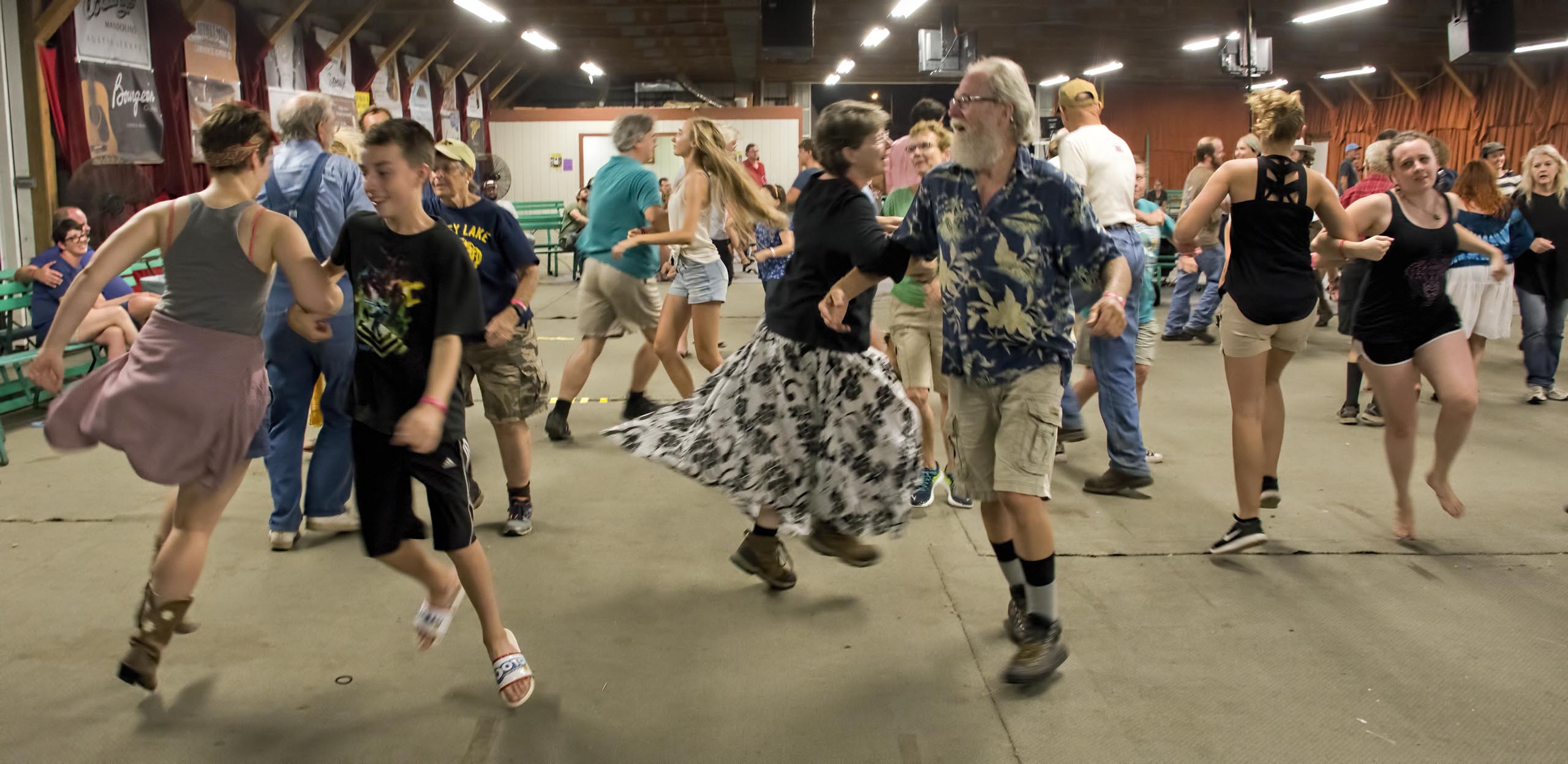
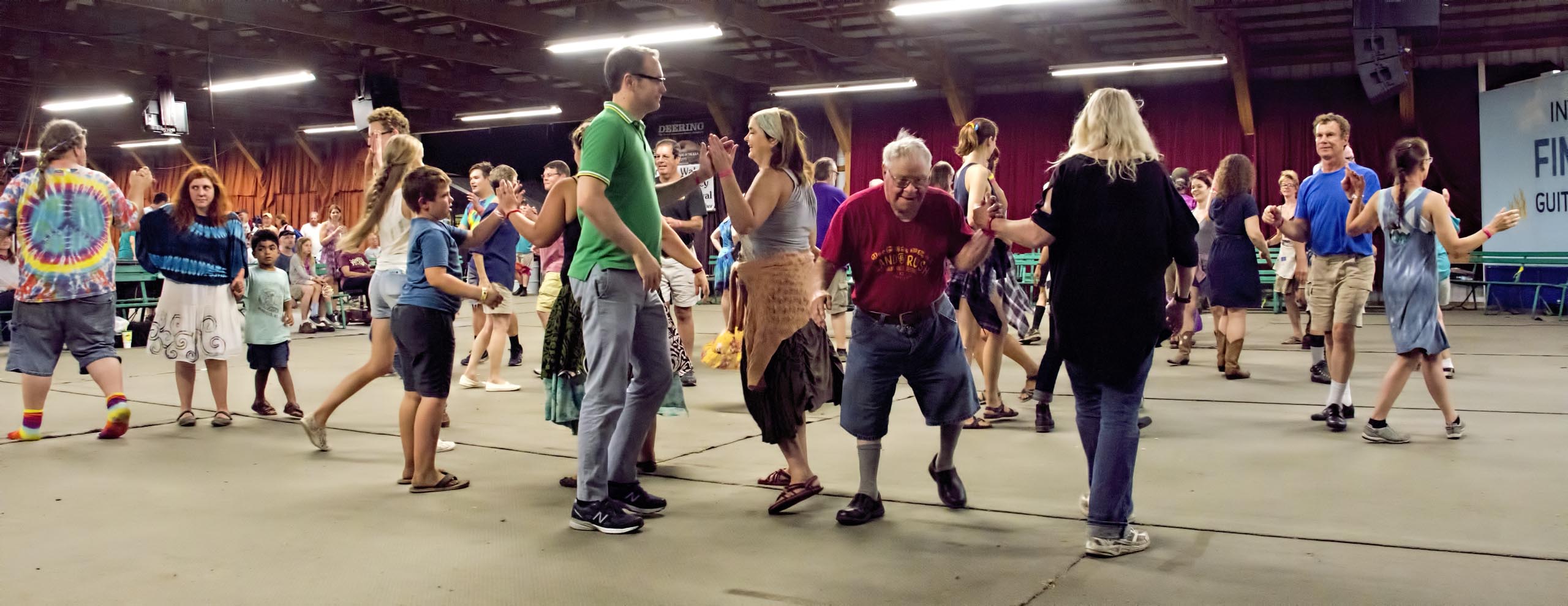
I thought I’d grabbed just a few snapshots at this year’s Walnut Valley Festival two weeks ago, but when I got home I discovered I had over a thousand frames. I finally sorted through them all. Here are a couple; there are more here and here.

Contra dancing

The fiddler in the contra dance band Friday evening was Roger Netherton, whom I’ve mentioned here many times. His first CD is finally available. If you like old-time fiddle or just enjoy good music, check it out.

Saliva as a cleaning agent, voodoo dolls in the office, medical applications of roller coasters, and more

The 2018 winners of the IgNobel Prize were announced earlier this month, recognizing noteworthy research in many fields. Perhaps the most provocative this year was the Nutrition Prize, awarded to James Cole “… for calculating that the caloric intake from a human-cannibalism diet is significantly lower than the caloric intake from most other traditional meat diets.” I’m not sure I look forward to the diet books that Cole’s work will inspire.

Are there straws in Vatican City?

Pope Frankie in perspective:

On September 1, 2018, this successor of Gregory I, who saw Latin civilization crumbling, and Leo IX, who grieved at the loss of Constantinople, and Pius V, who pitied souls lost in the heretical northern lands, implored and lamented: “We cannot allow our seas and oceans to be littered by endless fields of floating plastic. Here, too, our active commitment is needed to confront this emergency.” The struggle against plastic litter must be fought “as if everything depended on us.”

(Via William Briggs.)

Psittacosis

It’s Squawk Like a Parrot Day. Here are the Bonzos with an appropriate tune.

Addendum: If it’s pirates you want, here’s a set of variations on a tune named for Gráinne Mhaol, alias Grace O’Malley, the Pirate Queen of Ireland.1

Saa! Kaizoku no jikan da! Let’s not forget Marika Kato.

There are many space pirates in anime, and a surprising number of the are women. Their speech sounds like normal Japanese, and none of them gargle their rrrr’s.

Against Evelyn Wood

Fillyjonk:

(I have never read particularly fast, but maybe that’s not such an awful thing: I do find when I read more slowly my comprehension and memory for what I’ve read is much better).

Which brings to mind an old favorite story, R.A. Lafferty’s “The Primary Education of the Camiroi.” The text is not available online,2 and I’m too lazy to transcribe the relevant passages, so I’ll link instead to Alan Jacobs:

I recommend a story by one of the all-time great weirdos of American literature, R. A. Lafferty. The story is called “Primary Education of the Camiroi,” and it concerns a PTA delegation from Dubuque who visit another planet to investigate their educational methods. After one little boy crashes into a member of the delegation, knocking her down and breaking her glasses, and then immediately grinds new lenses for her and repairs the spectacles — a disconcerting experience for the Iowans — they interview one girl and ask her how fast she reads. She replies that she reads 120 words per minute. One of the Iowans proudly comments that she knows students of the same age in Dubuque who read five hundred words per minute.

“When I began disciplined reading, I was reading at a rate of four thousand words a minute,” the girl said. They had quite a time correcting me of it. I had to take remedial reading, and my parents were ashamed of me. Now I’ve learned to read almost slow enough.”

Slow enough, that is, to remember verbatim everything she has read. “We on Camiroi,” one of the adults says, “are only a little more intelligent than you on Earth. We cannot afford to waste time on forgetting or reviewing, or pursuing anything of a shallowness that lends itself to scanning.”

So maybe what matters most is not how many books we read, but how thoroughly we read them.

The delegation’s ultimate recommendations for Dubuque schools include “b.) A little constructive book-burning, particularly in the education field. c.) Judicious hanging of certain malingering students.”

The story is in Nine Hundred Grandmothers. (If you find the book at a reasonable price (good luck) and are new to Lafferty, I suggest starting with the last story and working your way to the front of the book. The first few stories are not the Lafferty I like best.)