
Right parietal-lobe damage

I was not aware of how severe Wilson’s disabilities were:

If Woodrow Wilson’s brain had suffered no further damage, the history of the following decades could have been very different. For Wilson in 1916 wanted Germany defeated but not crushed; he wanted Germany to be a viable member of the proposed League of Nations. He was convinced that a dictated peace [“… ]would be accepted in humiliation, under duress, at an intolerable sacrifice, and that would leave a sting, a resentment, a bitter memory upon which the terms of peace would rest, not permanently, but only as upon quicksand.” The overthrow of the Kaiser in 1918 and his replacement by a democratic government raised Wilson’s hopes for rehabilitating Germany. At the 1919 peace conference in Paris, he argued against French efforts to try the ex-Kaiser and to exact punitive reparations.

But then President Wilson suddenly took ill during the conference: he had vomiting, high fever, and the other signs of having caught the influenza which was sweeping Europe and later much of the world. It turned out that the virus had affected his respiratory system, heart, brain, and prostate. Indeed, judging from some of the mental symptoms (his top aide noted that, just overnight, Wilson’s personality changed), Wilson may have suffered another stroke at this time or, as Dr. Weinstein suggests, have also caught the frequently associated virus of encephalitis lethargica (this is the virus whose victims often developed Parkinson’s disease years later, Oliver Sacks wrote about them in Awakenings).

Even before the influenza attack, his obsession with secrecy was pronounced: none of the other American peace commissioners were privy to President Wilson’s thinking. Bedridden, Wilson became obsessed with being overheard, with guarding his papers. In addition to the paranoia, he became euphoric and almost manic at times following the bedridden phase of the illness. He even became socially outgoing in ways quite uncharacteristic of the normally reticent Wilson.

But most striking was Wilson’s change in attitude toward the Germans: now he himself proposed that the former Emperor be tried. Whereas he had previously insisted that the German delegates be granted full diplomatic privileges at the conference, now he was contemptuous of them. Herbert Hoover, who was there, noted the change in Wilson’s behavior: before the influenza, Wilson was willing to listen to advice, was incisive, quick to grasp essentials and unhesitating in his conclusions. Afterward, he had lapses in memory, he groped for ideas, he was obsessed with “precedents.”

(Via Classical Values.)

Where’s mee.nu?

A message from Steven:

For anyone curious, the mu.nu/mee.nu server had a hardware failure. The RAID controller died. Pixy is on the case, so it’s just a matter of how long before SoftLayer can find a spare and swap it in.

(This was stuck in the spam queue of the previous post for no good reason.)

Update: mee.nu is back, though at the moment the only pictures at Chizumatic are the header images.

For those who wonder just who the legendary Pixy Misa is, here’s a recent photo of the magical girl from Down Under:

Pixy Misa

Update II: While looking up the background of the phrase “Down Under,” I came across yet another damned case of copyright insanity.

Continue reading “Where’s mee.nu?”

More people in funny clothes

Shiny

The first batch of pictures from the weekend are up at my Flickr site. The event was “Figments & Filaments,” a costuming convention debuting this year at a hotel in Independence, Missouri. It was a small, friendly event, about equal parts SCA and steampunk. Although I brought a cotehardie with me, I stayed in civvies and just took a lot of pictures.

Continue reading “More people in funny clothes”

Extracurricular reading

I have another new toy, and I’m going to continue to be scarce here for a while longer while I figure it out. While I’m gone, you might want to drop in on Josh, who’s blogging his way through the alphabet. I particularly like his entries for G, J, R and S. There’s also this:

And don’t get me started about clown masses. If you want proof that Satan is real…

Update: Read also Eve Tushnet on Last Call.

You can also watch some fine unlicensed anime on YouTube, such as Kenji Nakamura‘s first and best series, Mononoke

(I wonder if Tushnet has see any anime beyond Tokyo Godfathers. I’d really like to see what she can find in such works as Mononoke and Serial Experiments Lain.)

Continue reading “Extracurricular reading”

Twenty-five keys

When I first saw this video, I immediately wanted the little green keyboard that Masaki Kurihara plays. It looked like I could carry it in a backpack on my bicycle or at the campgrounds at Winfield, and I would not need to find an electrical outlet or a USB port. After some searching, I determined that it was a Suzuki Andes 25F, a sort of panpipe with a keyboard. Unfortunately, the ones available for sale then were too expensive to consider. I recently checked again and found much better prices. The best was at a Japanese shop affiliated with Rakuten Global Market, which is where I ordered it. Placing the order was a bit complicated but not too tedious, and it arrived fairly quickly once it was shipped.

Suzuki Andes

It has a two-octave range, from F to F. I frequently play in D, A and E, and a few more notes at the low end would have been extremely helpful. Still, there are plenty of tunes that fit well on it. The keys are smaller than regular piano keys. People with small fingers have an advantage; those with larger hands, like me, will find that it takes practice to avoid playing two notes simultaneously with one finger. The lower octave has a pleasant sound, but the upper octave gets shrill, and I avoid playing the highest notes. Unlike most flute-sounding instruments, you can play chords on it. Thirds sound good; fifths, triads and octaves can be unpleasant. Also, the more notes you play at once, the more breath it requires. Glissandos are easy.

The biggest problem is that there is no good way to hold it. There’s no handle on the instrument itself, no strap to slip your hand into. There is an indentation on the angled side that I think is intended for a hand hold, but it feels awkward and your arm soon gets tired. There’s a neck strap, but it isn’t secure. I’ll have to think about this and see what I can devise.

More silly sounds

Here’s an obnoxious setting of an old fiddle tune, “June Apple.” It’s mainly an excuse to make funny noises with Razor. Beware: this is very bass-heavy.

Update: Uploaded a ever-so-slightly less cacophonous version. All the voices except the percussion now are Razor.

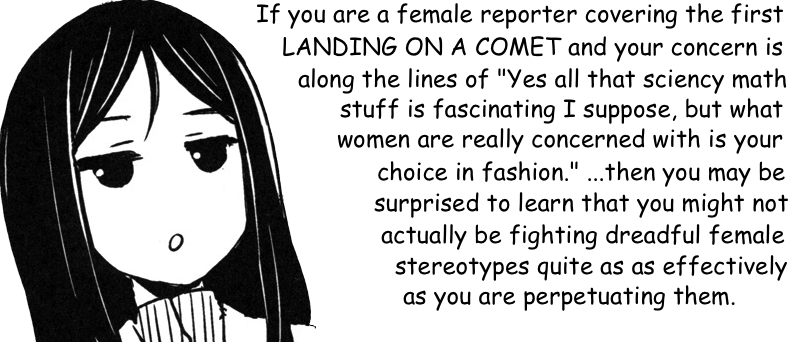
Did we land, or were we shot down?

Miscellaneous links and nonsense:

David Bentley Hart, from the May 2014 First Things:

Journalism is the art of translating abysmal ignorance into execrable prose.

A look at brilliant, psychotic Joe Meek, who changed the sound of music.

Stereogram

Stereo pictures from WWI. A couple of notes: stereograms made for hand-held viewers use the parallel method of viewing, not the crossed-eye. I.e., the right eye focuses on the right image, the left eye on the left. It is possible to free-fuse the images, though it is easier done than explained. Let your eyes relax and drift apart until the images of a well-defined region in the pictures, such a the bright sky through the roof in the above image pair, start to overlap. Focus on that region until the images snap together, and you should then be able to see the entire scene in perspective. (You’ll need to sit back at least two feet from the monitor if you want to see the full-size images at the link in stereo.)

Continue reading “Did we land, or were we shot down?”