Return to Tortalia

I was in the mood for old favorites this evening, and realized that I hadn’t seen Kunio Katou’s The Diary of Tortov Roddle in several years. As I recall, it was on Crunchyroll for a while, but it’s gone now. Fortunately, it’s on YouTube, in two chunks, and here they are. The music is by Kenji Kondo of the Kuricorder Quartet.

Katou subsequently made La Maison en Petits Cubes. It may have won an Academy Award, but it’s actually very good.

Reality becomes unintelligible

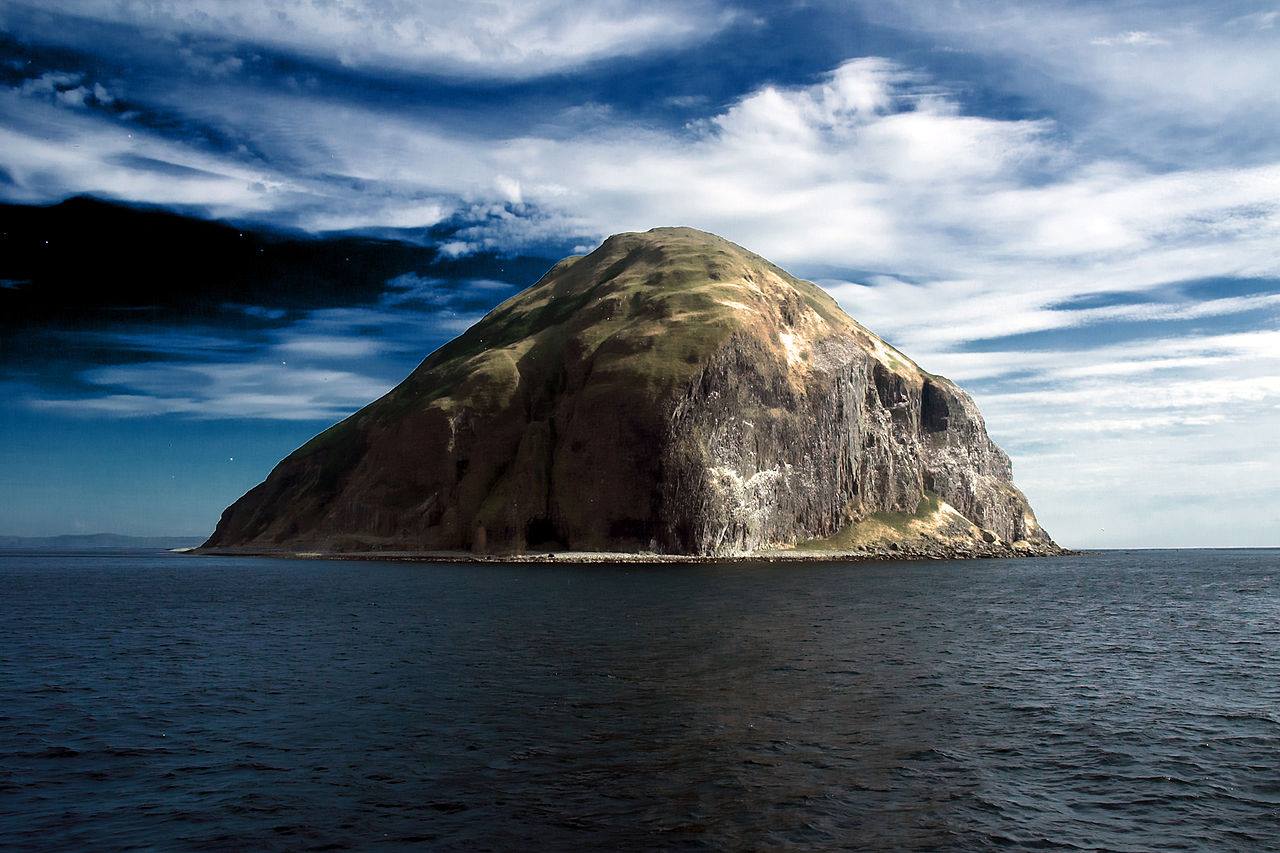
The Lion of Al-Lat, destroyed July 2015
The Lion of Al-Lat, destroyed June 27, 2015

Is it possible to reason with the Islamic State? Perhaps not.

Two theological schools emerged within Sunni Islam in the ninth century. The first, the Mu’tazalites, said that God is reason and justice. The Mu’tazalites held that man’s first duty is to reason because the existence of God is not self-evident. Once man arrives at the existence of God through his reason, he examines the claims of revelation that God has spoken. If anything in revelation appears to go against his reason, he must either bring the revelation into accord with reason or discard it. Through reason, too, man comes to know the difference between what is right and what is wrong, and he must choose what is right through his free will. God is just insofar as He will reward those who do what is right and punish those who do what is wrong.
The second theological school, the Ash’arite school, opposed all of this. God is not reason and justice, the Ash’arites said. Rather, He is pure will and power—unbound by anything, including His own word. Man must abandon reason and submit to the text of revelation, no matter what it says or how unreasonable it may appear. Man’s reason is incapable of knowing the difference between right and wrong. Nothing is right or wrong in and of itself; it is right or wrong only according to what God says.
Does God forbid murder because it is wrong? Or is it wrong because He forbids it? The Mu’tazilite answer was that God forbids it because it is wrong. The Ash’arite answer was that it is wrong only because God forbids it, and God could change his mind and require ritual murder, if He so chose. Also, according to the Ash’arites, God is not required to reward those who obey Him and punish those who disobey. He may reward those who disobey Him and punish those who obey, and no one can gainsay Him. Whatever God does is just—because right is the rule of the stronger, and God is the strongest.
The Mu’tazalites and the Ash’arites also fought over the nature of the Qur’an. The Mu’tazalites said that the Qur’an was created in history and therefore needs to be understood in terms of the linguistic and cultural circumstances in which it was revealed. The Ash’arites claimed that the Qur’an was not created but has existed coeternally with God in heaven. Therefore, the Qur’an is not contingent on the circumstances in which it was revealed, and Arabic is the language of God (which is why all Muslims have Arabic names and must pray in Arabic, though the majority of Muslims in the world do not understand this language). Obviously, the Mu’tazilite understanding of the Qur’an allows for greater breadth of interpretation, while the Ash’arite understanding tends toward literalism (which finds its harshest expression today in Saudi Wahhabism).
The Mu’tazalites had a conception of natural law that allowed man to come to know the difference between right and wrong through his reason’s apprehension of the essences of things. Since the Ash’arites asserted that man could not obtain moral knowledge through his reason, they constructed a bizarre atomistic metaphysics to defend their position and to destroy the possibility of natural law. Basically, man cannot know the nature or essence of things because they have no natures or essences. Everything is constituted by time-space atoms that momentarily come into existence directly through the will of God. Whatever exists is an agglomeration of these atoms specifically configured for a brief moment by an act of God. These same atoms are then annihilated almost simultaneously by another direct act of God’s will. God then reconstitutes reality with an entirely new set of atoms that may be similar to the previous ones or completely different—that depends only upon Him.
Therefore, a Mu’tazilite could know that a horse would remain a horse because it has the nature of the horse. But the Ash’arite could possess no such knowledge, because God might wish to turn the horse into a giraffe, and there is no reason why He could not. In fact, to say that the horse must remain a horse because it has the nature of the horse would be an act of blasphemy for an Ash’arite. It would place a limit on God’s omnipotence.
The atomistic metaphysics of the Ash’arites created a fatal breach between cause and effect in the natural world. Fire does not burn cotton; God does. Gravity does not make the rock fall; God does. To say that a rock falls because of gravity is an act of shirk, blasphemy—assigning a cause to something other than God. In other words, there is no continuous narrative of cause and effect tying these moments together in a comprehensible way. Each thing stands separately as an individual act of God, unrelated to what preceded it or to what follows it.
Anything can come of anything, and nothing necessarily follows. Reality becomes unintelligible….

The Mu’tazilite rational theological school was suppressed by force in the second half of the ninth century, and the Ash’arite school became the majority in Sunni Islam. To this day, everything that happens is assigned to the first and only cause, Allah; secondary causes simply do not exist.
Understanding that this teaching became entrenched in the Sunni Muslim world is the key to unlocking such puzzles as why scientific inquiry is nearly dead there; why the Arab world stands near the bottom of every measure of human development; why Spain translates more books in a single year than the entire Arab world has in the past thousand years; why some people in Saudi Arabia still refuse to believe man has been to the moon.

Among the fruits of this strain of Islam: the preservation of antiquities; respect for friends of mankind.

Above the hot zone

I expected that at least one of the many active volcanoes on caldera-ridden Kyushu would land on the New Decade Volcano Program at Volcano Café, though I wasn’t sure which it would be: Aira, Aso, or one of the less-publicized ones. This weekend NDVP #4 turned out to be the Aso Caldera and, yes, it is potentially extremely nightmarish.

There are three more to go. From the comments to the Café post:

BillG: So this is #4…. I can’t imagine there are three worse scenarios..

Henrik: Trust me Bill, there are. One marginally more so, one decidedly worse and the final one so utterly mind-blowing that eventually Hollywood will make a blockbuster movie of it.

I would guess that one of those three is either Campi Flegrei or Vesuvius; the other two, I have no idea. I note that five of the volcanoes announced in the NDVP so far are in Asia and none in South America, and there are a lot of interesting mountains and lakes in Central and South America.

You can watch the Nakadake crater at Aso at the JMA site. The link to the camera is highlighted here (“Aso grass Chisato,” according to Giggle Translate):

Aso grass Chisato

You can usually see a plume of steam and gasses when the weather is clear, and occasionally some incandescence.

Update (9/13/15): Aso had a bit of a cough today (or tomorrow, depending on which side of the International Date Line you’re on).

Update II (9/18/15): … and coming in at #3, it’s Campi Flegrei.

Physics and technology, plus magic

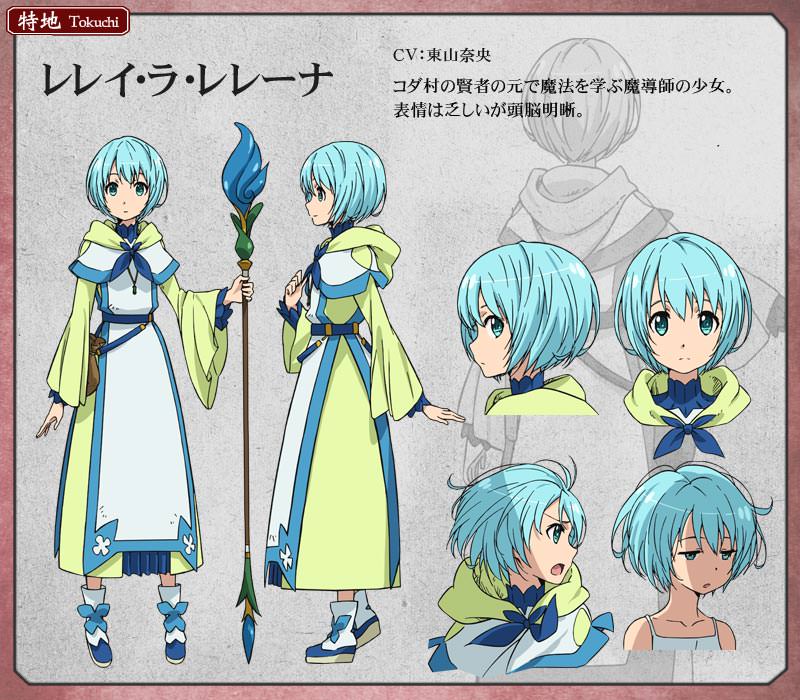
The most dangerous person in the trans-gate territories.

One of the finest examples of sheer geekery I’ve ever come across is the comments thread to this post of Steven’s.

Of current shows, I’m watching only GATE and Ushio and Tora. Both, however, are very good in their different ways and are sufficient to make this a good summer for anime.

A better ensemble

Update: The ninth episode of GATE was a major disappointment, and I’ll probably skip it in future rewatches. However, it did give Rory a chance to wear something more tasteful than her usual ita outfit.

I won’t settle for the lesser of two evils …

… but I won’t vote for Cthulhu, either. Instead, here’s my choice for 2016:

Straight talk

But they’re fictional characters! you say. And Donald Trump is real?

But it’s against the Constitution! That might have been true in the past, but no longer. Nowadays, the meaning of the Constitution depends on what side of the bed Anthony Kennedy gets up on in the morning. It’s just a matter of picking the right day to present the question.

But they’re not even from our world, let alone our country! Big deal. The same is true of the lousy golfer currently in the white house.

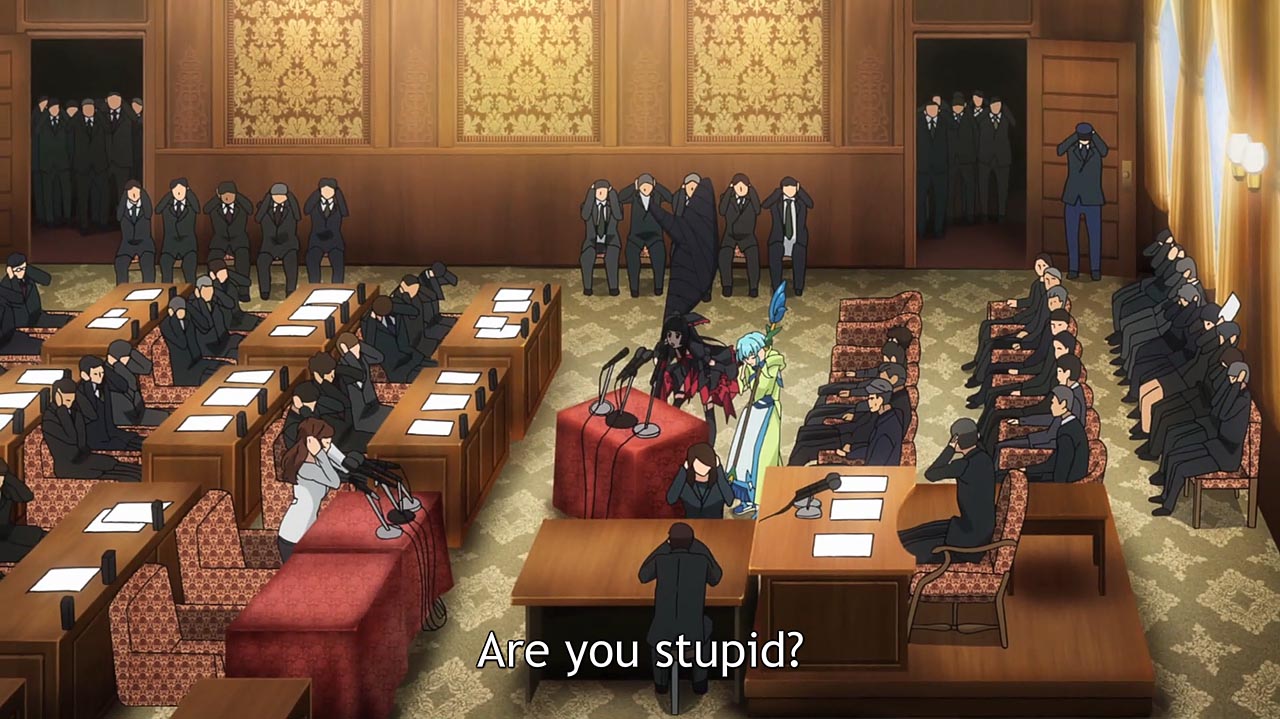
Do I expect Lelei and Rory to win? Probably not; I have a poor record with political endorsements. But there’s no question that an intelligent, responsible mage and a semi-divine warrior would do a better job leading the country than the present administration or the clown who wants to run the circus.

Continue reading “I won’t settle for the lesser of two evils …”

Deepening the field

Rose "Tiffany"

I recently discovered that Photoshop is capable of focus-stacking, though you have to dig through the menus to find the commands. I thought I’d see how well it works before investing in something like Zerene Stacker or Helicon Focus.

The picture above was assembled from 24 frames at f/5.6, with the camera mounted on a focusing rail. I could have added some more frames to get further depth, but this was enough to show that the process works.

So Photoshop works pretty well when the subject is uncomplicated. How well does it fare with something more intricate, such as Bidens bipinnata?

Bidens bipinnata

(Click to see the barbs on the needles.) Not so well. Photoshop has problems with depth perception, it seems. If I’m going to do stacked focus regularly, I probably will have to use a dedicated program.

In praise of fan fiction

Bruce Charlton:

The importance of Fan Fiction is that, while very few people can (like Tolkien, Rowling etc) primarily create a meaningful, purposeful, participative Imaginative Universe – a much larger number of people can take such a universe and secondarily create within it; can incrementally extrapolate, interpolate, combine it with other such Universes, deepen and extend characters from it, make new plots using characters from it – and so forth.

Since this secondary creativity is typically done within a better ‘world’ than the self-hating mainstream secular-alienated-nihilistic world of modern public discourse; and since the world of Fan Fiction is a part of a person’s life; this can serve to make a person’s life more meaningful – which is to say Fan Fiction can make a person’s life not just better but deeply better. And it has done, for very large numbers of people.

Suite in B

2015 marks the 50th anniversary of the discovery of P.D.Q. Bach by Peter Schickele. (Strictly speaking, the above isn’t P.D.Q.B., though it is from one of the early albums.)

Here’s another approach to Beethoven. (Via the Borderline Boy.)

1965 also saw The Baroque Beatles Book of Joshua Rifkin.

According to the liner notes of a reissue, Schickele was the first choice to write the arrangements, but he had just been signed to a different label, so Rifkin got the job. Incidentally, Rifkin sang in the first performance of P.D.Q. Bach’s “Iphigenia in Brooklyn.” A few years later, he would jumpstart the ragtime revival with his Scott Joplin recordings.

Here’s a more modern approach to the Beatles.

Glorieux’s Beatle recordings, which range stylistically from Bach to Bartok, are out of print, but you can find them on YouTube.

Ouchies

I

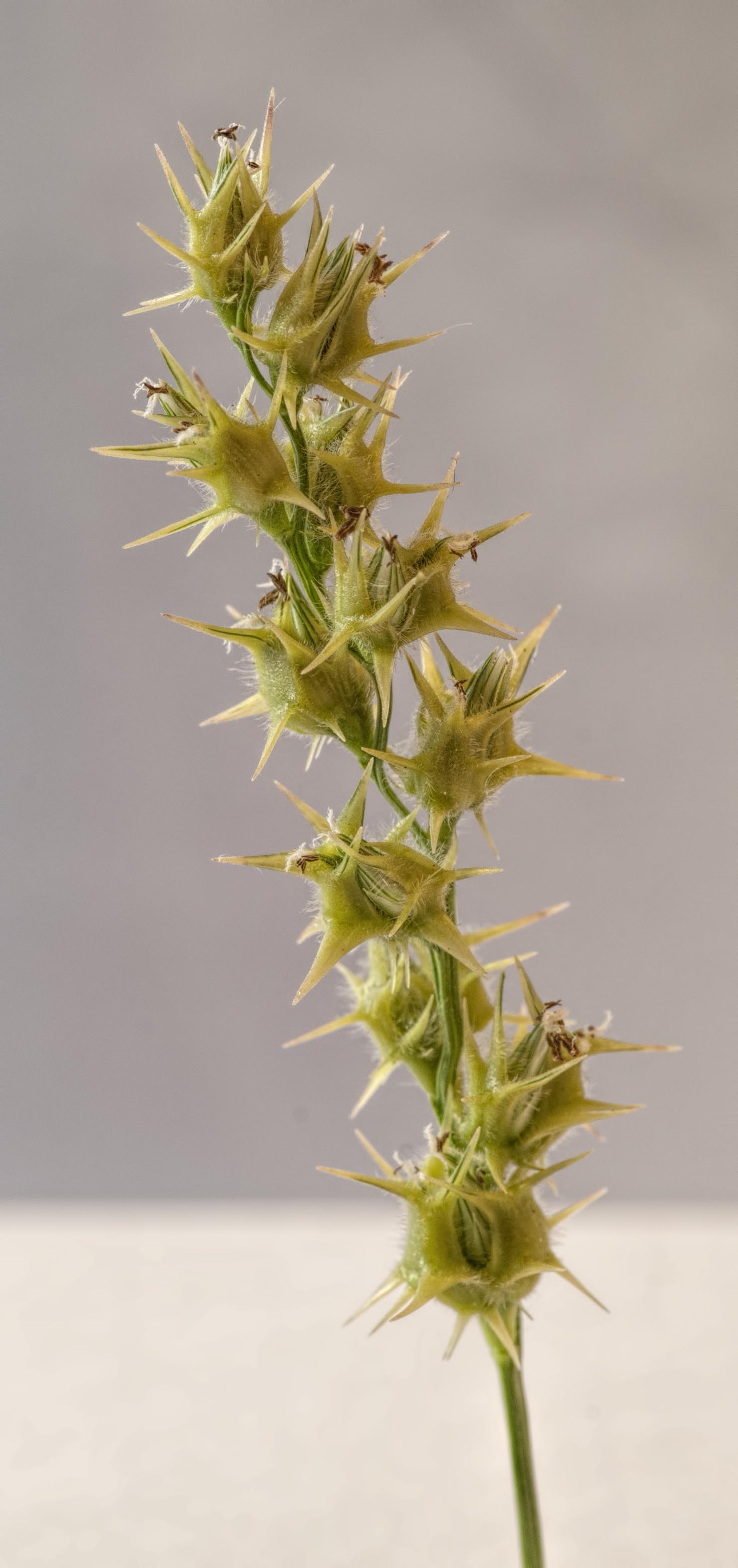
Cenchrus longinspinus

Cenchrus longispinus, “sandbur,” which is replacing crabgrass in Wichita lawns. Those minutely-barbed spines penetrate skin with alarming ease and resist extraction. They have a particular affinity for socks.

II

David French:

Whoa to the white liberal … who doesn’t pay homage.

I assume this was a spellchecker accident. If not, then whoa to French and his editor at National Review. (Update: It’s fixed now.)

Grab your hard hat

Sakurajima, from episode 5 of Katanagatari

The volcanic webcam star Sakurajima might be heading for a major eruption in the near future. The Japanese Meteorological Agency has raised the alert level for the Kagoshima area to “4,” advising residents in the districts nearest the volcano to prepare to evacuate.

While there are numerous webcams pointed at the Kyushu mountain, the only one I’ve found with a reliable night-time view is on the JMA’s page. Starting at the bottom of the list, it’s the first entry with a four-character name.

For further discussion, scroll down to the most recent comments here. The JMA released a statement here (pdf). It’s in Japanese only, but there are interesting maps and charts to study, and you can copy and paste the text into Giggle Translate.

Shichika, Togame, Sakurajima

Katanagatari, by the way, is a very good show.

Update: Meanwhile, in Ecuador