
Just when you thought you were safe from the St. Louis Jesuits:
Missa Meus Parum Equus. ((Or something like that; my Latin’s very rusty.))
(Via the comments at Josh’s place.)
Trivia that matter
Just when you thought you were safe from the St. Louis Jesuits:
Missa Meus Parum Equus. ((Or something like that; my Latin’s very rusty.))
(Via the comments at Josh’s place.)
(Blame Josh for this one.)
Is that so?
On my way home from Overland Park this past weekend, I listened to Be Bop Deluxe, who fall within the 33-year limit. However, on the way up I listened to Floating Cloud and Onmyouza, both of whom are recent bands active in the 21st century. I recently compiled an iTunes playlist of favorite non-classical tunes. It includes plenty of pieces from my youth by Fairport Convention, Frank Zappa, the Lovin’ Spoonful, Spirit, Dan Hicks and His Hot Licks, Cream and so on. But there are also such artists as the Hot Club of Cowtown, Jun Togawa, ((Hers is the only version of “Pachelbel’s Canon” I can tolerate.)) No Strings Attached, Gjallarhorn, Yuki Kajiura, Rare Air, Mayumi Kojima, Susumu Hirasawa and others whom I never heard until well after my 33rd year.
In fact, I’ve found more music in the past 15 years than in all my years in the previous century, thanks to the internet. I may be atypical, but I don’t think I’m unique. I seriously doubt that I’m the only person my age who actively searches for new music to listen to.
(Via Dustbury.)
The Dealers’ Hall at Figments and Filaments 2015
Here are a couple of panoramas from the weekend. Above is the dealer’s hall at the Figments and Filaments site; below is the booth of one of the vendors. (If you need fancy trim for a sewing project, Calontir Trim is the place to go.) These are best seen in full-screen.
One recalls the literary writer who, after grasping a story of a Mars voyage as a metaphor for isolation and the precariousness of relationships, realized that at a deeper, more subtle level it might even be a story about an actual trip to Mars!
(From the comments here.)
• While I applaud most efforts to annoy prissy leftists, I’m not all that concerned about the “Sad Puppies.” I’ve never regarded the Hugo award as anything but a popularity contest, no more significant than the Nobel Peace Prize. ((It doesn’t help that they’re named for a lousy writer.)) ((The Nebula awards, which are chosen by writers, are more meaningful, but only slightly: in 1971, Gene Wolfe and R.A. Lafferty, the best writer and the most original writer of our time, both lost to Noah Ward.)) It’s hardly worth all the histrionics.
• A useful term: “gong farmer.” (Via Professor Mondo.)
• Yesterday was the twelfth anniversary of the launch of my first weblog. It was not my first website, though; I’ve had a web presence of some sort since the final years of the last century.
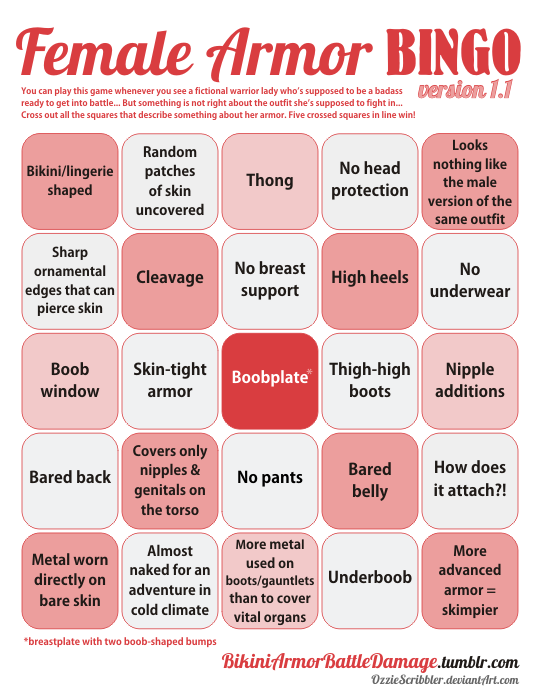
A game to play next time you read a second-tier fantasy novel. (Via J. Greely.)

Some trigger warnings for other literature.

88 airplanes were a total loss. Eighty-eight B-25 Mitchells – $25,000,000 [1944 dollars] worth of aircraft
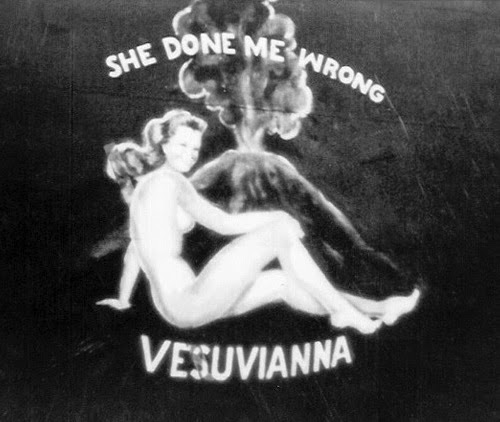
Update: More on Vesuvius here.
Anthony Sacramone’s list of the twelve funniest books ever written is better than most such lists, though it’s missing Terry Pratchett, Robert Benchley and a few others. ((I was pleased to see that someone else remembers Will Cuppy.))
“Let us build a fairyland for the people by dint of science!”
North Korean slogan or TED talk tidbit? (Via Jonah Goldberg.)
A large serving of silly nonsense is below the fold.
A visit to the poetry corner: Lewis Carroll meets Anthony Burgess, as translated by John-Lewis Lookingglass.
The Rasoodocky
Twas dobby and the chellovecks—
That’s Pete, George, Dim, and me, the boss—
Did sit and drink some vellocet
When came this great goloss“Beware the millicent, my droog!
His nozh to skrik, his hands that skvat!
Beware the staja godman well,
who vreds boys in their spat!”I took my shlaga in my hand,
And said “Come malchiks, ookadeet!”
Then viddied I old Billy Boy
This did I gavoreet:“Ho, ho! If it’s not stinking Bill,
I thought I nuked the smell of cal!
Come take it in the yarbles now,
You eunuch jelly thou!”Bill dropped the young devotchka down
That they had stripped nagoy
He spat and flashed his britva out
And crarked “Let’s get ‘em, boys!”One, two! Plesk, shive!
My brothers, ‘twas a glorious drat
They creeched and horned and dropped their knives
And ittied skorry backTwas dobby, grand, and horrorshow
We droogs retired, fagged and fashed
I raised my glass of honeygold,
“A toast! To our next crast!”
Apropos of nothing in particular, Lord Dunsany.
IN ZACCARATH
“Come,” said the King in sacred Zaccarath, “and let our prophets prophesy before us.”
A far-seen jewel of light was the holy palace, a wonder to the nomads on the plains.
There was the King with all his underlords, and the lesser kings that did him vassalage, and there were all his queens with all their jewels upon them.
Who shall tell of the splendour in which they sat; of the thousand lights and the answering emeralds; of the dangerous beauty of that hoard of queens, or the flash of their laden necks?
There was a necklace there of rose-pink pearls beyond the art of the dreamer to imagine. Who shall tell of the amethyst chandeliers, where torches, soaked in rare Bhyrinian oils, burned and gave off a scent of blethany?
(This herb marvellous, which, growing near the summit of Mount Zaumnos, scents all the Zaumnian range, and is smelt far out on the Kepuscran plains, and even, when the wind is from the mountains, in the streets of the city of Ognoth. At night it closes its petals and is heard to breathe, and its breath is a swift poison. This it does even by day if the snows are disturbed about it. No plant of this has ever been captured alive by a hunter.)
Enough to say that when the dawn came up it appeared by contrast pallid and unlovely and stripped bare of all its glory, so that it hid itself with rolling clouds.
“Come,” said the King, “let our prophets prophesy.”
Did machines write Fifty Shades of Crap Grey? Perhaps.
For those who missed it, here’s Dave Barry’s review of the book.
… Why was this book so incredibly popular? When so many women get so emotionally involved in a badly written, comically unrealistic porno yarn, what does this tell us? That women are basically insane? Yes.
A further depressing note: I spotted some “Fifty Shades” etc. wine this morning. Um, no thanks. (I was tempted to pick up a bottle of “Bourgeois Pig” on a different shelf for the sake of the label.)
(Via the Borderline Boys.)
Metallica may be a Big Name in metal, but I’ve never been able to take them seriously. ((When I do listen to their songs, I prefer Apocalyptica’s covers to the originals.)) Severian also finds them a bit silly, in an academic way.
From the current Ansible:
George Lucas, talking to Robert Redford at the Sundance Film Festival, confirmed the dark suspicions of many fans: ‘I really have no interest in science fiction at all.’
I assumed that I would spend the latter part of my life listening to Bach, sipping scotch and watching western civilization slowly decline through a pleasant silver age. However, stories such as J.G. Ballard’s “The Garden of Time” (pdf) and Gene Wolfe’s “And When They Appear” often come to mind these days. It’s possible I’ve been too optimistic:
Paradoxically, the key strengths of civilizations are also their central weaknesses. You can see that from the fact that the golden ages of civilizations are very often right before the collapse.
The Renaissance in Italy was very much like the Classic Maya. The apogee was the collapse. The Renaissance status rivalry between cities through art and science and warfare and architecture was a beautiful disaster, and it only lasted about 150 years. The Golden Age of Greece was the same thing: status rivalry with architecture, literature, and all these wonderful things—along with warfare—at the end of which Greece was conquered by Macedonia and remained under the control of foreign powers for 2,300 years.
We see this pattern repeated continuously, and it is one that should make us nervous. I just heard Bill Gates say that we are living in the greatest time in history. Now you can understand why Bill Gates would think that, but even if he is right, that is an ominous thing to say.
(Via Isegoria.)
A useful observation on Gene Wolfe:
A heuristic for dealing with Wolfe’s fiction is that, if all else seems in doubt, assume that the point of the story is to display the universality of the Christ.

Any study of the importance of the pig in civilization must mention the Empress of Blandings.
A couple of notes from the February First Things:
Mark Bauerlein, “Grammar Rules”
When we consider the vast transformations of politics, culture, science, technology, and daily life since 1600, it is astonishing that we can read Shakespeare’s sonnets and the King James Bible so easily. Relatively little vocabulary has changed, and grammar and syntax not much at all — a sign that language bears elements that resist historical and cultural variations.
John O’Callaghan, via R.R. Reno: The nine bourbons every professor should have, and where to hide them.
9) Early Times. Because, as Walker Percy once wrote, “the noxious particles and the sadness of the old dying Western world and him thinking: ‘Jesus, is this it? Lisening to Cronkite and the grass growing?'” Stash behind Love in the Ruins.
8) Evan Williams. Because it’ll do. Payday isn’t until Friday. Stash behind Lost Weekend.
7) Wild Turkey (101, not 81). Because essential reading requires essential drinking. Stash behind Elmore Leonard’s Three Ten to Yuma and Other Stories.
6) Maker’s Mark. Because sometimes it seems the world isn’t quite as awful as it appears to be. Stash behind Augustine’s Confessions.
5) John B. Stetson. Because sometimes the world is as awful as it seems to be. John B. will help you make it through the night. Stash behind Paradise Lost.
4) Woodford Reserve. Because sometimes class went well. Stash behind Deus Caritas Est.
3) Bulleit. Because if you’re good, it may give up the ghost for you. It did for me. Stash behind Hamlet.
2) Basil Hayden. Because it’s the Catholic Bourbon. Stash behind Wise Blood.
1) Blanton’s. Because Pappy Van Winkle is for rich people and other criminals. Blanton’s is 1/4 the price and is what Christ serves to the saints while they smoke their cigars on the veranda of His Father’s mansion. Stash behind Summa Theologiae.
And from Ricochet:
[Paul Dirac’s] father was as strict a disciplinarian at home as in the schoolroom, and spoke only French to his children, requiring them to answer in that language and abruptly correcting them if they committed any faute de français. Flo spoke to the children only in English, and since the Diracs rarely received visitors at home, before going to school Paul got the idea that men and women spoke different languages.
And now for a bit of culture. You’ve heard of The Red Shoes? Here’s the red pocketbook. There’s a cow, too.
“101 Dalmatians”
A wealthy woman attempts to do her impoverished school friend Anita a favor by purchasing some of her many dogs and putting them to sensible use. Her generosity is repulsed at every turn, and Anita foolishly and irresponsibly begins acquiring even more animals, none of which are used to make a practical winter coat. Altruism is pointless. So are dogs. A cat is a far more sensible pet. A cat is objectively valuable. —No stars.
“Mary Poppins”
A woman takes a job with a wealthy family without asking for money in exchange for her services. An absurd premise. Later, her employer leaves a lucrative career in banking in order to play a children’s game. —No stars.
There’s more here.

Some years back I read Novala Takemoto’s Shimotsuma Story, published in English as Kamikaze Girls. I wrote about it here. I finally watched the movie based on the book this evening. Some of the humor was overly broad, and there were some gratuitous crudities early on, but overall this movie about a very odd couple was watchable and often very funny. Kyoko Fukuda and Anna Tsuchiya were plausible as Momoko the lolita and Ichiko the yanki. The story was necessarily simplified, but it was generally true to what I remember of the book.
There are more screen captures beneath the fold. Click the pictures to see the details of Momoko’s garb.