Here is the quiz from Saturday with the blanks filled in and the rest of the answers.
Category: Culture and anti-culture
Wrong notes
Nicolas Slonimsky’s Lexicon of Musical Invective, a compendium of harshly negative reviews of composers from Beethoven to Varèse, is fun to browse. Years ago I based a little name-that-composer quiz on entries in the book. That quiz is long gone, along with the rest of my first weblog1, so I’ve compiled a new one. See if you can identify the composers and works from the following excerpts. In a few cases, the critic speaking is also noteworthy.
I’ll post the answers sometime next week.
1. Crashing Siberias, volcano hell, Krakatoa, sea-bottom crawlers.
Composer, composition
2. ____ was abominable. Not a trace of coherent melodies. It would kill a cat and would turn rocks into scrambled eggs from fear of these hideous discords.
Composer, composition, critic
3. It is mathematical music evolved from an unimaginative brain … How it ever came to be known as The Tenth Symphony is a mystery to us.
Composer, composition
4. The overabundance of dissonances and the incompetence in handling vocal parts in ____ reach the point where the listener can not be sure of the composer’s intentions and is unable to distinguish intentional wrong notes from the wrong notes of the performers.
Composer, composition
5. The ____ is filthy and vile. It suggests Chinese orchestral performances as described by enterprising and self-sacrificing travelers. This may be a specimen of the School of the Future for aught I know. If it is, the future will throw the works of Haydn, Mozart and Beethoven into the rubbish bin.
Composer, composition
6. If the reader were so rash as to purchase any of ____’s compositions, he would find that they each and all consist of unmeaning bunches of notes, apparently representing the composer promenading the keyboard in his boots. Some can be played better with the elbows, other with the flat of the hand. None requires fingers to perform nor ears to listen to.
Composer
7. ____ sometimes sounds like a plague of insects in the Amazon valley, sometimes like a miniature of the Day of Judgment … and for a change goes lachrymose.
Composer, composition
8. It must be admitted that to the larger part of our public, ____ is still an incomprehensible terror.
Composer
9. If it were possible to imagine His Satanic Majesty writing an opera, ____ would be the sort of work he might be expected to turn out. After hearing it, we seem to have been assisting at some unholy rites, weirdly fascinating, but painful.
Composer, composition
10. As a kind of drug, no doubt ____’s music has a certain significance, but it is wholly superfluous. We already have cocaine, morphine, hashish, heroin, anhalonium, and innumerable similar productions, to say nothing of alcohol. Surely that is enough. On the other hand, we have only one music. Why must we degrade an art into a spiritual narcotic? Why is it more artistic to use eight horns and five trumpets than to use eight brandies and five double whiskies?
Composer
11. Cunning must be the coinnoiseur, indeed, who, while listening to his music, can form the slightest idea when wrong notes are played — its difficulties to the eye being doubled by the composer’s eccentricity of notation.
Composer
12. To hear a whole program of ____’s works is like watching some midget or pygmy doing clever, but very small, things within a limited scope. Moreover, the almost reptilian cold-bloodedness, which one suspects of having been consciously cultivated, of most of ____’s music is almost repulsive when heard in bulk; even its beauties are like the markings on snakes and lizards.
Composer
13. ____ always sounds to me like the upsetting of bags of nails, with here and there an also dropped hammer.
Composer, critic
14. ____’s symphonic poem ____ is not just filled with wrong notes, in the sense of Strauss’s Don Quixote; it is a fifty-minute-long protracted wrong note. This is to be take literally. What else may hide behind these cacaphonies is quite impossible to find out.
Composer, composition
15. The ____ has pretty sonority, but one does not find in it the least musical idea, properly speaking; it resembles a piece of music as the palette used by an artist in his work resembles a picture. ____ did not create a style; he cultivated an absence of style, logic, and common sense.
Composer, composition, critic
16. There is only one thing for a man like ____ to do if he desires to escape oblivion, and that is to plunge into the grossest materialism in music and seek to puzzle or shock you, because he cannot touch your heart.
Composer
17. ____ had not much to say in his Fifth Symphony and occupied a wondrous time in saying it. His manner is ponderous, his matter imponderable.
Composer
18. … I shall hot criticize this music; quite to the contrary, I will say that this is wonderful barbaric music, the best barbaric music in the world. But when I am asked whether this music gives me pleasure or an artistic satisfaction, whether it makes a deep impression, I must categorically say: “No!”
Composer, composition
19. The Paleozoic Crawl, turned into tone with all the resources of the modern orchestra, clamored for attention at the Philadelphia Orchestra concert when ____ was given its first airing on this side of the vast Atlantic. It was the primitive run riot, almost formless and without definite tonality, save for insistently beating rhythms that made the tom-tom melodies of the gentle Congo tribes seem super-sophisticated in comparison … Without description or program, the work might have suggested a New Year’s Eve rally of moonshine addicts and the simple pastimes of early youth and maidens, circumspectly attired in a fig leaf apiece.
Composer, composition
20. The ____ threads all the foul ditches and sewers of human despair; it is as unclean as music well can be.
Composer, composition
21. I can compare ____ by ____ to nothing but the caperings and gibberings of a big baboon, over-excited by a dose of alcoholic stimulus.
Composer, composition
22. … if the crude expression be permissible, I should say that what was at the back of ____’s mind was an alarm of fire at the Zoo, with the beasts and birds all making appropriate noises — the lion roaring, the hyena howling, the monkeys chattering, the parrots squealing, with the curses of the distracted attendants cutting through them all.
Composer, composition
23. Again I see his curious asymmetrical face, the pointed fawn ears, the projecting cheek bones — the man is a wraith from the East; his music was heard long ago in the hill temples of Borneo; was made as a symphony to welcome the head-hunters with their ghastly spoils of war!
Composer
24. ____’s violin concerto sounds, in its brutal genius, in its abolition of all formal limits, like a rhapsody of nihilism.
Composer
25. (the amoeba weeps)
Composer
Update: The answers are here.
Keep your wrist solid and in alignment with the bones of your forearm
A couple of links to help you get into the spirit of the season:
• What to give the heretic on your list (See also St. Louis’ guide to dealing with barbarians.)
• Beware rogue carolers, and avoid broadcast media until December 24
If you absolutely must sing a carol, here are the words:
Just wondering
Is this true? It doesn’t tally with my observations, but I try to minimize my exposure to popular culture.
The bit about Tolkien fans would be news to the rat maiden at the too-long-idle Quenta Nârwenion.
Not by Brueghel
Kim Du Toit’s discussion of body graffiti reminded me of a favorite story by Saki, “The Background.” It’s easily found online, and you can read it below the fold here.
For more fun with tattoos, see Hanzi Smatter. There’s also a tune by The Who. For commentary on a different Fall of Icarus, see W.H. Auden.
The empire strikes out
A depressing number of commentators recently got sentimental and downright gooey talking about Star Wars, which was released 40 years ago this week.
By 1977, I had read a lot of science fiction. Gene Wolfe and R.A. Lafferty, Philip K. Dick, Joanna Russ and Cordwainer Smith were favorites, and I collected all the various best-of-the-year anthologies (and for a while, there were a lot). I regularly visited all the bookstores in town, new and used, looking for interesting new writers and well-written, adventurous stories.
One of my co-workers praised the movie, so one afternoon I rode my bicycle out to the theatre and sat through 17 minutes of commercials in the chilly dark2 waiting to see this magnificent new breakthrough in science fiction. Finally, the movie started.
And it stunk. If you are Star Wars fan, I’m sorry, but I found it stupid. The script was comic-book level. The actors might have been talented, but their lines were drivel. The music deserved a better showcase, and why did Alec Guinness bother with this mess? (Money, I suppose.)
I did sit through The Empire Strikes Back, and found it a little better — having Leigh Brackett on the script probably helped. It was still lousy, though, and I didn’t bother watching any more Lucasian nonsense.
I would hesitate to call Star Wars “life-changing,” but along with a few other disasters like Blade Runner — I left the theater furious at what had been done to Dick’s novel — it was one of the reasons I lost all interest in movies.3
By the way, if you want to see Alec Guinness in roles that suit him, start here.
Two points on a curve
But Mark Zuckerberg found a way to convince a billion people to voluntarily enter the panopticon. He baited the trap with an irresistible siren: a perpetual High School reunion, pictures of grandkids, and cat videos.
Today’s poem
It crossed my mind
to buy yet another book until
I stopped to count the ones I have.
Stopping by for a moment
I’m alive again after an unpleasant two weeks. I’ve got a lot of cleaning and catching up to do, so I’ll continue to be scarce here.
*****
A few things that caught my eye or ear recently:
I have a little list of words and phrases that tell me everything I need to know about the people who use them. So does J Greely.
Science, Roger Bacon and Robert Grosseteste.
Are the New York Disco Villains the Bonzo Dog Band reborn? (Via the Professor.)
Mozart and Chagall.
The Magic Flute – Chagall Animation from 59 Productions on Vimeo.
Mozart and Tonari no Seki-kun. (Via Wonderduck.)
There’s a live-action version of Tonari no Seki-kun. You don’t need to know Japanese to follow the story.
Bonus link: Vulcanologist Erik Klemetti counts down his list of the ten most dangerous volcanoes. If you’re thinking of investing in European real estate, forget Naples.
Today’s quote
Real history is nothing like school history. Oddly, real history is more like a swords-and-sorcery novel: evil priests, hair matted with blood, commit human sacrifices atop pyramids amidst a city built on a lake inside a volcanic crater; frenzied fighting ensues.
Post script: See also Conan the Librarian.
A couple of curiosities
Today’s quote …
If you have the experience as I’ve had of just driving through town driving past schools and then driving past prisons, they really often look a lot alike.
2016 Necrology I
During 2016, many people died, some of whom were famous. This happens every year. 2016 was a really lousy year for many reasons, but not because a lot of celebrities died.
Most of the dead performers were adequately memorialized — the hoopla surrounding David Bowie’s departure was downright ridiculous4 — but a few were overlooked, and I discovered their deaths weeks or months later.
One whom I miss is Bob Elliott, half of Bob and Ray. I wonder if youngsters today can sit still long enough to appreciate B&R’s unhurried delivery. Here are some of their skits, some of which are older than I am.
The second group
What would William Tenn have thought of J. Forbes Kerry?
There’s not much Tenn online, which is a shame; his writing is funnier and sharper than that of most alleged satirists. I did find “Null-P,” which I strongly recommend to friends of dogs everywhere.
Gotta have a Feckle Freezer
Accumulated odds and ends:
Is Obama Catholic? No, and Dennis McDonough is an idiot.
Is the Pope Catholic? That’s a much more interesting question. Edward Feser supplies some useful background, including notes about Popes Honorius, John XXII and Liberius.
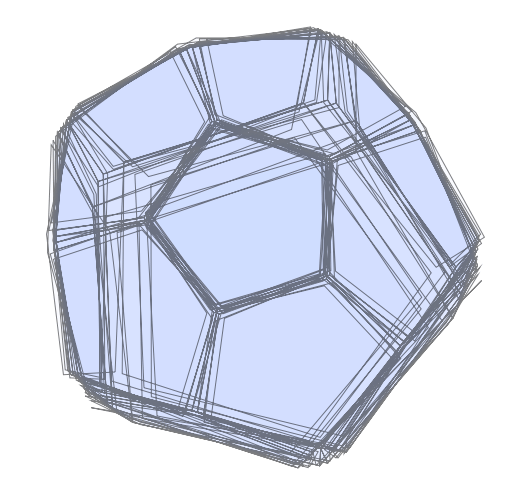
Hyperplay will provide hours — well, minutes — of fun for the mathematically inclined and the easily entertained.
God help us, every one
Robert Benchley on not-so-Dickensian Christmas afternoons:
In the meantime, we must not forget the children. No one else could. Aunt Libbie said that she didn’t think there was anything like children to make a Christmas; to which Uncle Ray, the one with the Masonic fob, said, “No, thank God.” Although Christmas is supposed to be the season of good cheer, you (or I, for that matter) couldn’t have told, from listening to the little ones, but that it was the children’s Armageddon season, when Nature had decreed that only the fittest should survive, in order that the race might be carried on by the strongest, the most predatory and those possessing the best protective coloring.
Max Beerbohm5 wrote an entire book of parodic Christmas pieces in A Christmas Garland. If you have trouble telling Ch*st*rt*n from B*ll*c, this might help. (There’s an interesting dicussion of Beerbohm here, though it suffers from Too Much Information.)
There’s a discussion of Christmas science fiction here.
Odds and ends for a chilly December day

Dear [Beautiful but Evil Space Princess],
Every time I capture the hero, I get this overwhelming urge to spill the entire plan, including the way out. How can I stop myself from giving it all away?
Sincerely,
Evil Underlord who can’t quite make the big leaguesDear Under,
Oh, Sweetie. This is a compulsion written into you by the author. You must use aversion therapy. Have one of your underlings dress up as the hero, and when you start spilling things, force yourself to do something really distasteful. I don’t know, pet a puppy or give sweets to children or something, until you break the compulsion.
It’s all right. If you manage to cure yourself, you can blend the puppies into a nice smoothie afterwards and it will make you feel much better.
I’m not a professional political scientist or sociologist. Then again, neither were Washington, Adams, Jefferson and that crowd ….
The election of Trump is, in many senses, stupid. However, it is far, far wiser and more in keeping with the idea that we, the people, are the defenders of the Republic to elect Trump than to elect someone who is beloved of Harvard. On the scale of errors one can make in a Republic, electing an arrogant and impulsive side-show barker is far to be prefered to electing someone whose fundamental goal is making elections irrelevant.
… humans have never had to deal with the problems that come from too much food and too much free time to consume it. We really have no idea what will come from it and how it will hurt or help society. There could very well be a huge upside to having lots of fat people. Perhaps when the zombie apocalypse comes, the zombies will eat the fat people and be satisfied, leaving the rest of us to regroup.
When I’m ruler of these lands, the people responsible for embedded, autoplay video will be torn to pieces and fed to the dogs.
Video meliora, proboque; Deteriora sequor:
I’ll never forget when John Updike reviewed a book on how FDR’s policies lengthened the Great Depression. Updike basically said that because FDR cared, and was trying, that was worth more than shortening the Depression.
Via Dustbury, who also notes that
That word “bipartisan” should set off an alarm: it almost always means that both sides are in cahoots and Up to Something.
A bit of spirited horticultural history, from a comment at an AoSHQ food thread:
One food arena where the US used to be the best in the world and is now near the bottom of the pack is cider (i.e. alcoholic fermented cider.)
Back in the Revolutionary War era cider was the #1 drink in the nation, far surpassing beer or wine or hard liquor. And people had planted the right kind of apple trees all over the country (as it existed then), so there was always a big supply of the raw material.
In fact, Johnny Appleseed didn’t go around planting edible apple trees — he went around planting cider apple trees! A detail that is now lost to most people’s imaginations of history.
“But wait,” you’re saying, “there’s a difference between edible apples and cider apples?”
Yes indeed. There are three fundamental “types” of apples:
“Sweet apples,” which is what we now think of simply as “apples” — the big crunchy sweet kind that you can eat.
“Sour apples,” now mostly known as “crabapples,” which are mostly useless except for making things with their pectin.
“Bitter apples,” now mostly unknown in the US, but still planted widely in France and England. THESE are the apples you are supposed to make true cider out of. As the name implies, they’re slightly too bitter to eat, but their chemical makeup is absolutely perfect for fermenting a delicious kind of apple cider, a process during which the bitterness goes away.
If you’ve ever tasted true cider made from bitter apples (which is what they serve you in Somerset and Normandy), you’ll know that cider made from sweet apples is atrocious by comparison.
And that’s the tragic part of our story.
Because of the arrival of so many German and Bohemian and Polish immigrants in the second half of the 19th century in the US, beer started to surpass cider in popularity nationwide, and then when Prohibition hit, cider production was stopped entirely. And what happened was that ALL — or almost all — the bitter apple trees in the United States were left to die or were torn out and make room for more useful trees.
So that by the time Prohibition ended, there was no longer any way to make true cider in any quantity, and as a result beer took over the casual drinking market almost 100%. Wine only started to make inroads in the ’60s and ’70s. But cider remain completely forgotten by then.
That is until about 8 years ago, when the “small batch cider” renaissance started in the US, with small startups making cider from apples.
Sweet apples, that is — because that’s all that we have in the US anymore! Yuck!
Cider made from sweet apples is just wrong to a true cider aficionado. So no matter how much effort these America cider microbreweries put into their product, it will never match up to French and British ciders.
In fact, until just a couple years ago, most American cidermakers didn’t even know about the existence of bitter apples and didn’t know they were doing it fundamentally wrong.
Finally a few people have wised up, and they’ve started planting bitter apple trees in the US again, but it will still be several years before they are up and producing in sufficient numbers to create enough true cider for the masses.
Until then, we must suffer with an inferior American product! Frowney face!
The 1,387,229th Eastern Subordinate Incarnation of a Lohan
I felt like re-reading Cordwainer Smith’s “Western Science Is So Wonderful,” the tale of a local Chinese demon with strong pro-Communist sentiments who wants to study engineering. Rather than climb the stairs to the main library, I found it online here. Smith wrote science fiction on a grand scale, but he could do comedy, too.
The Kelly Freas illustration for the story here.
The topic of the day
Can schadenfreude be virtuous? Edward Feser considers the question.
Meanwhile, Daniil Simkin heads to work:
Cigarettes and spiders
The first episode of Miss Bernard Said. mentioned Yasutaka Tsutsui, and I checked to see if any more of his books have been translated into English. A quick search showed nothing new. However, I did find translations of a few of his stories online:
The first two are satirical; the third is strange.
I also looked for Henry Kuttner’s “The Twonky.” I couldn’t find the text online, but I did find a podcast. (Scroll down to the bottom.)