Moving to a less urban area does have drawbacks. E.g., active railroad crossings. This train blocked my route for a half-hour earlier today. I would guess that it was traveling between five and ten miles per hour, say seven-and-a-half mph, so I watched roughly three and a half miles of train.
Word is that the proprietor of Wonderduck’s Pond is making good progress and hopefully will be back online soon. Until then, here’s a mallard at the botanical garden pond.
I’ve finally escaped from Wichita. I now live in a city an order of magnitude smaller in a neighboring county, where I don’t hear boom cars and shouting strangers all evening. It will no longer be convenient for me to visit the botanical garden in Wichita, but quiet nights are compensation.
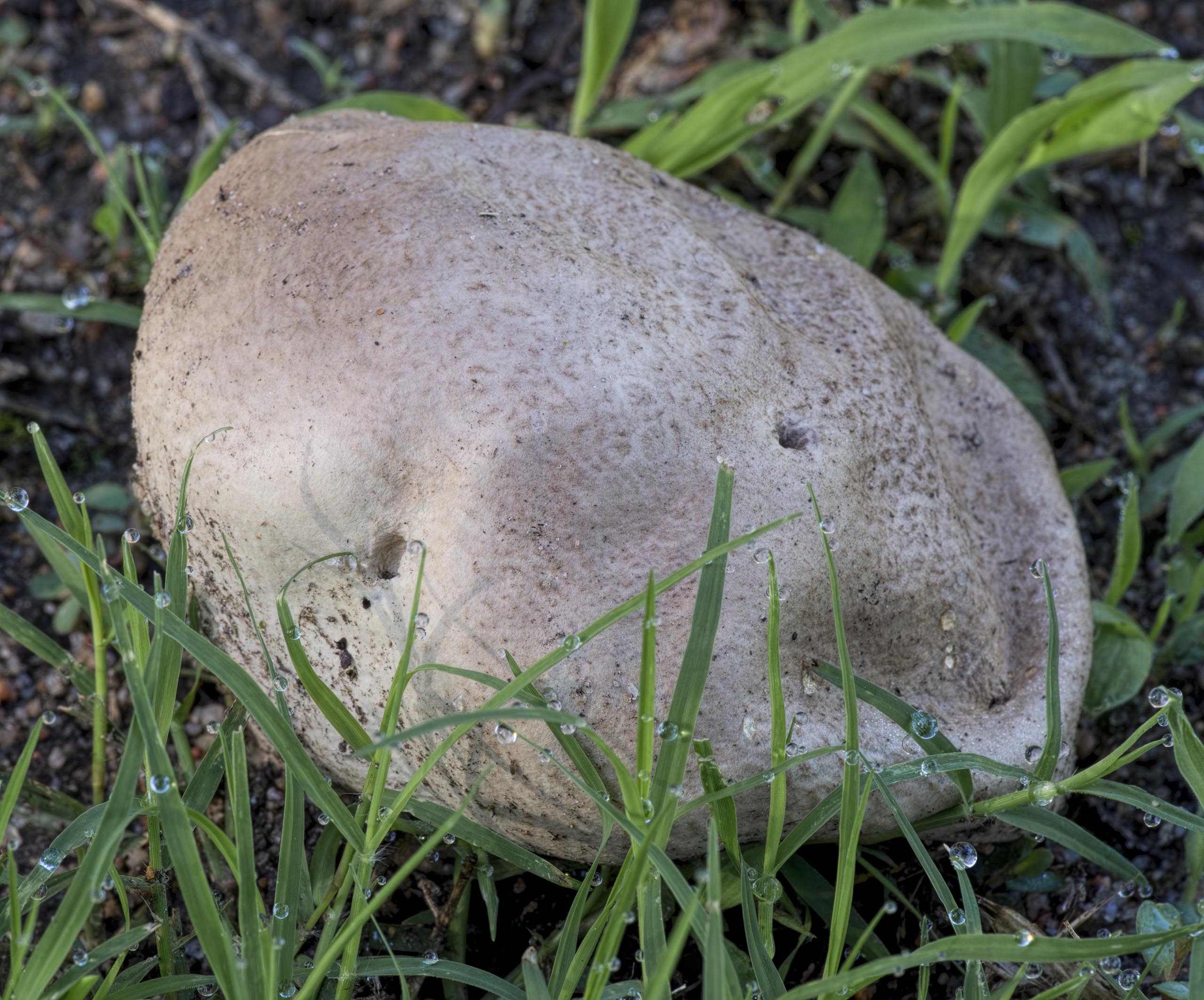
Waiting for me in the front yard when I moved in was the puffball above. I’d guess it’s either Calvatia fragilis or Calvatia cyathiformis. It was at its prime yesterday while my camera was packed away, and was starting to deflate this morning when I finally got a picture.
Also waiting for me were a couple of peony plants in their prime.
… pluralism in academic settings rarely lasts for long. There has to be a truth at the end of the day, even if it’s the “truth” of an artificial academic consensus. When theory killed literary truth, it doomed the discipline. Into this vacuum, identity professors in English departments poured ersatz truths about race and sex, which have failed to shore it up. At the time I was baffled at this suicidal trend, but in retrospect I can see that it was only natural that identity politics should have ascended so quickly in the nineties. Its urgent claims gave English a moral meaning that theory had undermined. When literature itself no longer sparked the heat of conviction that divided Bloom and Hirsch in the early sixties, the discipline had to find another source of energy. Identity critics had the answer. They weren’t decadent—they were impassioned. By 1992, “post-structuralism” had a stale tang, but gender and queer sounded fresh and potent. A theory panel at the MLA Convention on “Shelley and the Sign” was ho-hum, but “Queer Shakespeare” down the hall was packed.
High seriousness was restored, but literature was the victim. It wasn’t Shakespeare that drew the crowd, but queerness: Lear was a pretext. Literature had become a booster rocket, at best, one that you jettison when you reach the orbit of political relevance. The institutional effects are plain to see at this late date. Fifty years ago, a university couldn’t call itself “Tier One” unless it had a renowned English department. No more: Abysmal enrollment numbers in the humanities at such universities prove the irrelevance of literary study. My colleagues around the country bemoan the decline, but they blame the wrong things. English did not fall because a bunch of conservatives trashed the humanities as a den of political correctness. It didn’t fall because it lost funding or because business leaders promoted STEM fields. It fell because the dominant schools of thought stopped speaking about the truth of literature. Once the professors could no longer insist, “You absolutely must read Dryden, Pope, and Swift—they are the essence of wit and discernment”; when they lost the confidence to say that nothing reveals the social complexity of the colonial situation better than Nostromo; if they couldn’t assure anyone that Hawthorne’s sentences showed the American language in its most exquisite form, they lost the competition for majors. Students stopped caring about literature because the professors stopped believing in its promises of revelation and delight.
1. A French term meaning “black film,” or film of the night, inspired by the Series Noir, a line of cheap paperbacks that translated hard-boiled American crime authors and found a popular audience in France.
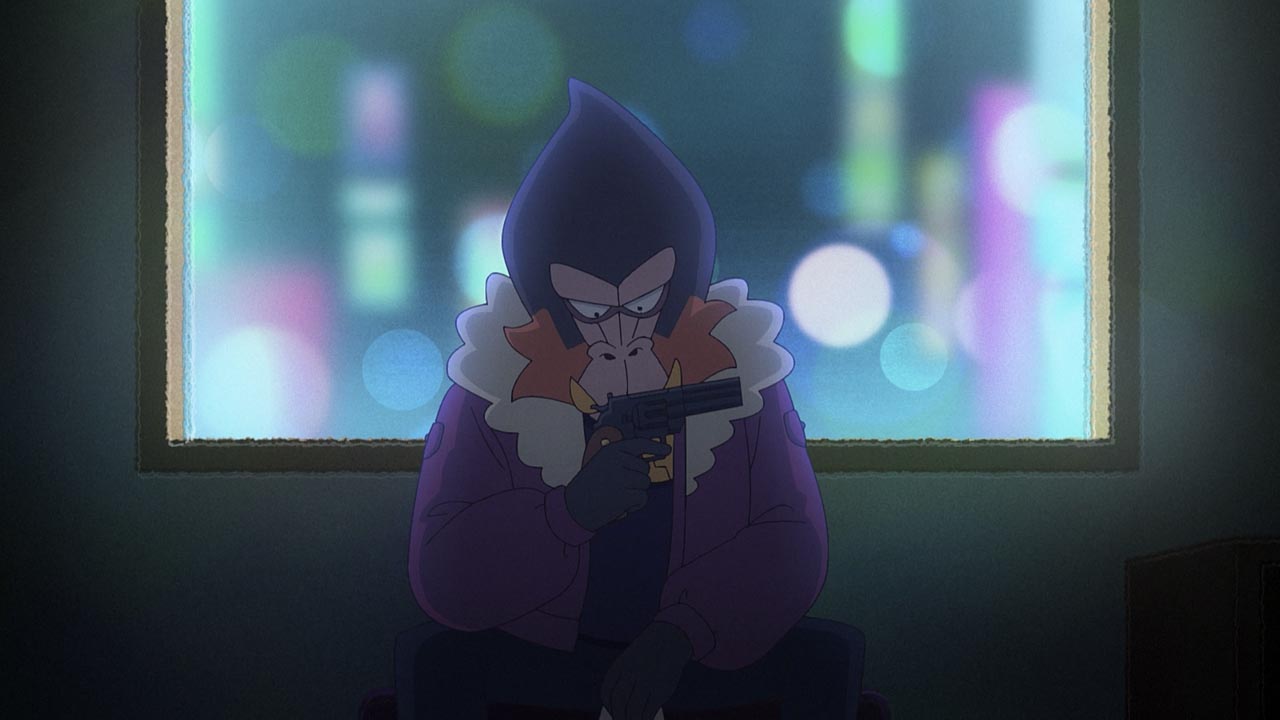
Nearly every scene in Odd Taxi takes place during the evening or night. Check.
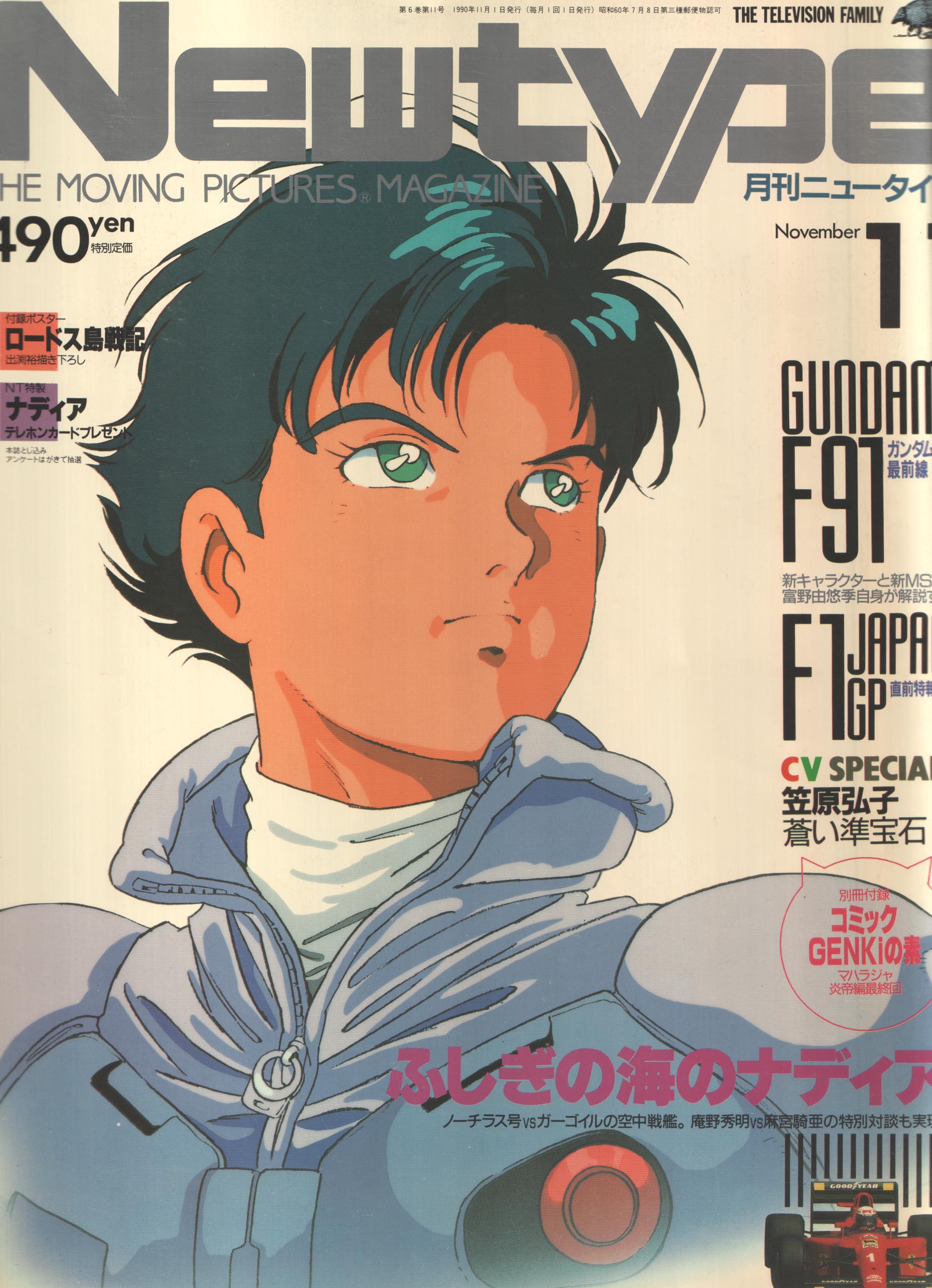
I recently unearthed Richard’s box of Japanese magazines and scanned a few more. This batch is from the February 1991 Newtype. It provides a snapshot of what anime was during the age of the laser disc. (The magazine pages are a little larger than my scanner can handle and there are missing edges.) These are big scans, so right-click and open in a new window to see every detail.
The weatherman predicts thunderstorms every day for the next ten days, so I made time today to visit to the botanical garden while the weather was still mild.
Critical Race Theory, and Critical Theory in general doesn’t have any art I can think of. Not poetry, not music, theater, film, painting, sculpture, nor literature. It may just be that I am not up on such things. I don’t think it is mere recency, as both have been around for years, nor is it a bias from unfair comparisons from centuries ago. I am not asking that it produce an equivalent to the high Renaissance. Existentialism is also recent but does not suffer from the same lack. There is plenty of interesting theater, poetry, and literature from them, and I think only a little stretch of the concept brings in the visual arts including film….
This is a major red flag for the intellectual foundation of a philosophy, that artists in no medium can bring forth anything of interest. The heart of artistic expression is transposition, of reframing or new understanding of one concept and making it manifest in another. If you can find nothing to transpose, it means there is nothing there.
How many boys doze off in English class because no one made clear that poetry is also the province of Satanic wizards, voodoo queens, blood-flecked Vikings, Puritan swordsmen, and frantic barbarian hordes?
In 2008 I was wary of Obama but never bought into the “born in Kenya” crap and thought maybe he could do some great good in uniting our country racially. I think by 2012-ish I realized the enemy was within. By 2017 I realized we were in a Cold Civil War. And now in 2021 I think it’s a tossup as to who is the bigger enemy: the Left in this country or China.
I’m just hoping that whatever is in the White House next year is a Republican. I can’t bear to watch what’s happened to our great country. Everybody’s got their head in the sand. Everybody in the industry is like, ‘Oh, Obama’s doing such a great job…’ I don’t think so. Not from what I see.
Looking at the Republican candidates, I’ve got to tell you, I was floored the other day to see that Mitt Romney’s five boys have a $100 million trust fund. Where does a guy make that much money? So there’s some questions there. And watching Newt Gingrich, I was pretty excited for a while, but now he’s just gone back to being that person that everybody said he was – that angry little man. I still like him, but I don’t think I’d vote for him.
Ron Paul… you know, I heard somebody say he was like insecticide – 98 percent of it’s inert gases, but it’s the two percent that’s left that will kill you. What that means is that he’ll make total sense for a while, and then he’ll say something so way out that it negates everything else. I like the guy because he knows how to excite the youth of America and fill them in on some things. But when he says that we’re like the Taliban… I’m sorry, Congressman Paul, but I’m nothing like the Taliban.
Earlier in the election, I was completely oblivious as to who Rick Santorum was, but when the dude went home to be with his daughter when she was sick, that was very commendable. Also, just watching how he hasn’t gotten into doing these horrible, horrible attack ads like Mitt Romney’s done against Newt Gingrich, and then the volume at which Newt has gone back at Romney… You know, I think Santorum has some presidential qualities, and I’m hoping that if it does come down to it, we’ll see a Republican in the White House… and that it’s Rick Santorum.”
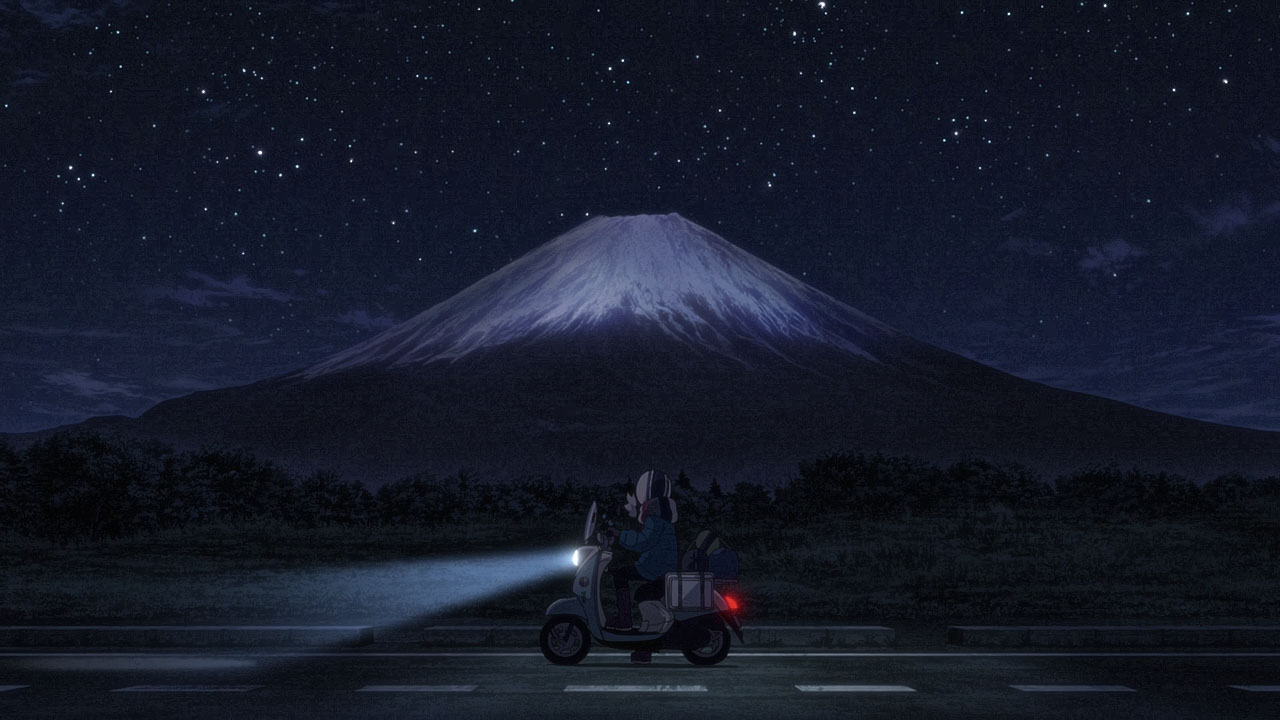
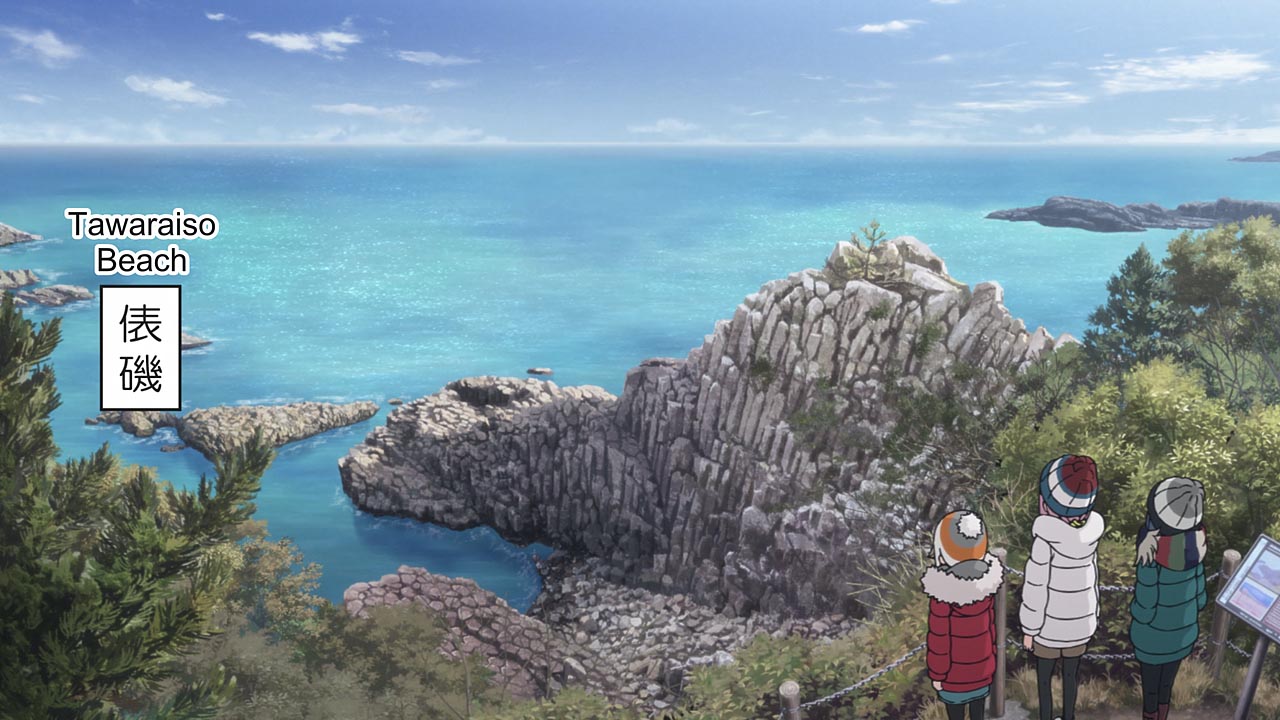
The second season of Yuru Camp concluded with a four-episode trip around the Izu peninsula south of Tokyo. It was mostly more of the same — girls go camping in cool weather, and nothing much happens. Which is fine; spending time with the introverted, independent Rin is enough. (The next hard drive I buy will be named “Rin,” joining the company of Kino, Marika and Isako.)
Among its other virtues, the show was almost entirely free of common fanservice — the beach episode lasted maybe ten seconds and occurred only in one character’s imagination. However, there was plenty of scenery and food porn. One unexpected pleasure was the show’s awareness of the geological history of Izu. Although Japan has numerous volcanoes, some very active, they rarely figure in anime.
Columnar basalt
If you’d like to see the real-world counterparts of the locations in Yuru Camp, infinitezenith has you covered: one, two, three, four, five, six.
Business Insider interviewed Laid-Back Camp producer Shōichi Hotta, where he shared some of the secrets behind the hit anime. He said that although the manga is published in Manga Time Kirara, which tends to be associated with slice-of-life stories that emphasize cute girls, Laid-Back Camp has some slightly different nuances to its appeal, and he wanted to ensure that this was captured by the anime. Specifically, there were two things that he set out to avoid:
1. When a character praises another one of the other girls, don’t make them say “You’re cute.”
2. Don’t let them get touchy-feely so easily.
He explained that doing so would pigeon-hole the genre, and also that these kinds of depictions weren’t in the original manga to begin with.
*****
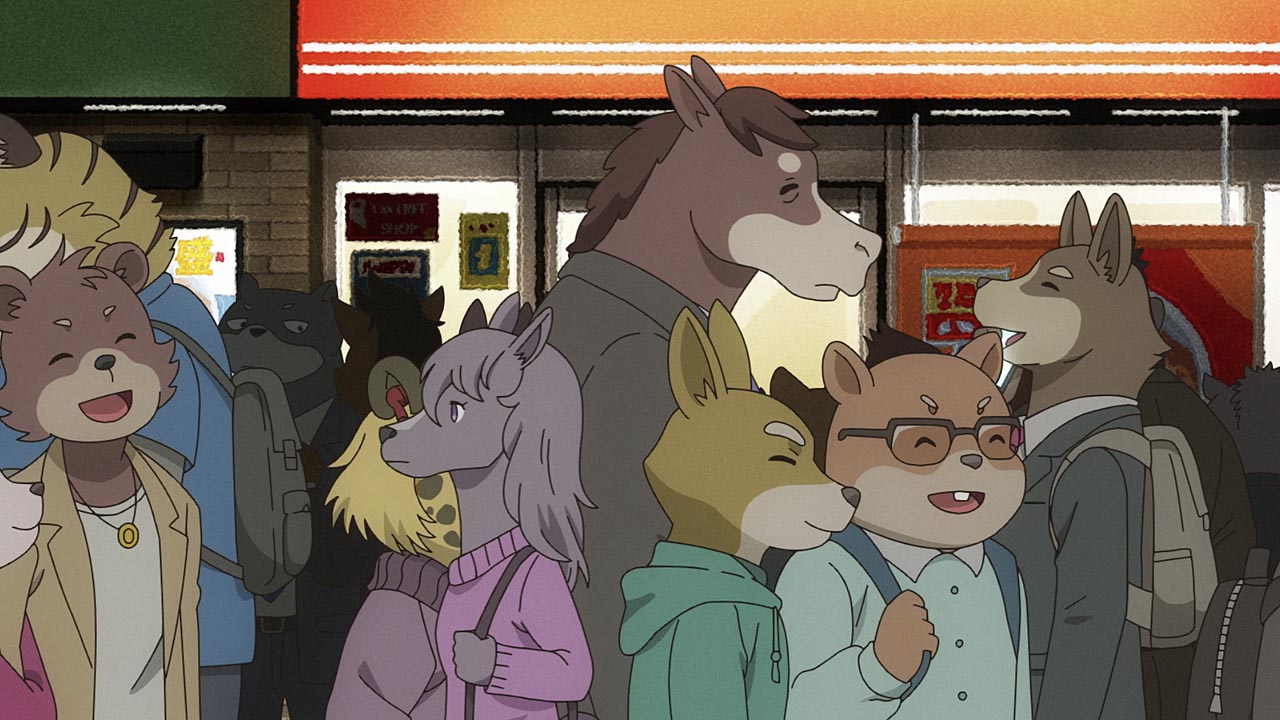
I’ve been checking out first episodes of the current season on Crunchyroll as they become available to non-subscribers. As usual, I rarely can tolerate more than five minutes of most, but I did watch the debut of OddTaxi twice. It looks like a kid’s show — simple art, anthropomorphized animal characters — but it has a satirical edge and looks like it could get quite dark. The central character, a walrus who drives a taxi, is blunt and cynical. There are strong hints of police corruption and various nefarious goings-on, and probably everyone has a secret. Despite appearances, it’s not for children. What the central story will be isn’t clear yet, but I will probably continue to watch this.
Some spectacular views of the first phase of the eruption in Iceland.
The best source for information on the events on the Reykjanes peninsula is Volcano Café. Check the comments on recent posts for the latest news, pictures and videos.
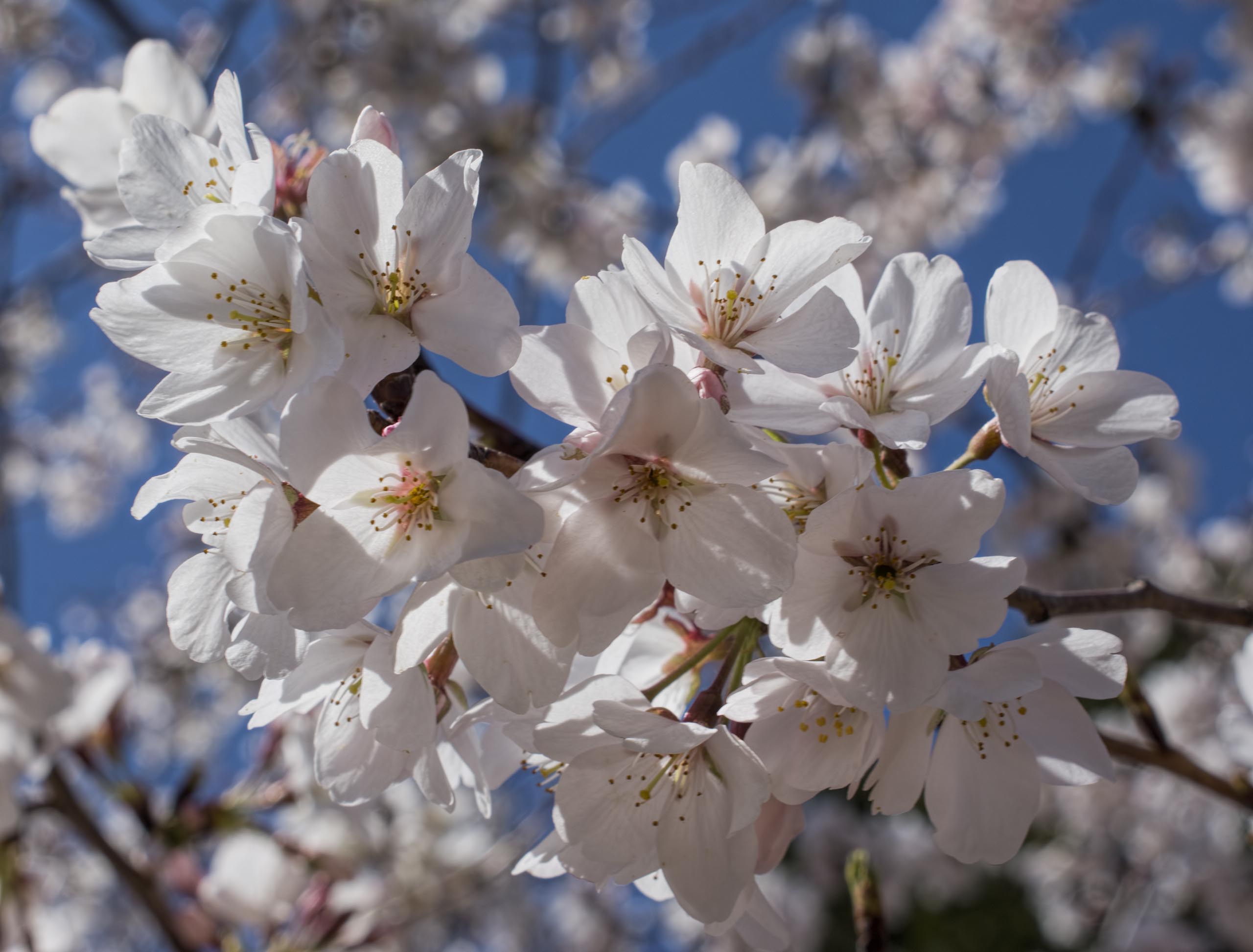
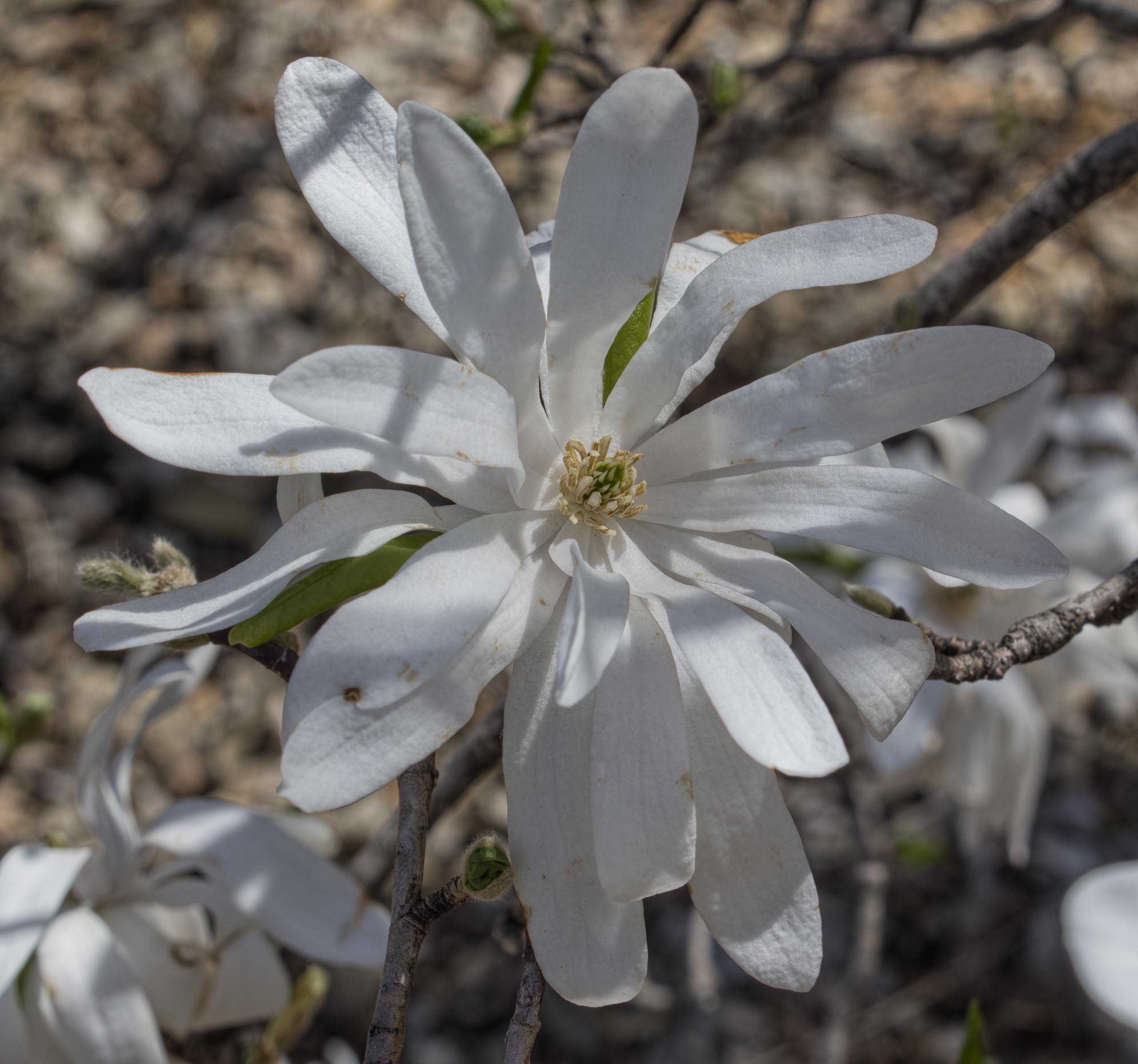
While the crypto-British Okame cherry at the botanical garden was badly damaged by the freeze in February, the Yoshino cherry did fine. The deciduous magnolias were also untouched by the cold.
These are the three signs of spring in Kansas: ants in the house; lawnmowers; and, tornado warnings. I spotted the first ant a few days ago. Today, Sunday morning, at 8:40, two guys attacked the yard next door with edger, blower and lawn mower. All we need now is a real tornado, and spring will be fully here.
I might have saved this for a secondofFebruary one of these years. However Theodore Dalrymple mentioned it in a recent column, so I’ll post it now.
The Latest Decalogue
By Arthur Hugh Clough
Thou shalt have one God only; who
Would be at the expense of two?
No graven images may be
Worshipp’d, except the currency:
Swear not at all; for, for thy curse
Thine enemy is none the worse:
At church on Sunday to attend
Will serve to keep the world thy friend:
Honour thy parents; that is, all
From whom advancement may befall:
Thou shalt not kill; but need’st not strive
Officiously to keep alive:
Do not adultery commit;
Advantage rarely comes of it:
Thou shalt not steal; an empty feat,
When it’s so lucrative to cheat:
Bear not false witness; let the lie
Have time on its own wings to fly:
Thou shalt not covet; but tradition
Approves all forms of competition.
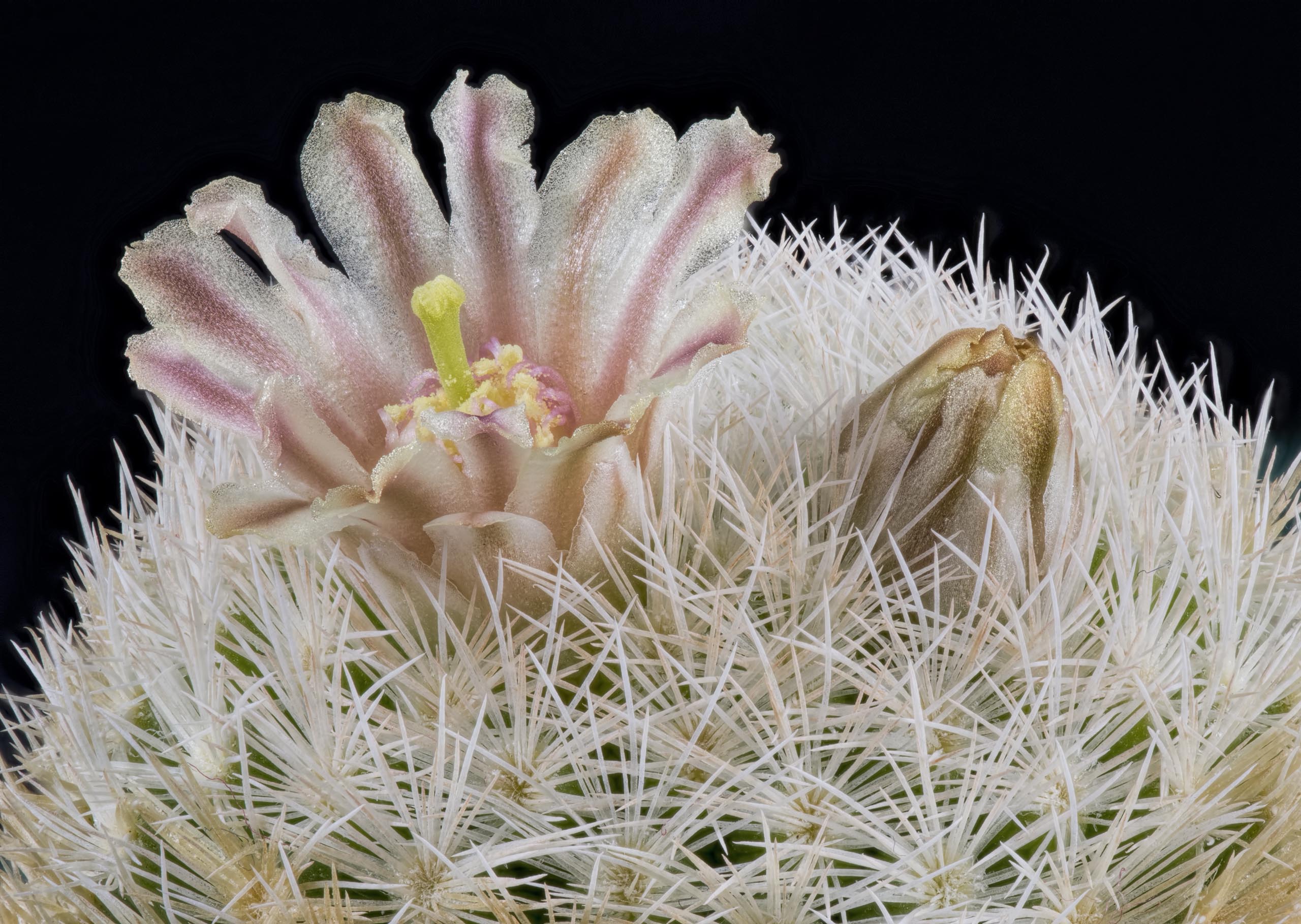
A Mammillaria lasiacantha that I started from seed a few years ago opened its first flower this week. It’s a small plant; the flower is about three-eighths of an inch across.