
My friend Roger the Fiddler has begun a weblog, Cold Jazz. If you’re interested in how music works, it’s worth a visit. (John Salmon, are you still around?)
Category: Music
Another one gone
Today it’s Michael Brown, keyboardist and songwriter of The Left Banke half a century ago.
(Via Dustbury.)
Addendum: Surely someone has made an AMV combining “Pretty Ballerina” with Princess Tutu, but a search at AMV.org comes up dry. I did find a video with Russian animation.
What kind of monster?
(Via the Borderline Boys.)
Metallica may be a Big Name in metal, but I’ve never been able to take them seriously. ((When I do listen to their songs, I prefer Apocalyptica’s covers to the originals.)) Severian also finds them a bit silly, in an academic way.
Ukulele and tuba
Masaki Kurihara and his cohorts recently turned up at Wonderduck’s, which gives me an excuse to post a few favorites.
Porkypalooza II
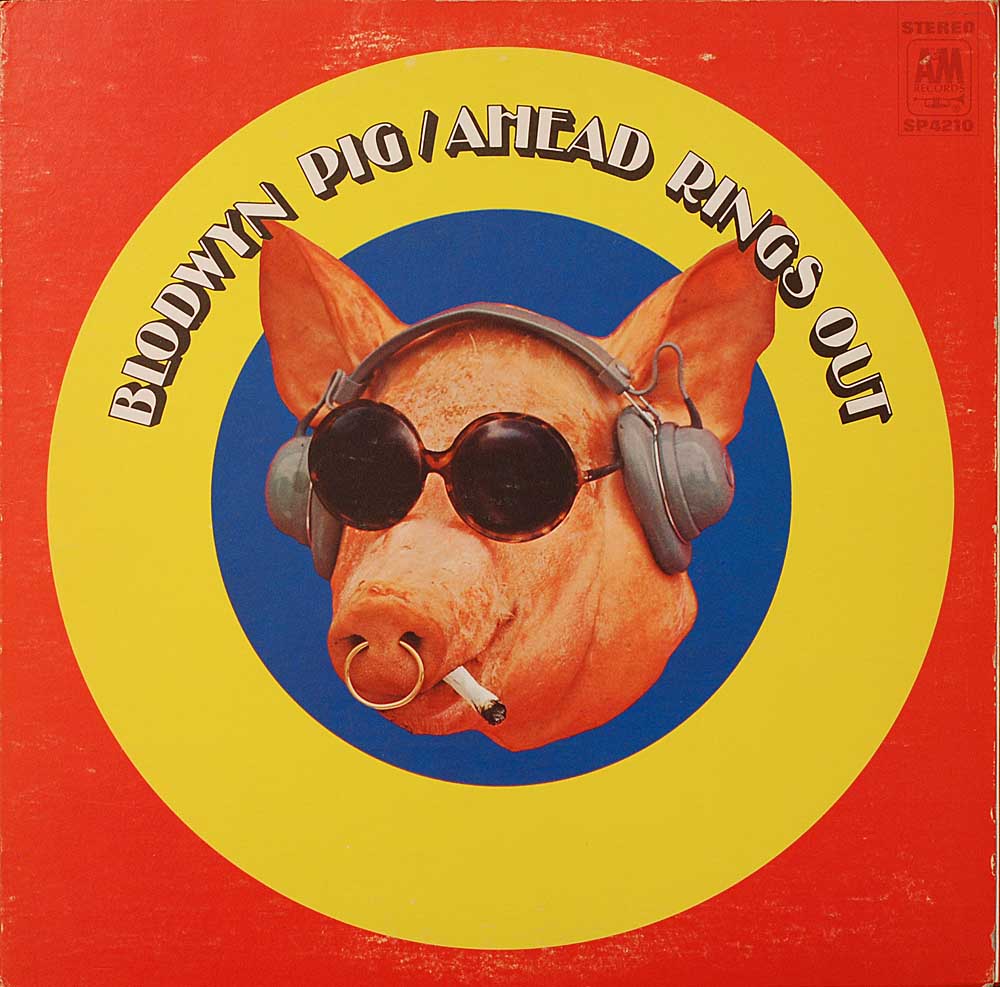
A couple of old favorites by Blodwyn Pig, the band guitarist Mick Abrahams formed after his departure from Jethro Tull. Jack Lancaster plays saxes, plural and often simultaneously. The bass and drums are by Andy Pyle and Ron Berg.
Wring that dishrag
Here’s a song for Steven, sung by John McCutcheon.
Zooming along
Back in the 1980s, it took immense amounts of computer time to generate fractal images. If you wanted to see pretty pictures of recursively-generated figures, you borrowed books such as The Beauty of Fractals, or watched Nothing But Zooms if you knew someone with the video. Computers and software have come a long way since then, and nowadays you can easily create your own fractal images on your laptop. I experimented with a couple of applications for Macs this weekend, Xaos and UltraFractal.
Xaos is freeware, and it comes in Windows and Linux versions as well. It’s fairly easy to use, though you might want to bookmark the online documentation. It’s what I used to make the video above. It doesn’t actually make movies. Instead, it outputs a series of .png files, which you can import into Final Cut or something similar. (Be aware that at 30 frames per second, there are 1800 images per minute. You’re going to be working with a lot of files.)
Ultra Fractal has some Photoshop-style image manipulation features. It’s more complicated than Xaos but not really difficult to figure out. However, it’s a bit pricey; if you want to do animations, it will cost you $130. I think I’ll make do with Xaos for now.

A little Maiden in the morning
There’s a lot of bluegrass metal around these days. Perhaps that’s not so strange; bluegrass has been called “acoustic shred,” and sometimes that definition fits. Here are a couple of examples, the one above from Finland and the other possibly from somewhere ‘way down south.
Louder than Lang Lang
Before there were sequencers, there were player pianos. The American Fotoplayer also incorporated a forerunner of the drum machine.
There are many more examples here.
(Via the Borderline Boy.)
Twit rock
So Green Day is worthy of the Rock and Roll Hall of “Fame” but Johnny Winter (ELP, Yes, Fairport Convention, Roy Buchanan, King Crimson …) is not. Bah.
Another one gone
Today it’s Ian McLagan, keyboardist for the Small Faces half a lifetime ago.
Vexed
There are all kinds of strange things on YouTube. For instance, this recording of Erik Satie’s notorious “Vexations.” Normally a complete performance runs from 14 to 24 hours. Nicholas Horvath plays the 840 repeats in less than ten hours, which is blazingly fast for a piece marked “très lent.” (No, I’m not counting them, and I don’t expect to listen to the whole thing.) On another occasion, Horvath took 35 hours to play the piece. That performance was probably closer to the proper tempo.
Not every pianist who attempts a solo “Vexations” succeeds. From The New Yorker:
An Australian pianist named Peter Evans abandoned a 1970 solo performance after five hundred and ninety-five repetitions because he claimed he was being overtaken by evil thoughts and noticed strange creatures emerging from the sheet music. “People who play it do so at their own peril,” he said afterward.
Morning serenade
Arriving at Harmony Row
I early acquired the habit of listening to music from the bottom up. A tune with an energetic bass line is far more likely to catch my attention than one in which the bass merely marks chord changes. I took to Cream immediately, partly because of Clapton and Baker, but mainly because of bassist, singer and songwriter Jack Bruce. There are many musicians whose bass playing I’ve enjoyed, but Bruce has always been my favorite.
Jack Bruce passed away today. R.I.P.
Here’s Bruce with Ginger Baker and Eric Clapton:
Seeing red
“Is She U.N. Owen?” is probably the best-known piece of music from the vast Touhou Project, ((except possibly for “Bad Apple“)) and you can find innumerable versions in every style, from orchestral to nightcore, on YouTube. I stumbled across the one above recently while looking for something else.
Another version of the tune, impressive yet ridiculous.
Incidentally, “U.N. Owen” is not “Death Waltz.” This is “Death Waltz:”
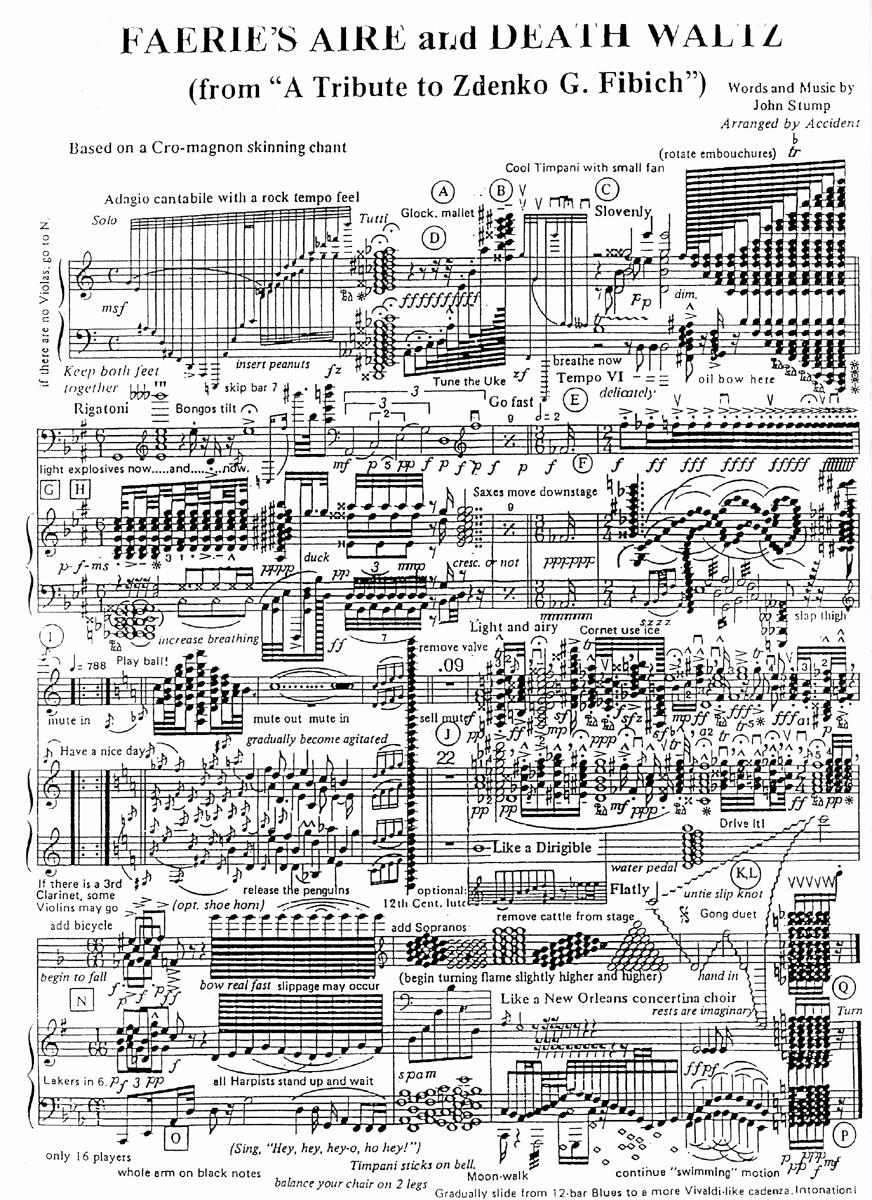
Update: Yet another version of “U.N. Owen,” this one by Floating Cloud.
https://youtube.com/watch?v=VpNvGNRlFaE
Fifty years ago today …
… Bob Moog introduced his modular synthesizer.
Anybody have a spare $150,000?
October song
“Hocus Pocus” was released on album 43 years ago this month and as a single a year later. The Borderline Boy says that this is the best song in the known universe, and I won’t argue. Certainly the lyrics alone are worth the entire output of any dozen singer/songwriters combined.
Two-fisted fiddle player
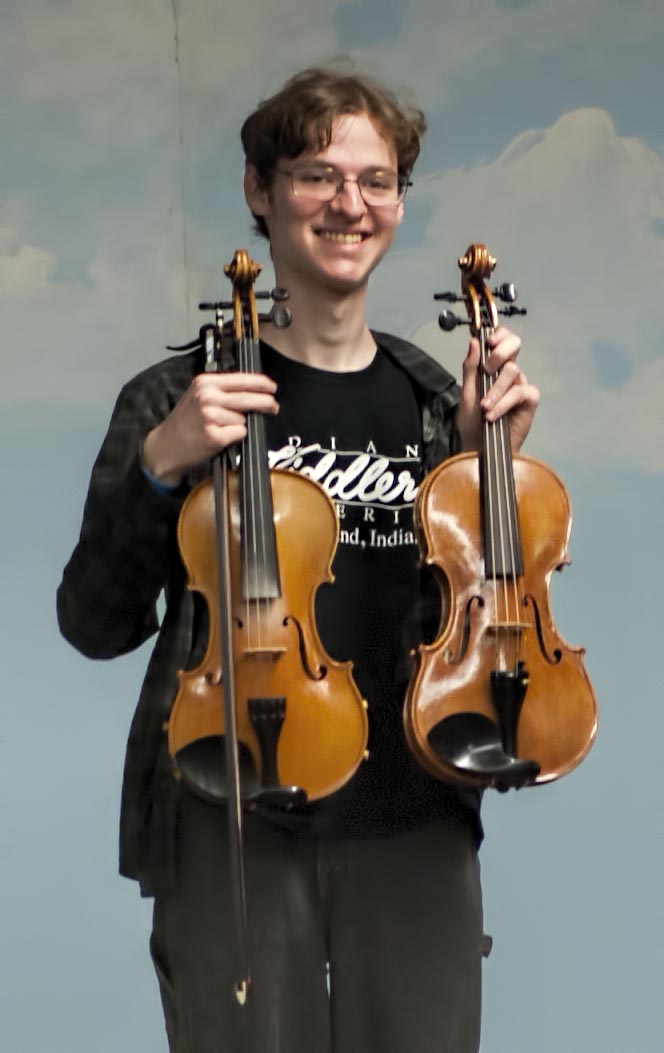
My friend Roger, musician and aficionado of fine anime, acquired another fiddle for his collection Friday in the old-time fiddle competition at the Walnut Valley Festival in Winfield, Kansas.
This was his encore:
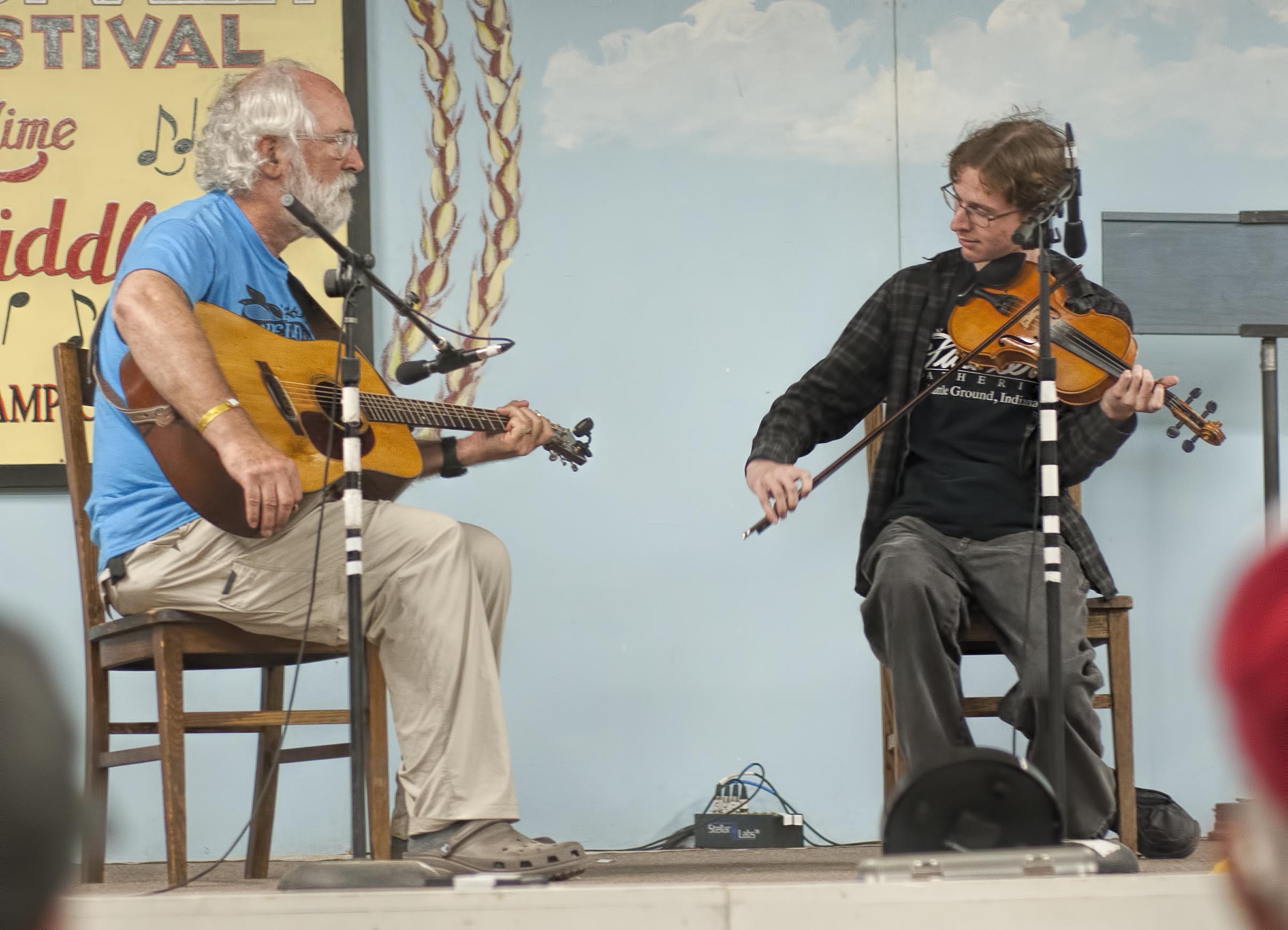
Update: A better-quality recording of Roger from a jam session later in the festival:
Name that tune
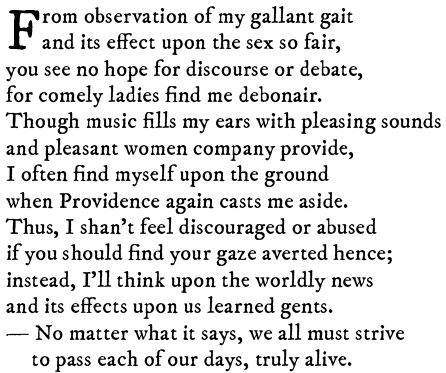
These are the lyrics to a certain over-familiar song rewritten as a sonnet. Can you identify the original? Here’s a hint the answer. There are more sonnets here.
(Via Fillyjonk.)
Rock and reel
When does a fiddle contest require a referee?
(Translation of the text at YouTube via a friend: “Annual competition in Pembroke which has about 25 fiddlers playing reels in turn without stopping and without playing a reel that has been played before. Towards the end, the fiddler must play only the “A” of a reel (which only lasts 10 seconds). This video shows the final minutes of the contest Sep 5, 2010, while there were only three participants. April Verch, Shane Cook and Danny Perreault. The contest lasted about two hours. Judge: René Dacier. Winner 2010: April Verch. In the end, Danny Perreault played one of his compositions (Breakdown at Rosary) and Germain Leduc accompanies on the piano in a funny way …”)