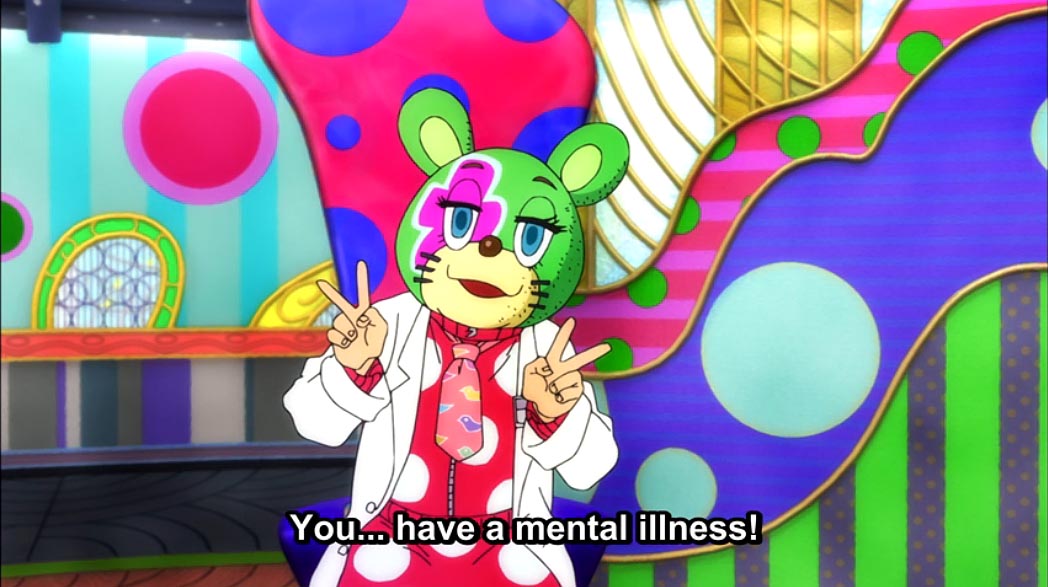
Kenji Nakamura‘s Kuuchuu Buranko is finally available to American viewers. If you thought Gatchaman Crowds was trippy, make an appointment to see Dr. Irabu.

Trivia that matter
Kenji Nakamura‘s Kuuchuu Buranko is finally available to American viewers. If you thought Gatchaman Crowds was trippy, make an appointment to see Dr. Irabu.
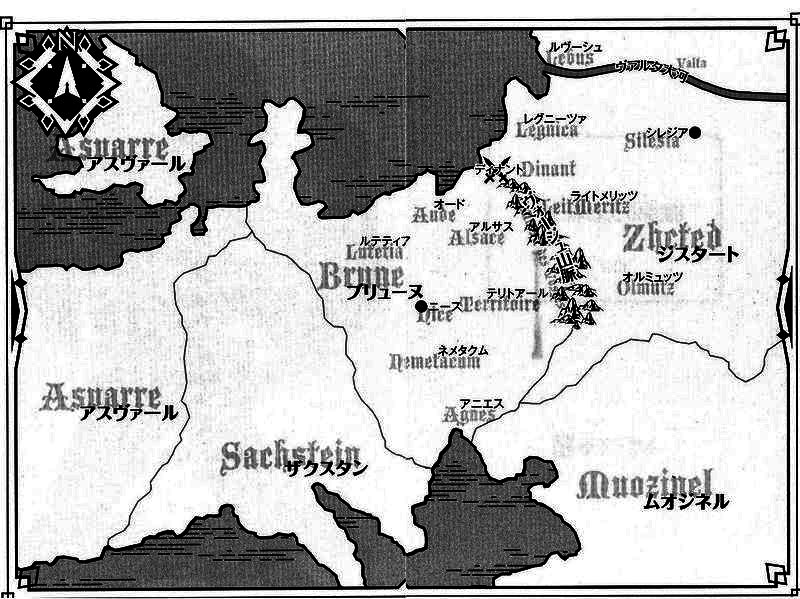
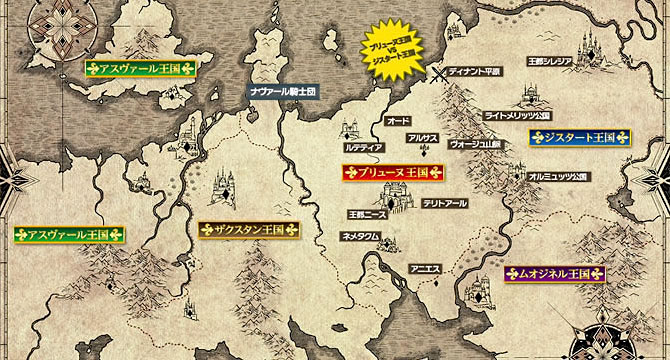
Those following Madan no Ou to Vanadis might find a map of its world useful. I found a couple at a wiki devoted to the show. (I tweaked the contrast of the first to improve readability.)
Advice to cartographers: Legibility trumps stylishness. Pseudo-black letter might look pretty on the page, but it’s a pain to interpret. Please stick to plain fonts such as Helvetica or Times Roman.
Thanksgiving is over, and another Christmas season is at our throats. I won’t be going near any shopping center until January. Here’s a token seasonal song that you can sing along with if you’re feeling nostalgic.
If only Hamilton had said: “No citizen of the United States should refrain from grilled trout on Thanksgiving Day.”
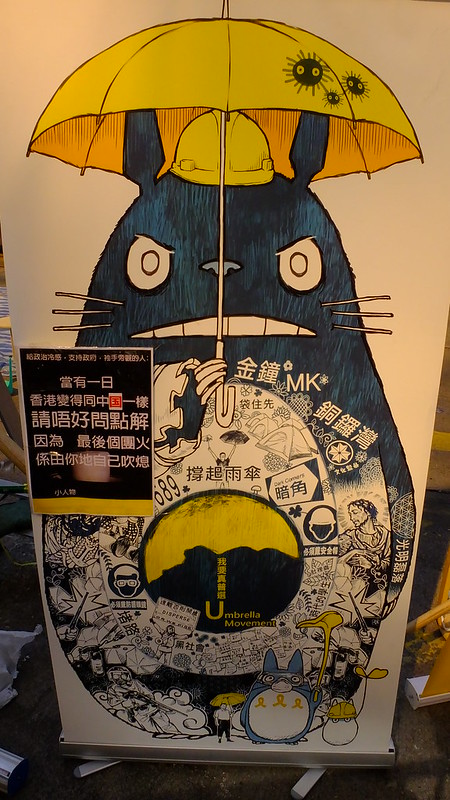
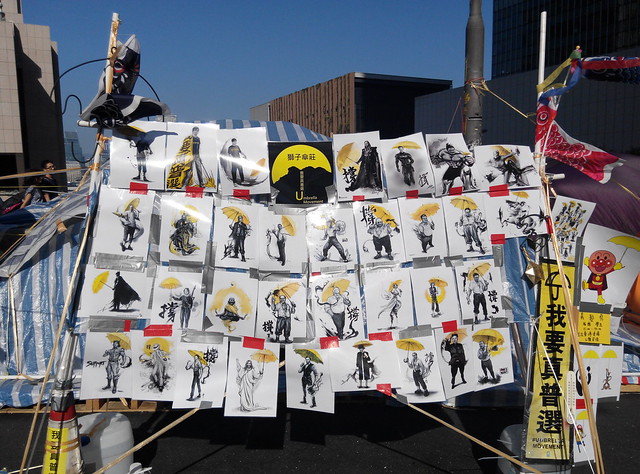
One of the photographers I follow on Flickr has been recording the sights of the “Umbrella Revolution” in Hong Kong. Her photostream is worth a look.
For commentary on current events in Missouri, see the professor.
“Pirate” beats “ninja” easily, and “samurai,” too.

(Illustration from Amagi Brilliant Park, episode seven. Chart from Google Ngram Viewer.)
Holuhraun Volcano, Iceland, November 2014 from Jon Gustafsson on Vimeo.
The eruption in the Holuhraun lava field between Bárðarbunga and Askja continues unabated.
Again, in slow motion:
There are good live views of the action here and here when the weather in Iceland cooperates.
It was my good fortune half a lifetime ago to spend time around Msgr. Lorenzo Albacete, who passed away recently. Cardinal Seán O’Malley, in his homily at Lorenzo’s funeral, tells some stories that illustrate one side of Lorenzo’s memorable personality.
It was also around that time when Lorenzo first met Cardinal O’Boyle the Archbishop of Washington. Lorenzo and I spent a lot of time at St. Matthews Cathedral where I was working with Rosario Corredera and the Hispanic community. Lorenzo used to drive me very often. One day, as he was wont to do, Lorenzo parked in the Cardinal’s parking space… (Any ‘no parking’ sign was an invitation to Lorenzo.) At that moment Cardinal O’Boyle was approaching and confronted Lorenzo: “who are you,” he asked. Lorenzo replied: “I am the Cardinal”. Cardinal O’Boyle, who was something of a curmudgeon, answered back: “I am the Cardinal!” To which Lorenzo said: “yes, you are the day Cardinal; I am the night Cardinal.”
It is no wonder that after his first Mass, Lorenzo’s mother asked me to bless her new apartment. I said, “But, doña Conchita, your son was just ordained.” She said, “Yes, padre, but I think he is joking.”
There’s more at the Cardinal’s site. (Scroll down to “Tuesday.”)
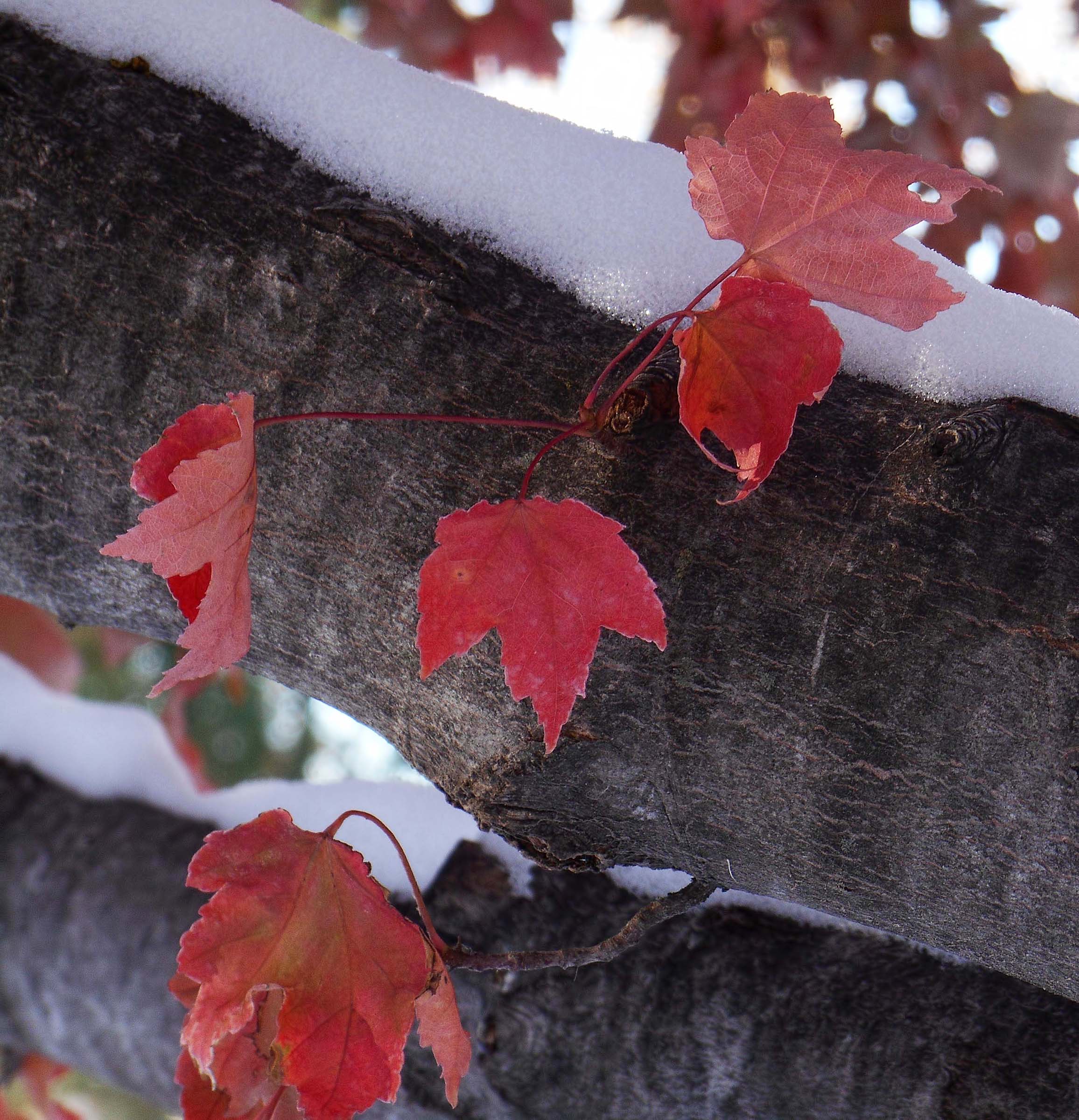
Many people declare that fall is their favorite season. I’ve never understood why. Sure, there are pleasant Indian summer days when you can read Keats and admire fall foliage, but it always ends in cold and desolation. This year winter came very early. The maples never reached full intensity, and other late fall trees were still mostly green when the January weather arrived. Where’s global warming when you need it?
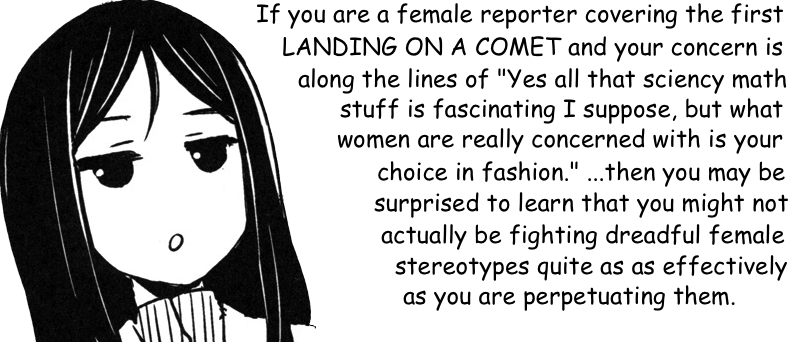
(Illustration from the Brickmuppet. Title ripped off from Aliens in This World.)
I just discovered that Terry Pratchett’s Wyrd Sisters was made into a movie. It’s not the Discworld novel I would have chosen — Granny Weatherwax is my least-favorite of Pratchett’s recurring characters, and I’d have preferred a good adaptation of The Light Fantastic ((The title was deliberately chosen to annoy Robbo.)) — but it’s still funnier than most alleged comedies. Chrstopher Lee is a resonant Death, though his voice doesn’t have “all the warmth and colour of an iceberg.” Although Wyrd Sisters is animated, Nanny Ogg’s abundant presence renders it not quite suitable for children. She sings a bit of her hedgehog song, too.

There are some things in the movie that I don’t remember from the book.
Update: It turns out that a lot of Pratchett has been dramatized, and much of it is available and inexpensive — downright cheap, sometimes, if you buy used. I just ordered these:
The Colour of Magic (which also adapts The Light Fantastic ((“You know when we were flying and I was worried we might hit something in the storm and you said that the only thing we could possibly hit at this height was a cloud stuffed with rocks?”
“Well?”
“How did you know?”)) )
There’s also a Discworld calendar, but since I already have four other 2015 calendars ordered, I think I’ll pass.

(From episode six of Ore, Twintail ni Narimasu.)
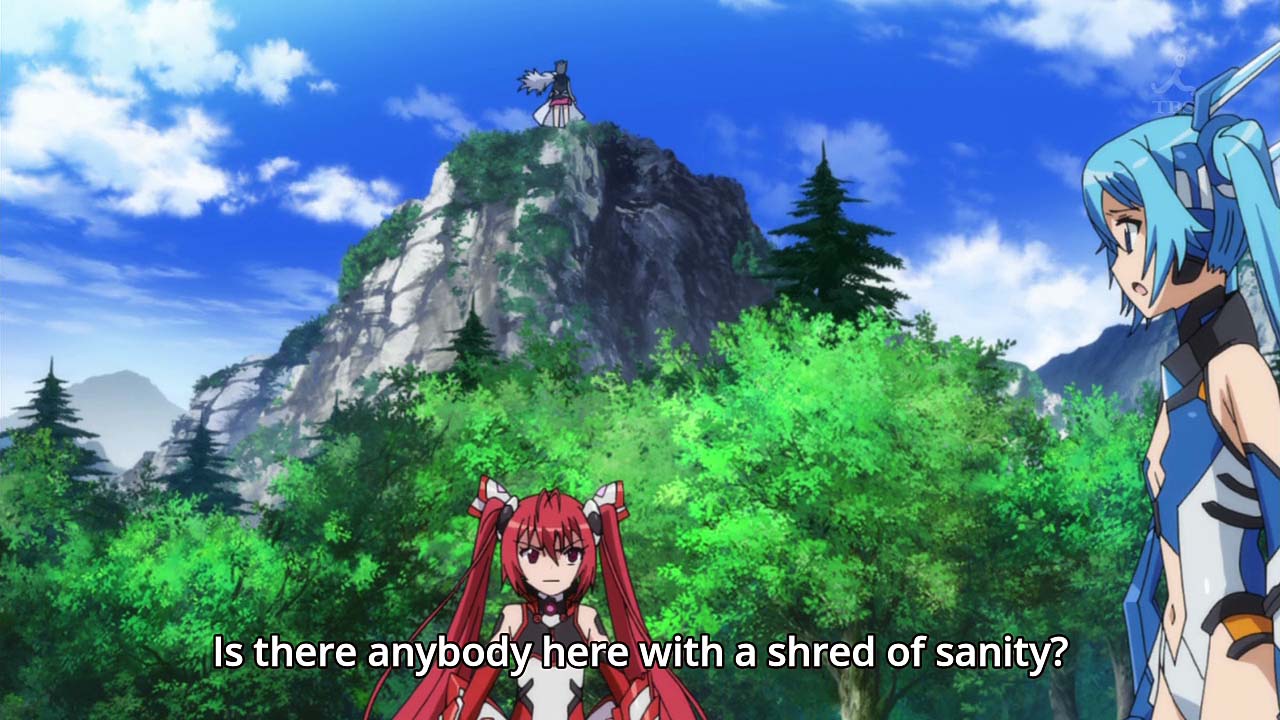
Good question.

I’ve never been that interested in yachting, but I could change my mind. (Via Steven.)

I’ve never any interest in football, European or American. Perhaps I’ve missed out. (Via the Brickmuppet.)
Perhaps not. (Via the Borderline Boy.)

So the Brickmuppet is suspicious?
Update: Possibly of relevance:
Or perhaps not.
Just as the technological singularity is the point where technological change will happen so rapidly it cannot be seen beyond, the Neuman Singularity is the point where reality becomes ridiculous faster than it can be satirized.
(The “Neuman” referred to is Alfred E., not John von.)

The webmasters of the Dominican School of Philosophy and Theology know their Aristotle.
If you have Sitemeter on your site, get rid of it. Now.
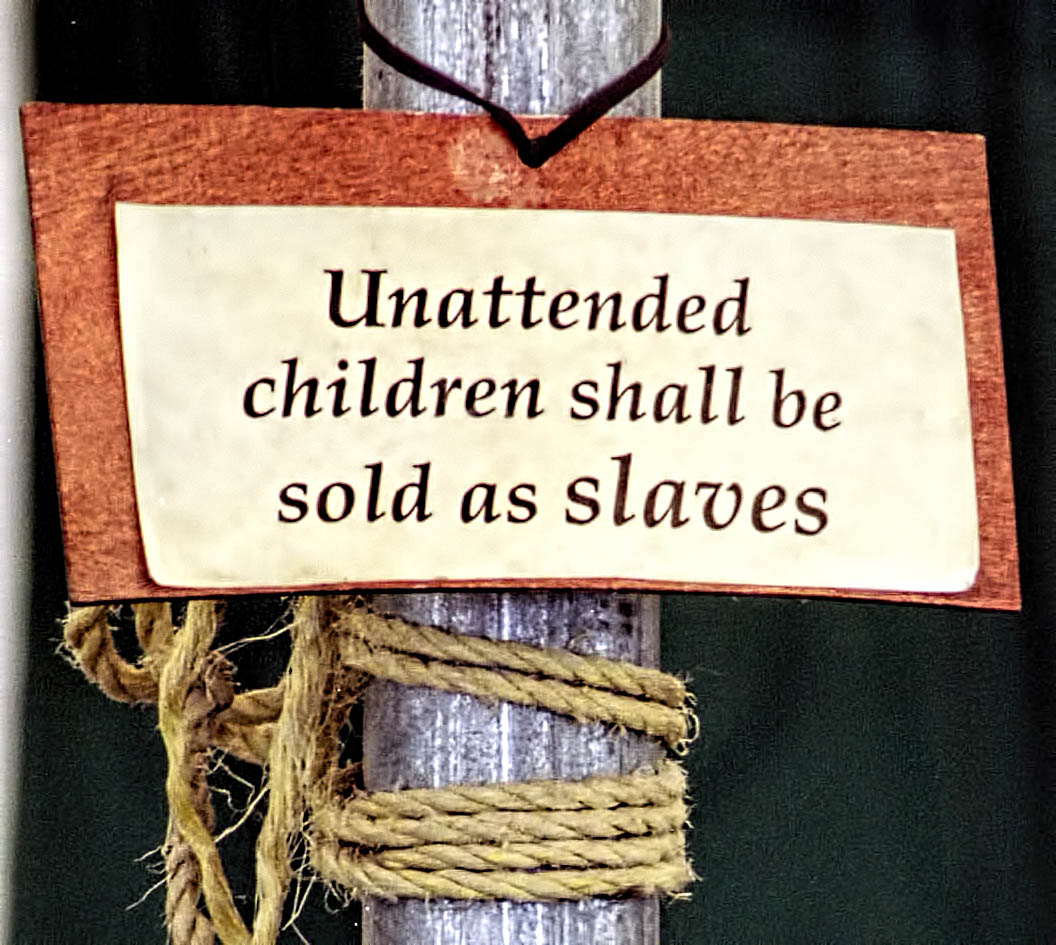
While going through old pictures, I came across this from a Renaissance Faire a decade ago. As threats go, that’s fairly mild. More frightening are promises to give stray children sugary snacks and free kittens.
In the modern state there now exist only two parties: citizens and bureaucracy.

It’s time to order next year’s calendars. I found a number of possibilites here, notably Girls und Panzer and Hozuki no Reitetsu. Others of note include Cardcaptor Sakura, World Conquest Zvezda Plot, Arpeggio of Blue Steel, Hyperdimension Neptunia, Natsume Yujincho‘s Nyanko and the third Madoka Magica movie.
There’s plenty else there — lots of cheesecake, hundred of dogs, Mt. Fuji, Naruto and similar franchises, all the usual stuff. There are also curiosities like the Karel Capek calendar, which is about tea, not robots or newts; the lifestyles disease prevention calendar; and, the maritime self-defense force calendars, both male and female.