Something stinks

Iwoto?

Okay, for the sake of a story, I can suspend my disbelief in sentient submarines and ships. I can accept “mental models” of these vessels that look like adolescent girls. I can even believe that stuffed bears eat carrots. But I cannot believe that any military would store vital materials on Iwo Jima . “Sulphur Island” is the tip of a rapidly-inflating volcanic resurgent dome, and it’s rising out of the sea at an average rate of about eight inches a year, rendering any harbor or dock temporary. Soon, geologically speaking, magma is going to meet seawater, catastrophically. The creators of Arpeggio of Blue Steel need to do better research.

*****

Shin Sekai Yori depicts a future in which adults are frightened of children. We’re already there. (Via Ace.)

Love, Labrador

The Kousanji family

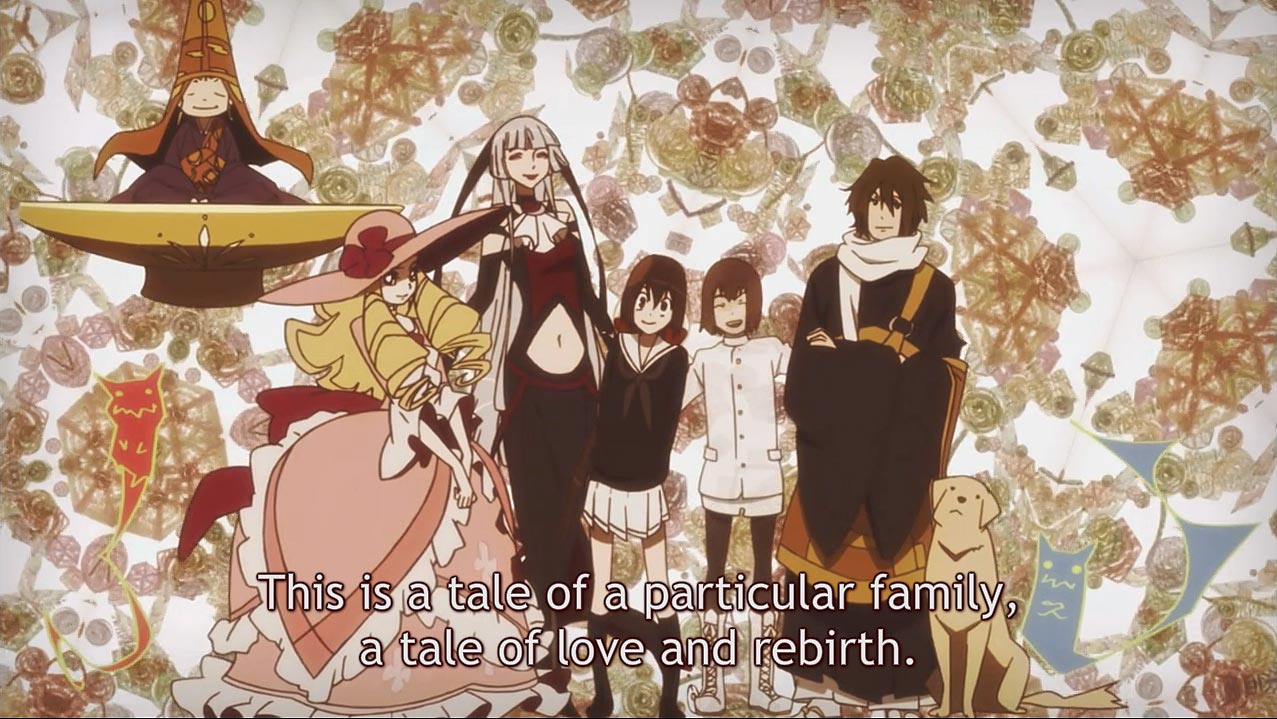
Five episodes in, the story in Kyousougiga is taking shape, and it looks like that underneath the Carrollian whimsey and name games, it is exactly what it purports to be, a fairy tale of love and rebirth in the Kousanji family. It’s difficult to encapsulate the show beyond that. ((Crunchyroll’s description of the show is “Enter a description.”)) Instead, here are a bunch of screen caps from the second episode, “Episode 1,” to give you an idea of the flavor of this willfully eccentric series.

Continue reading “Love, Labrador”

Through another looking glass

Quick notes on what I’m currently watching:

Jonathan said the magic words “Alice in Wonderland” in his notes about Kyousougiga, so of course I had to take a look. A few minutes into episode zero, I wondered if I was back in Kenji Nakamura Land. Not exactly, it turns out, but some of the designers had indeed earlier worked on Mononoke and other Nakamura projects. If you liked the art in Gatchaman Crowds, check Kyousougiga out.

About Kyousougiga itself: after watching episodes zero (surrealistic verging on psychotic; prestissimo) and one (in which the story actually begins; allegro ma non troppo), I can say that it sure is lively, inventive and fantastical, and very, very busy — you can’t let your attention wander for an instant lest you miss a vital clue. Whether all the bright colors and incessant activity ultimately add up to a story that makes sense remains to be seen.

Kill la Kill rockets along like a psychobilly song, proudly lowbrow and defiantly tasteless. There might be a political message and sociological commentary lurking beneath the outrages and the breakneck pace, but through the fifth episode it hardly matters. Kyousougiga and Coppelion show how artsy anime can be; Kill la Kill reminds you that you’re watching cartoons. Before there was Miyazaki, there was Tex Avery.

Arpeggio of Blue Steel has been a pleasant surprise. Given the elements — kids in the navy, sentient ships and submarines with “mental model” avatars that look like pretty girls, a powerful but vaguely-defined enemy, glowing hexagonal grids — I expected a Strike Witches ripoff. However, the focus has been on battle tactics, politics, and the puzzles human behavior presents to non-human minds. Fanservice has been minimal thus far.

For a while it seemed that I couldn’t be bothered to come up with a real title was going to be the comic counterpart of Divergence Eve: a very good show nearly spoiled by a surfeit of jiggle. Possibly the makers realized that; I didn’t notice any buy-the-BD moments in the fifth episode. However, while it was mildly amusing, it was never more than that, and Raul’s outbursts are increasingly grating. Unless the next few episodes are markedly better, I’ll probably drop it.

I likely will also drop Outbreak Company. Our hero crossed the line from raving otaku to blithering idiot in the fourth episode, and much as I would like to see what elves and dwarves make of human culture as presented in manga and anime, I’m losing patience. Update: Ken the Brickmuppet reports that the fifth episode is a disaster. The show is now off my watch list.

Today’s musical interlude

The Professor has discovered “group sounds,” the reaction of young Japanese musicians to the Beatles’ 1966 performance at the Nippon Budokan. Here’s a band of that school I recently discovered, Yokohama’s The Golden Cups. They might have had the first fuzzbox in Japan. The bass player, Masayoshi “Louis” Kabe, sounds like an asian John Entwistle to me.

Continue reading “Today’s musical interlude”

Miscellany

Guys und Panzer:

(Via the Borderline Boy.)

An ornithopter for Miyazaki.

The Sailor Senshi meet the Jetsons. (Via Project Rooftop.)

I think that when a human engineer lives a good life, he’s reincarnated as a beaver.”

Full disclosure: I am a creature of the sinister right-wing Koch brothers, just like Michael Mann. Both universities I attended, plus the one where I studied and photographed ballet and the one where I took part in the annual Renaissance Faire, have all received money from the Kochtopus.

Don’t expect a Calvin and Hobbes movie.

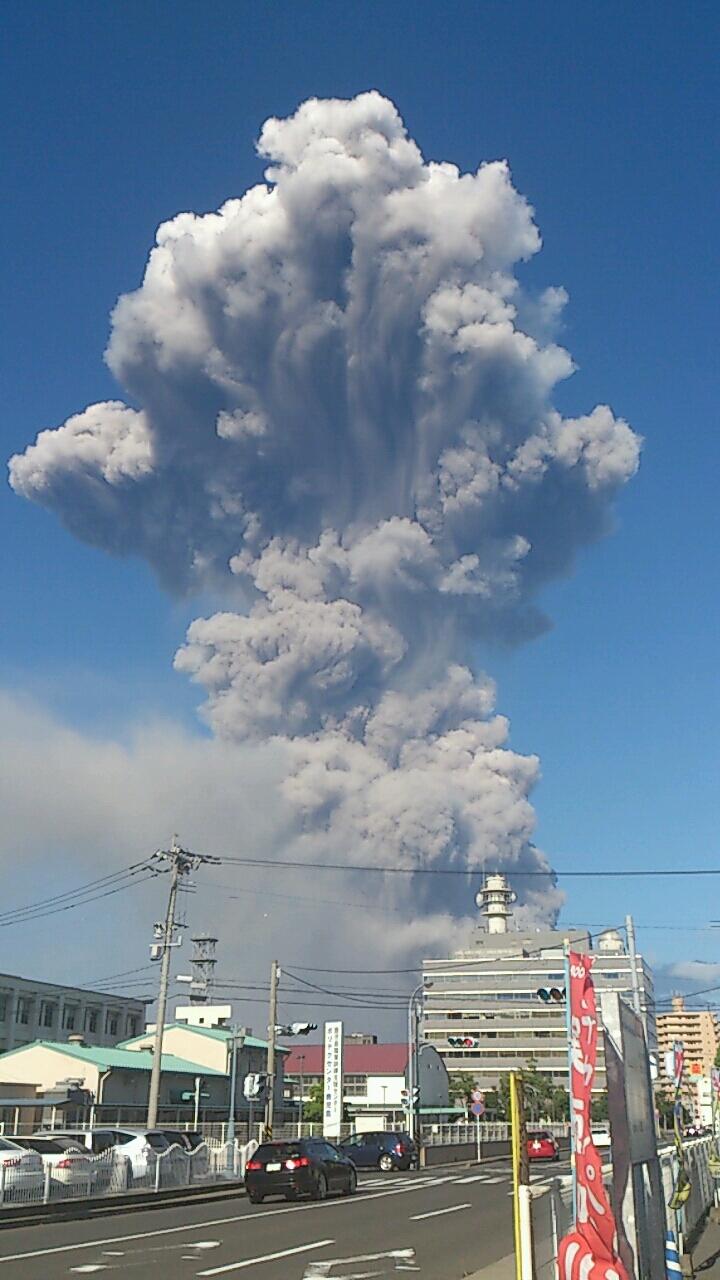
You probably shouldn’t expect another VEI 8 blast from Yellowstone, either.

I haven’t had a haircut in 20 years. Perhaps that is why I’m still alive despite riding my bike every day on the wild streets of west Wichita.

Notes on growing biochemical weapons.

Pride and Prejudice for academics.

Ikea or black metal?

Today’s musical interlude, lunatic bassist edition:

MxBx

Do all the little-girl singers sound alike to you? Is the Anime Music Tournament making you sleepy? Here’s something to wake you up. (If you’re prone to seizures, don’t click.)

If all you know about Japanese rock is what you hear in anime, you’re missing most of the best. Someday I’ll write about the bands I’ve discovered, from Happy End and the Sadistic Mika Band to Melt-Banana and Tatsuya Yoshida’s various projects. In the meantime, here’s an article about and an interview with Melt-Banana.

We Have Signal: MELT-BANANA from We Have Signal on Vimeo.

If you find Yako’s vocals hard to take, try thinking of her voice as a percussion instrument.

(Via Clear and Refreshing.)

The year of sewing dangerously

Useful adjectives for discussing Kill la Kill:

ridiculous
tasteless
vulgar
lunatic
gross
headlong
obscene
violent
sophomoric
breathless
extreme
insane
pretentious
freakish
puerile
stripperiffic
furious
absurd
pell-mell
disgusting
fun

The ideal audience for Kill la Kill is a bunch of drunken male college sophomores. The show really is too tasteless to recommend, but if you can stomach the inexcusable extremes, you might find it compulsively watchable. I can hardly call it good, but if the creators can maintain the berserk energy of the first three episodes without veering into stupidity or pornography, Kill la Kill could very well be great.

Other shows I’m currently following include Yuusha ni Narenakatta Ore wa Shibushibu Shuushoku o Ketsui Shimashita, Outbreak Company and Arpeggio of Blue Steel. I’m feeling lazy, so I’ll just refer you to Steven and Avatar for commentary on the first two. About Coppelion, I don’t know. There might be a good story there, or it might descend into Angst and Message. I also sampled Tokyo Ravens, which I barely remember though it’s only been a few days since I watched it, and Galilei Donna, which is ridiculous but does feature a wrench wench. I might watch more of the latter, but I don’t have great hopes for it.

Update: As of the third episode, I’m Not Typing This Silly Long Title Out Again is on probation. Fino may be a delightful character, but tentacles cross the line.

Update II: Another word for Kill la Kill: shameless.

Calendar girls

Calendar girls

It’s the time of year to look for new calendars. I found a bunch at YesAsia, such as the Girls und Panzer one above. Other shows represented that might be of interest to certain visitors here include Vividred Operation, Hyperdimension Neptunia, Gargantia on the Verdurous Planet and Hatsune Miku. There’s a Gatchaman calendar, but it’s the old-style Gatchaman, not Gatchaman Crowds — a pity; Utsutsu deserves at least one month of her own. ((Better yet, a calendar of her own.))

For those with different tastes, there are two Edward Gorey calendars, this one, and The Evil Garden.

Pop quiz

What do Shinku Izumi, Light Yagami, Death the Kid, Alpaca (from Polar Bear’s Café) and Percy Weasley have in common? The answer is below.

A few last notes on Gatchaman Crowds:

• The ending was unsatisfying. Although the good guys won and evil was defeated, and the resolution made some sense in terms of the show’s premises, it left too many questions unanswered. For instance, who or what is JJ? What is his connection with Berg-Katze? How did he know to pick Hajime? Are Utsutsu and Jou still around? What is Berg-Katze? What is his origin? What about MESS? Perhaps there wasn’t enough air time available to make everything plain, but if so, then why was half the penultimate episode a clip show?

• Nakamura doesn’t show us the final confrontation of Hajime and Berg-Katze, so I don’t know if J. Greely’s prediction was accurate. It makes sense and could have happened, and it would have made a fine climactic scene.

• Hajime is the most alien character in the show. ((Except maybe for JJ, but he scarcely counts as a character.)) I’m not convinced that she’s human, even if she does talk to her mother on the phone.

• Nakamura has a more optimistic view of human nature than I do, and more faith in the possibility of utopia. I’d rather that people didn’t try to immanentize the eschaton. (On the other hand, if you can transform troublemakers and jerks into inert cubes, then the remaining people probably will get along better and behave more responsibly. For a while.)

• Shifting attitudes toward information technologies can be followed in anime. In 1998’s Serial Experiments Lain, the “wired” is weird, scary and dangerous. In 2007’s Dennou Coil, evolved Google Glass is a lot of fun, though occasionally still dangerous. In Gatchaman Crowds, smart phones and conscious artificial intelligence are taken for granted and are generally benign.

Despite my reservations, Gatchaman Crowds is one of the better shows I’ve seen recently and is worth your time. It’s by no means Kenji Nakamura‘s best, though. If you want to see what he is capable of, violate international copyright law and download Mononoke.

The answer to the quiz:

Spoiler

They were all performed by Mamoru Miyano, who was also the voice of Berg-Katze.

[collapse]

Update: Ken the Brickmuppet finds libertarian themes in Gatchaman Crowds.

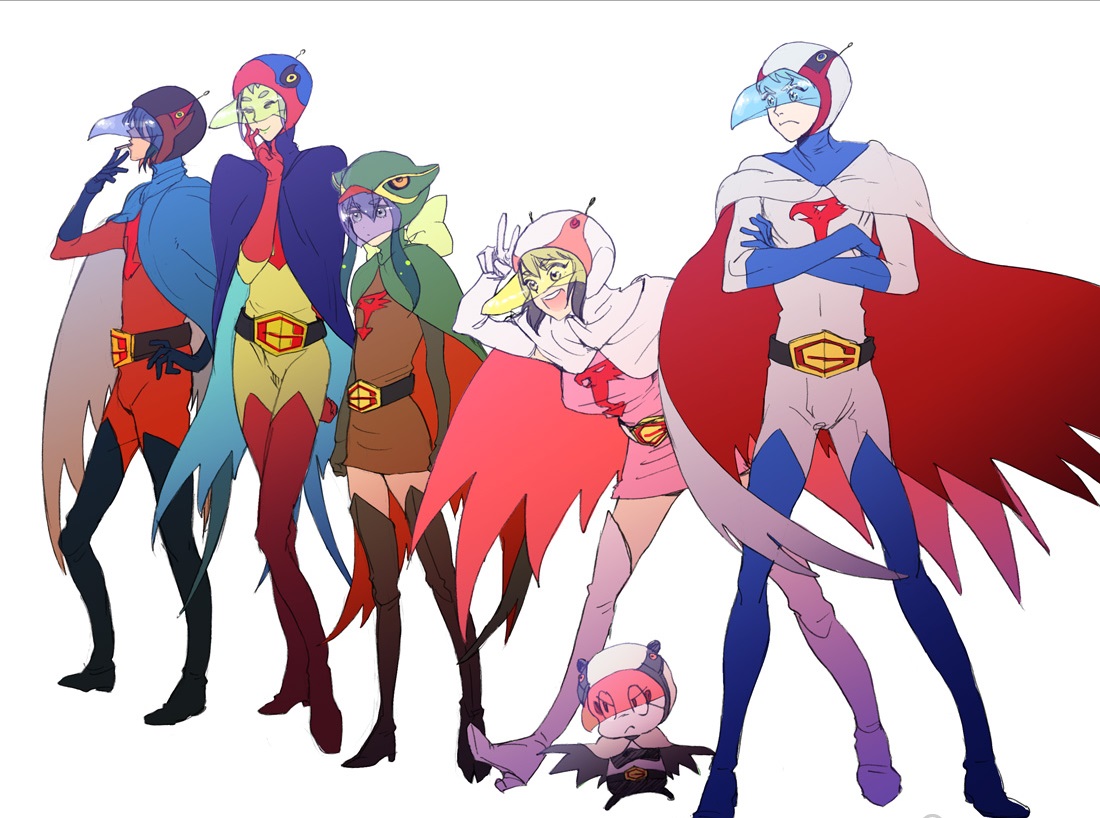
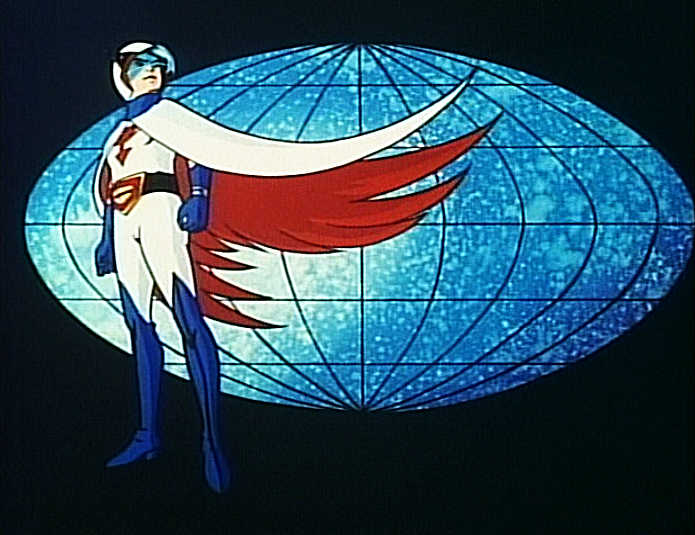
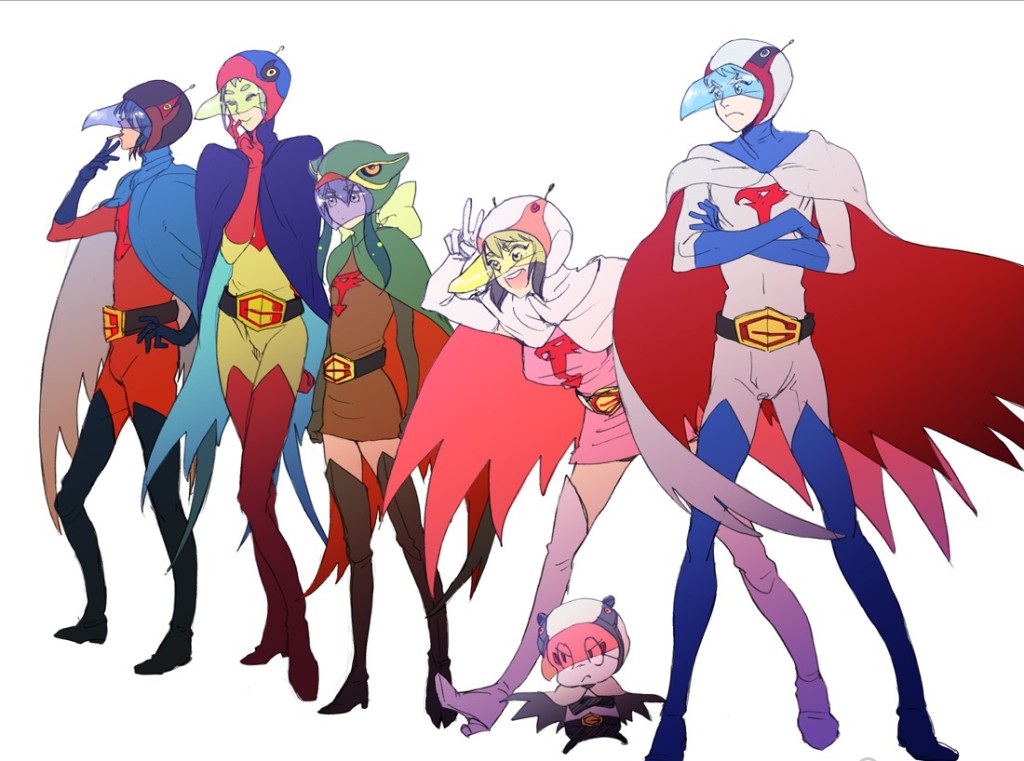
Update II: Greely found a picture of the team in old-style uniforms:
Gatchaman

Nobody’s favorite guitarist

Umizatou as Norio Wakamoto

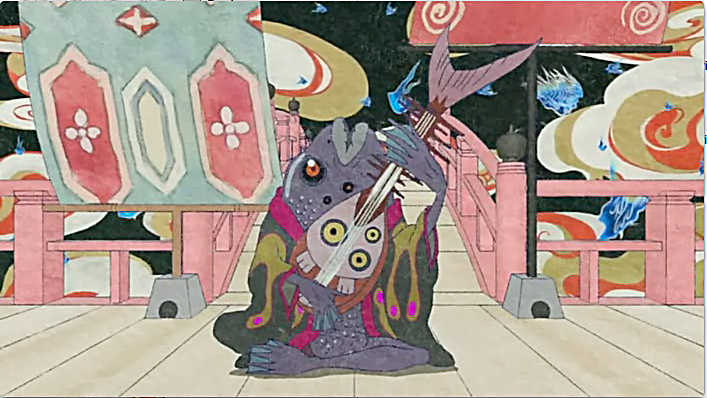
While I wait to see how well Kenji Nakamura pulls everything together in the concluding episodes of Gatchaman Crowds, I’ve been again re-watching Mononoke, his first full series and still his best. Above is a screen capture from the fourth episode, in which an ayakashi with the unmistakable voice of Norio Wakamoto visits the passengers of a ship sailing seas stranger than any in Yellow Submarine.

Mononoke Crowds

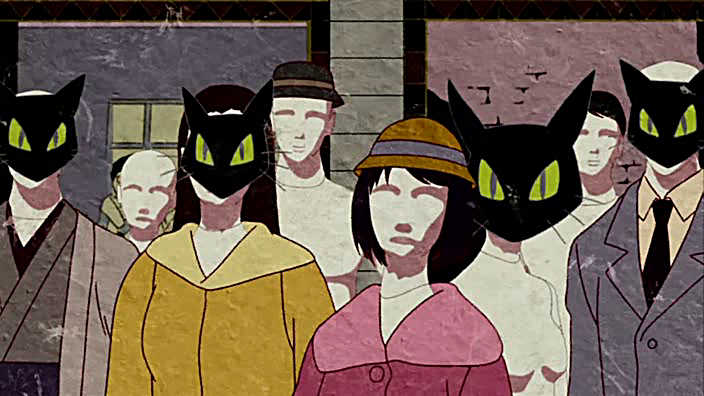
Crowds: Mononoke, above; Gatchaman, below.

Gatchaman Crowds

Word of the day

Nibiruistic.

Nibiruistic (adjective), used to describe postulations, interpretations and opinions on natural phenomenae coloured by a wish for disasters on a Doomsday scale rather than based on scientific merit. The word is derived from Nibiru, the fictional planet invoked as the root cause for the disaster predicted by the Mayan calendar that would end the world on December 21st, 2012. Since the Mayan calendar was very ambiguous, it could be said to be the archetype for a Nibiruistic interpretation. Nibiruism (noun), a statement based on a wish for a disaster on a Doomsday scale rather than on scientific merit.

*****

Now that we’ve considered what the fox says, what does the moose say? ((“Hey, Rocky.”))

The furry anthem is not the first crime the Norwegian Flight of the Conchords has commmitted. Here are some earlier outrages (N.B.: rough language and worse):

*****

I abandoned Stella blah blah blah several episodes ago when it ceased to be fun. Ken the Brickmuppet stuck with it, and he has figured out what it all means:

We at Gainax hate you.
Our childhoods were miserable because we were a bunch of geeky, socially inept otaku who grew to hate our hobby (which we blame for all our lost opportunities). Nothing makes us sicker than seeing those who watch and enjoy anime for they remind us of our selves and our many personal failures. We hereby dedicate our lives to making you hate the medium as much as us, for we are transgressive and enlightened hipsters who understand the nihilistic futility of everything…Well…everything except the cruel pleasure we derive from getting you gullible fools to first enjoy something we create and then watch helplessly and despair as we dismember it without anesthesia before you. That is the greatest joy in all creation.That we are paid to do this is icing on the cake. It’s an ephemeral joy though. Your innocence thus defiled, you can bring us little amusement from this point on, but there are always others that follow the likes of you. Now get thee along, Aokigahara beckons you.

The view from above

Can’t afford to travel to Japan? Visit Tokyo virtually with this extremely detailed 150-gigapixel panorama photographed from the Tokyo Tower. To see it full-screen at full resolution (recommended), go here and click on the symbol with the four little arrows pointing out.

Update: here’s a detail.

Train time

Gotcha

Old-time Gatchaman
Gatchaman, 1972

The fourth episode of Preferential Measure Organization Stella Women’s Academy High School Division Class C3 ((as J. Greely translates the title)) suggested that the series might be more than just a sports/socialization story. Subsequent episodes have not fulfilled my hopes, and I’m getting tired of muttering “idiot” at the protagonist. Unless I hear that the eighth episode is markedly better than the previous three, I’m through with Stella etc.

Gatchaman, revised
Gatchaman, 2013

Instead, I’m watching Gatchaman Crowds, Kenji Nakamura‘s current project. Nakamura makes anime unlike other anime, and he doesn’t repeat himself. Last year’s Tsuritama was concerned with fishing, regional dances and alien invasions. Before that came [C] Control, about money, and Kuuchuu Buranko, about psychiatry. His outstanding show remains Mononoke, about the nature, origins and intentions of certain demons. It was one of the best shows to be aired in anime’s annus mirabilis, 2007. This time around Nakamura is considering superheroics.

Continue reading “Gotcha”

Today’s mystery

[ASFS] Kimi no Shiranai Monogatari – (Bakemonogatari ED) from jacklong on Vimeo.

Why is “Kimi no Shiranai Monogatari” the top seed in the Anime Music Tournament? It’s not bad; the arrangement is solid, if a bit overwrought, and the recording demonstrates that Ryo can work with real singers as well as Hatsune Miku. It may well be one of the better songs in the tournament. But I don’t hear anything remarkable in it. I’ve listened to it several times, and as soon as it ends, I can’t remember a single phrase well enough to hum.

I’ve gone through all the tournament entries now, and what I said earlier stands. (I’ll admit that I didn’t listen to each and every one all the way through. Sometimes, if a song didn’t catch my interest after the first verse and refrain, I skipped to the middle to see if there were any surprises there. There weren’t.)

A few further notes:

1. Radiohead? Really? Gah. At least Yes is worth listening to. Radiohead is allegedly brilliant, but whiny twit Thom spoils everything they do.

2. The more homogenized, pasteurized pap I hear, the more I appreciate forthright rock ‘n’ roll like “Ride on Shooting Star.”

3. Evidently Ali Project is out of favor these days. I expected at least “Coppelia no Hitsugi” to make the cut.

4. While the majority of the nominees were new to me, most of the ones I judged to be good I was already familiar with. I did find a few songs worth adding to my playlists, though. “Forces” sounds like Karkador-era P-Model — no surprise, since it’s by Susumu Hirasawa. I might have to track down the Berserk soundtrack. “Hanaji” has a pleasantly trashy psychobilly feel, and “Shoujo S” (which reminds me of The Monkees for some reason) rocks nicely.

5. Curiously, the opening and ending themes for The Tatami Galaxy sound better separated from the animation. The wispy vocals in the latter song, “Kami-sama no lu Toori,” are peculiarly effective combined with the spooky synths.