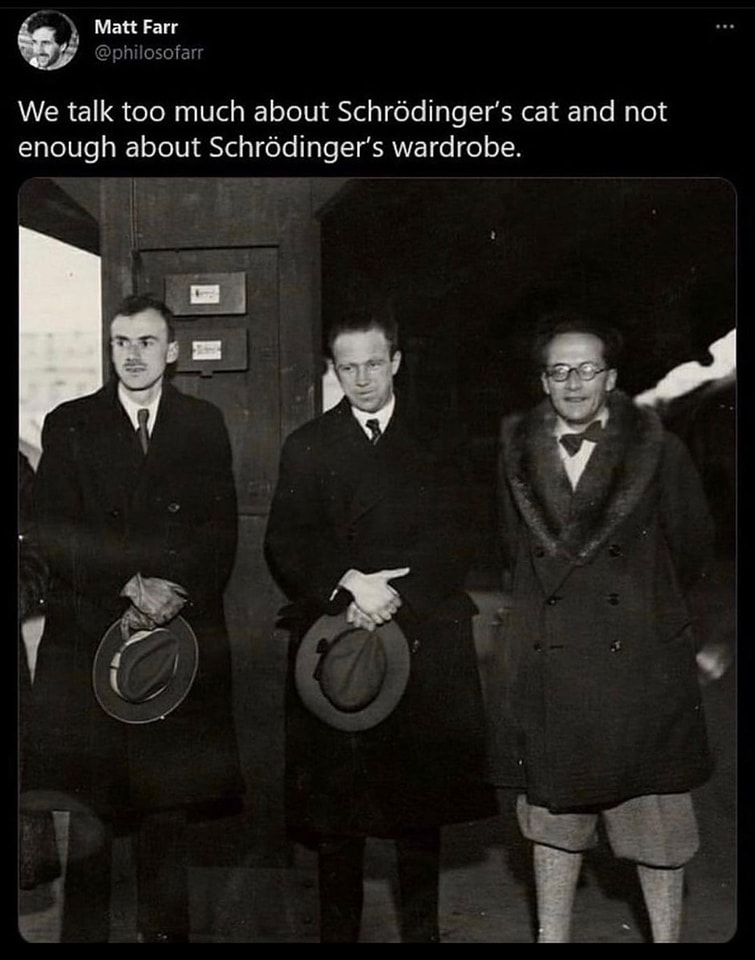
No comment necessary.
Category: Humor and horror
I cannot tell the difference …
… between facts and sites satirical
A note on Dilbert
From time to time I had reason to stroll through some of the engineering buildings, or chemistry or math1, and now and then the business school. Fifteen/twenty years ago Dilbert was all over the place in physics (I had some) and computing and engineering, but not at the business school. Other cartoons appeared there, so it wasn’t a department dictum on decorum….
Since Dilbert so often skewered pointy-haired bosses and HR, it’s no surprise that the strip wouldn’t pop up on grad student doors so much in those regions….
From the speed with which the strip was dropped I suspect there was great relief in the relevant management and HR corporate quarters at the excuse for revenge.
I expect everyone visiting here has a collection of Scott Adams’ books in his library, so I don’t need to post my favorites. The Silicon Graybeard posted some of his here.
Bonus tune
A footnote to Dr. Boli’s notes on our kinder, gentler slavery.
Golf and rewolwers
I’ve been reading Paul Johnson and P.G. Wodehouse, who go unexpectedly well together. See, for example, Wodehouse’s 1921 story “The Clicking of Cuthbert,” in which a Russian novelist is on a lecture tour of England:
The latest news which Vladimir Brusiloff had had from Russia had been particularly cheering. Three of his principal creditors had perished in the last massacre of the bourgeoisie, and a man whom he owed for five years for a samovar and a pair of overshoes had fled the country, and had not been heard of since. It was not bad news from home that was depressing Vladimir. What was wrong with him was the fact that this was the eighty-second suburban literary reception he had been compelled to attend since he had landed in the country on his lecturing tour, and he was sick to death of it. When his agent had first suggested the trip, he had signed on the dotted line without an instant’s hesitation. Worked out in roubles, the fees offered had seemed just about right. But now, as he peered through the brushwood at the faces round him, and realized that eight out of ten of those present had manuscripts of some sort concealed on their persons, and were only waiting for an opportunity to whip them out and start reading, he wished that he had stayed at his quiet home in Nijni-Novgorod, where the worst thing that could happen to a fellow was a brace of bombs coming in through the window and mixing themselves up with his breakfast egg.
Upon discovering that one of the attendees at the dreary reception is a golfer, he cheers up:
“Let me tell you one vairy funny story about putting. It was one day I play at Nijni-Novgorod with the pro. against Lenin and Trotsky, and Trotsky had a two-inch putt for the hole. But, just as he addresses the ball, someone in the crowd he tries to assassinate Lenin with a rewolwer—you know that is our great national sport, trying to assassinate Lenin with rewolwers—and the bang puts Trotsky off his stroke and he goes five yards past the hole, and then Lenin, who is rather shaken, you understand, he misses again himself, and we win the hole and match and I clean up three hundred and ninety-six thousand roubles, or fifteen shillings in your money. Some gameovitch! And now let me tell you one other vairy funny story——”
Therapeutic silliness

I’ve been dealing with a surfeit of reality, and something funny would be helpful right now.
Tune of the day #17
Relics of a lost civilization. Strictly speaking, this isn’t a “tune.” However, the Firesign Theatre billed themselves as the only rock group that didn’t need music, so I’ll give them a pass.
Miscellany
Noise comes in colors. There are white noise, pink noise, red noise, brown noise, blue noise, grey noise, etc. The various shades are most easily perceived by acousticians and acoustical engineers.
While wandering around an airport earlier this summer, I realized that there music playing throughout the building. It was light, watery jazzish stuff, difficult to pay attention to. There was a trumpet in the mix, but the sound was bland, not bold. The melodies were trivial and the chords hackneyed. It may very well have been AI slop. What I was hearing could be called “beige noise”: music intended to be ignored.
*****
Joseph Epstein on a biography he never wrote:
In my early thirties I signed on to write a biography of John Dos Passos, who was still alive. I wrote to Dos Passos to ask if I might have his cooperation in writing his biography. He replied instantly, saying that he would help me in any way he could, on the condition that I “put my liberal ideology in mothballs” and pledge never again to use the word “explicate.”
*****
Atomic Fungus shows how to talk to machines:
Mrs. Fungus was trying to get a tech on the phone, and was stuck at the recalcitrant AI prompt. After hearing her say, “I want to talk to an agent!” fifty-odd times, I took the phone from her.
Machine: “Do you want to try to restart your cable box now?”
Me: “NO! BIB GOBBLE WAGLE BAG GAG HANGLE!”
Whenever the clanker would ask me a yes/no question, I’d answer it, but then add random gobbledygook. And I kept making the tone angrier and angrier.
It gave up and shunted us to a human.
Mrs. Fungus: “How did you do that?”
The algorithm that translates what the user is saying into something the computer can understand has a limited capacity for literal nonsense. In theory, after a sufficient number of errors, it should crap out and send the caller to a human.
That was my theory. I’m glad it worked!
*****
A thousand years ago I discovered three records in the University of Dallas library that would determine much of my musical activity over the years to come: Augustin Anievas’ Chopin waltzes, the first disc of Isolde Ahlgrimm’s “Well-Tempered Clavier,” and Songs by Tom Lehrer2. Lehrer died recently. A few years ago he released his music into the public domain. You can find all the songs here.
*****

One of the places I passed through in Alaska, southeast of Fairbanks. There is culture in the wilderness.
Collect the whole set

The day after
A couple of items of interest from yesterday.
The People’s Cube has been marching proudly in ideological circles for the betterment of Global Equality™ for two glorious decades now.
*****
Those following the tale of Maomao and Jinshi might find this of interest:
Token sportsball post

(Via Serpent’s Den)
Nonsense: the sequel

Reality gets sillier all the time….

You don’t need an infinite number of monkeys
Six are enough, if you have the time. See R.A. Lafferty. And also Russell Maloney.
(Via Pixy.)
For more STEM literature, see A Stress Analysis of a Strapless Evening Gown.
Alternate history: 1865
Steve Sailer this week wrote about American presidents and alcohol, which reminded me of this old favorite.
If Grant Had Been Drinking at Appomattox
By James Thurber
(“Scribner’s” magazine is publishing a series of three articles: “If Booth Had Missed Lincoln,” “If Lee Had Won the Battle of Gettysburg,” and “If Napoleon Had Escaped to America.” This is the fourth.)
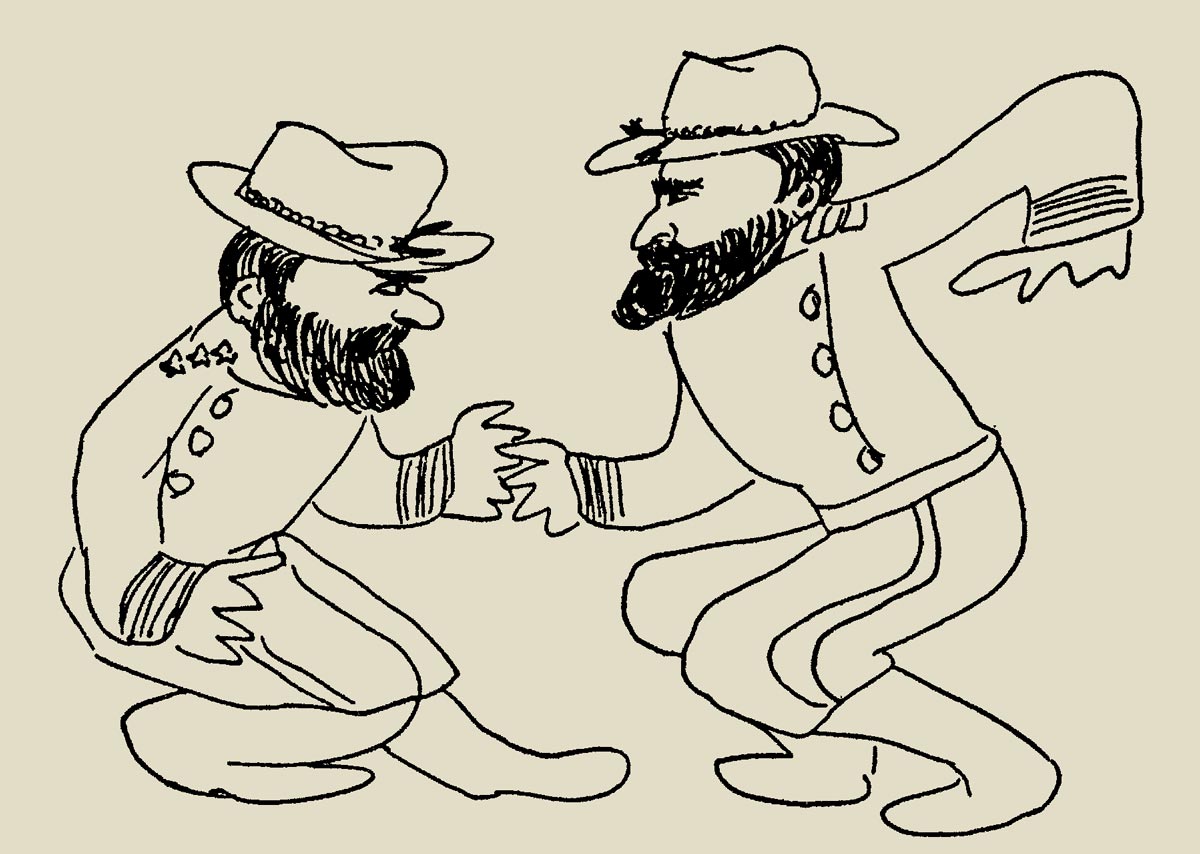
The morning of the ninth of April, 1865, dawned beautifully. General Meade was up with the first streaks of crimson in the sky. General Hooker and General Burnside were up and had breakfasted, by a quarter after eight. The day continued beautiful. It drew on toward eleven o’clock. General Ulysses S. Grant was still not up. He was asleep in his famous old navy hammock, swung high above the floor of his headquarters’ bedroom. Headquarters was distressingly disarranged: papers were strewn on the floor; confidential notes from spies scurried here and there in the breeze from an open window; the dregs of an overturned bottle of wine flowed pinkly across an important military map.
Farewell to the button-down mind
A Christmas tradition
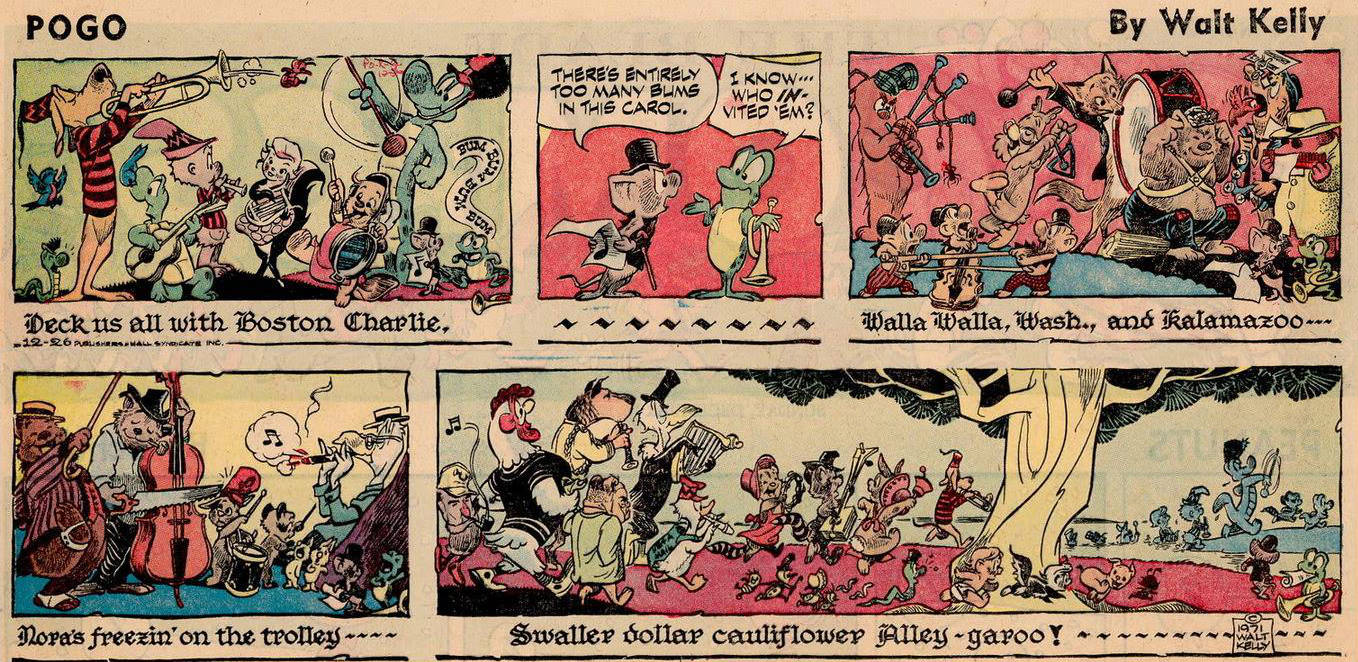
The full lyrics:
Deck us all with Boston Charlie,
Walla Walla, Wash., an’ Kalamazoo!
Nora’s freezin’ on the trolley,
Swaller dollar cauliflower alley-garoo!Don’t we know archaic barrel
Lullaby Lilla Boy, Louisville Lou?
Trolley Molly don’t love Harold,
Boola boola Pensacoola hullabaloo!
Update: See also here.
A Great Moment ….
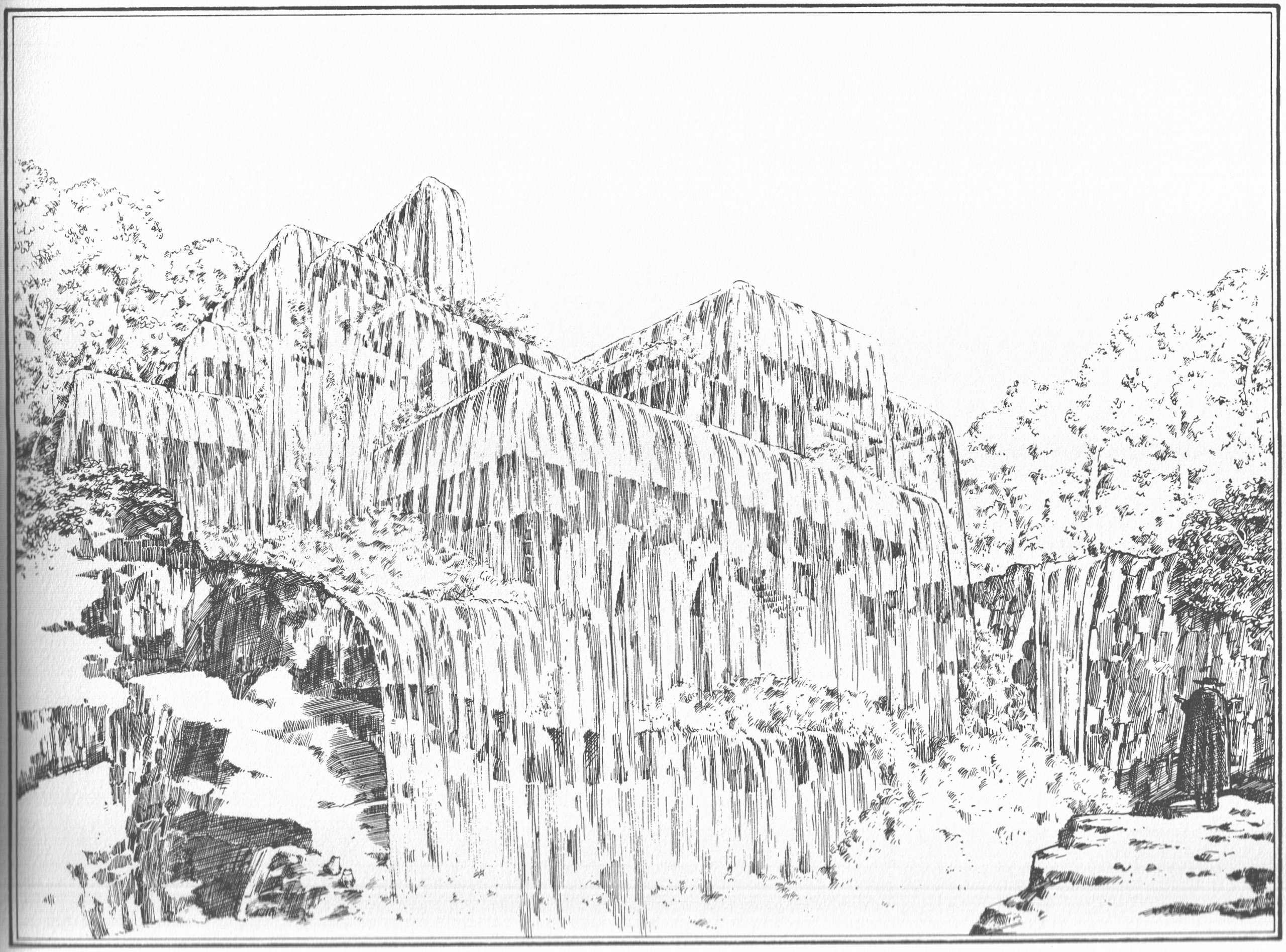
A recent discussion at Severian’s place touched on Frank Lloyd Wright, which reminded me of David Macaulay’s rendering of one of his buildings. (I used to live a few blocks from a Wright-designed house in Wichita.)
There are a few more of Macauley’s works below the fold.
A tale of Whoopshire
Last year we had a P.G. Wodehouse story for Halloween. This year it’s Robert Benchley’s turn. This is technically a Christmas story, but it’s equally inappropriate for October 31.
Uncle Edith’s Ghost Story
“Tell us a ghost story, Uncle Edith,” cried all the children late Christmas afternoon when everyone was cross and sweaty.
“Very well, then,” said Uncle Edith, “it isn’t much of a ghost story, but you will take it—and like it,” he added, cheerfully. “And if I hear any whispering while it is going on, I will seize the luckless offender and baste him one.