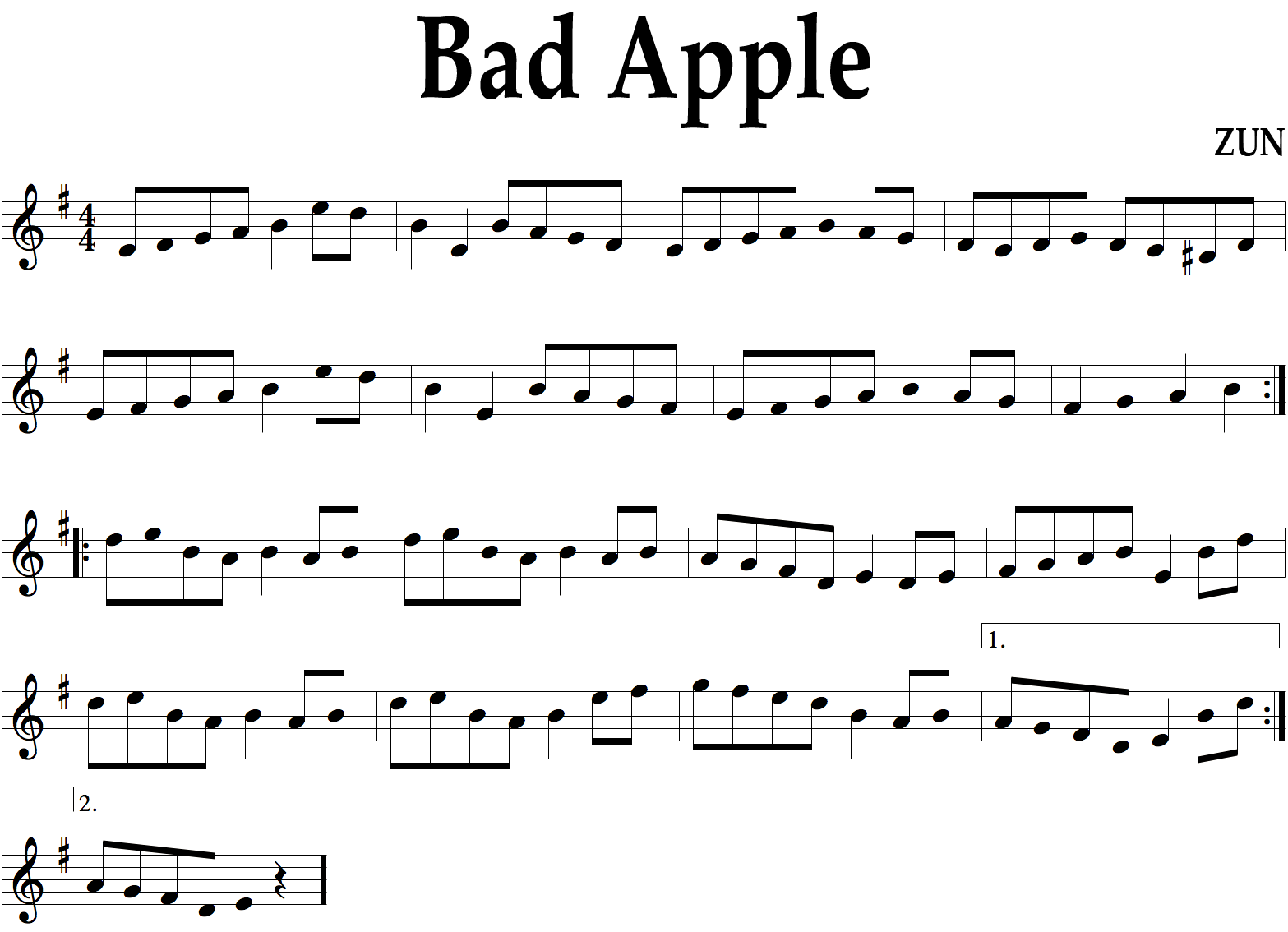
“… de de de de de, dink ….”

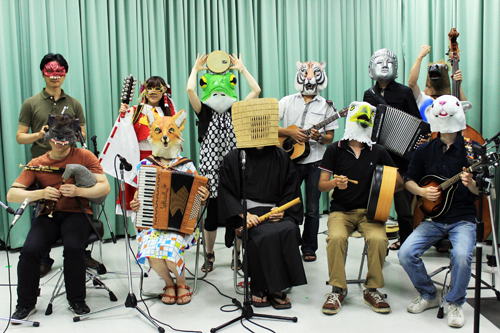
I found this discussion of the War Powers Resolution difficult to follow. I wondered if the arguments might be easier to understand if they were sung to the melody of “The Primrose Polka.”

Nope.

The lyrics can be found here. (I substituted “cuckoo clock” for a word I prefer not to use.)

Please note that this is not a good example of what Miku English is capable of. I picked a lively tune with many notes so I could get a lot of words in, and exaggerated the “clearness” and “brightness” of the voices. Fewer, longer notes, individually edited, would have sounded much better.

Too much knowledge

Lately when I’m in the mood for loud, fast and not overly intellectual music, I listen to Onmyouza, a well-dressed “yokai” metal band. Here’s “組曲「鬼子母神」〜鬼拵ノ唄,” transliterated by Google as “Kumikyoku ‘kishimojin’ — oni Koshirae no uta.”

[audio:http://tancos.net/audio/oni Koshirae no uta.mp3]

One of the advantages of listening to music in languages you don’t know is that you can pretend that the words are literate and worth hearing. I foolishly became curious about Onmyouza’s lyrics and looked for translations. I found a video with subtitles of one of their other pieces, and I kinda wish I hadn’t. If you understand what the song above is about, please don’t tell me.

The commonest rose in cultivation

Dr. Huey

The hybrid wichuriana “Dr. Huey” is the most commonly-used rootstock for propagation of roses by bud grafting. When gardeners are careless about removing suckers, the understock will take over. The result is a brilliant but brief display of bright red blossoms at the beginning of the rose season. This example was blooming in a Wichita garden in mid-May, but you can find them everywhere grafted roses are grown.

Continue reading “The commonest rose in cultivation”

Right parietal-lobe damage

I was not aware of how severe Wilson’s disabilities were:

If Woodrow Wilson’s brain had suffered no further damage, the history of the following decades could have been very different. For Wilson in 1916 wanted Germany defeated but not crushed; he wanted Germany to be a viable member of the proposed League of Nations. He was convinced that a dictated peace [“… ]would be accepted in humiliation, under duress, at an intolerable sacrifice, and that would leave a sting, a resentment, a bitter memory upon which the terms of peace would rest, not permanently, but only as upon quicksand.” The overthrow of the Kaiser in 1918 and his replacement by a democratic government raised Wilson’s hopes for rehabilitating Germany. At the 1919 peace conference in Paris, he argued against French efforts to try the ex-Kaiser and to exact punitive reparations.

But then President Wilson suddenly took ill during the conference: he had vomiting, high fever, and the other signs of having caught the influenza which was sweeping Europe and later much of the world. It turned out that the virus had affected his respiratory system, heart, brain, and prostate. Indeed, judging from some of the mental symptoms (his top aide noted that, just overnight, Wilson’s personality changed), Wilson may have suffered another stroke at this time or, as Dr. Weinstein suggests, have also caught the frequently associated virus of encephalitis lethargica (this is the virus whose victims often developed Parkinson’s disease years later, Oliver Sacks wrote about them in Awakenings).

Even before the influenza attack, his obsession with secrecy was pronounced: none of the other American peace commissioners were privy to President Wilson’s thinking. Bedridden, Wilson became obsessed with being overheard, with guarding his papers. In addition to the paranoia, he became euphoric and almost manic at times following the bedridden phase of the illness. He even became socially outgoing in ways quite uncharacteristic of the normally reticent Wilson.

But most striking was Wilson’s change in attitude toward the Germans: now he himself proposed that the former Emperor be tried. Whereas he had previously insisted that the German delegates be granted full diplomatic privileges at the conference, now he was contemptuous of them. Herbert Hoover, who was there, noted the change in Wilson’s behavior: before the influenza, Wilson was willing to listen to advice, was incisive, quick to grasp essentials and unhesitating in his conclusions. Afterward, he had lapses in memory, he groped for ideas, he was obsessed with “precedents.”

(Via Classical Values.)

Where’s mee.nu?

A message from Steven:

For anyone curious, the mu.nu/mee.nu server had a hardware failure. The RAID controller died. Pixy is on the case, so it’s just a matter of how long before SoftLayer can find a spare and swap it in.

(This was stuck in the spam queue of the previous post for no good reason.)

Update: mee.nu is back, though at the moment the only pictures at Chizumatic are the header images.

For those who wonder just who the legendary Pixy Misa is, here’s a recent photo of the magical girl from Down Under:

Pixy Misa

Update II: While looking up the background of the phrase “Down Under,” I came across yet another damned case of copyright insanity.

Continue reading “Where’s mee.nu?”

More people in funny clothes

Shiny

The first batch of pictures from the weekend are up at my Flickr site. The event was “Figments & Filaments,” a costuming convention debuting this year at a hotel in Independence, Missouri. It was a small, friendly event, about equal parts SCA and steampunk. Although I brought a cotehardie with me, I stayed in civvies and just took a lot of pictures.

Continue reading “More people in funny clothes”